On 30 December, a team from the Trustworthy AI and Autonomous Systems Laboratory (TASLAB), led by Xiao Naigui and supported by volunteers from the Wu Zhi Qiao Charitable Foundation, conducted a preparatory scientific research visit to the Sha Tau Kok Restricted Area. The visit was part of the Pilot North East New Territories Rural Waste Reduction and Sustainability Project, funded by the Hong Kong Jockey Club Charities Trust. The project aims to explore and implement innovative waste management solutions using unmanned aerial vehicles (UAVs) to address the region’s unique waste challenges.

The TASLAB team and Wu Zhi Qiao volunteers during the visit.
Regional survey
The team carried out a regional survey across several key locations: Lai Chi Wo village, Mui Tsz Lam village, Yung Shue Au village, Kat O, Ap Chau and Kuk Po village. The goal was to better understand the waste generation and collection needs of each area. The team collected detailed data on waste points and used 3D reconstruction to identify potential UAV base stations.
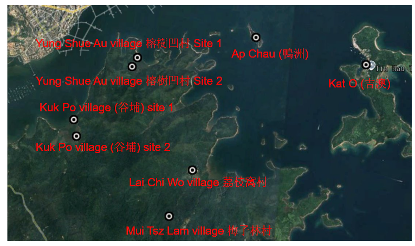
Locations visited during the survey.
Handheld 3D reconstruction equipment was used to generate 3D point cloud maps of the areas, and GPS positioning accuracy was tested to ensure that the planned UAV operations would be precise and reliable.
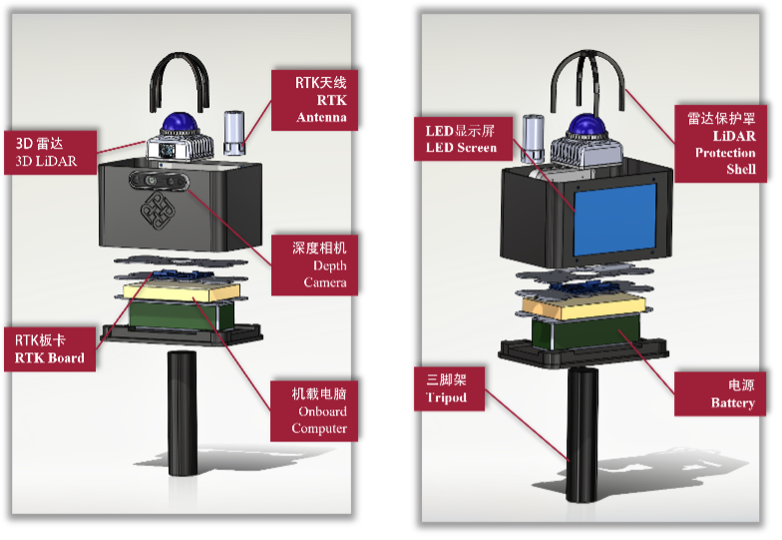
The handheld 3D reconstruction device, with 3D LiDAR, RTK antenna, depth camera, RTK board, onboard computer, LED screen and battery.
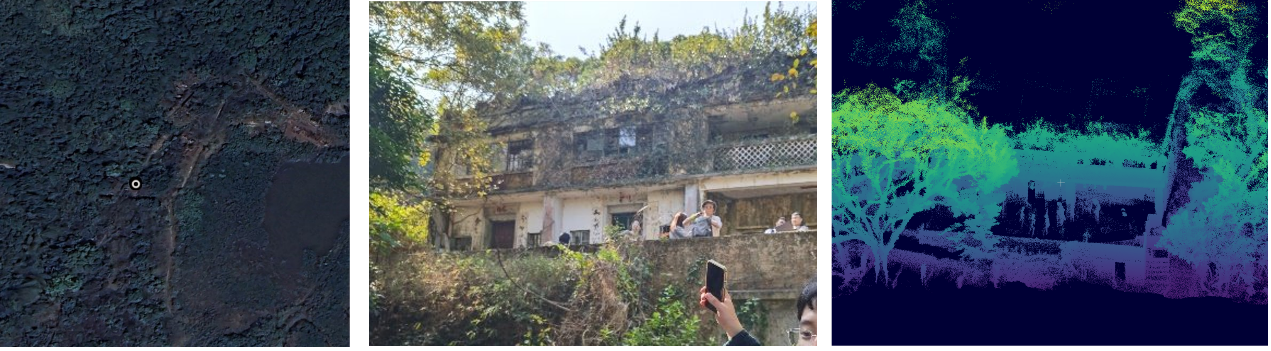
Satellite view, on-site photo and the resulting 3D point cloud map of a surveyed location.
Results
The GNSS single-point positioning experiment gave promising results: positioning precision was within a 1-meter radius in 2D, which is sufficient for UAV localization in the field. This level of accuracy is crucial for a drone-based waste management network, as it ensures that UAVs can navigate precisely to specific collection points.
The data gathered will form the basis for designing a drone delivery network tailored to the waste management challenges of the North East New Territories. By using UAVs, the project aims to create a more efficient, sustainable and cost-effective waste management system for rural areas.
The field survey marks a milestone for the project and lays the groundwork for future phases focusing on the implementation of UAV-based waste collection systems. The results highlight the feasibility of using drones in waste management and reflect the commitment of TASLAB, Wu Zhi Qiao and their partners to sustainability and innovation in Hong Kong’s rural communities.