The Trustworthy AI and Autonomous Systems Laboratory (TASLAB) hosted the 1st Workshop on Robot Meets GNSS and Ranging for Seamless Autonomy at the 2026 IEEE International Conference on Robotics and Automation (ICRA 2026) in Vienna, Austria. The workshop brought together researchers from the robotics, navigation, positioning and intelligent transportation communities to discuss how GNSS, UWB, ranging and multi-sensor fusion technologies can support reliable robot autonomy in complex real-world environments. More details are available on the workshop page.
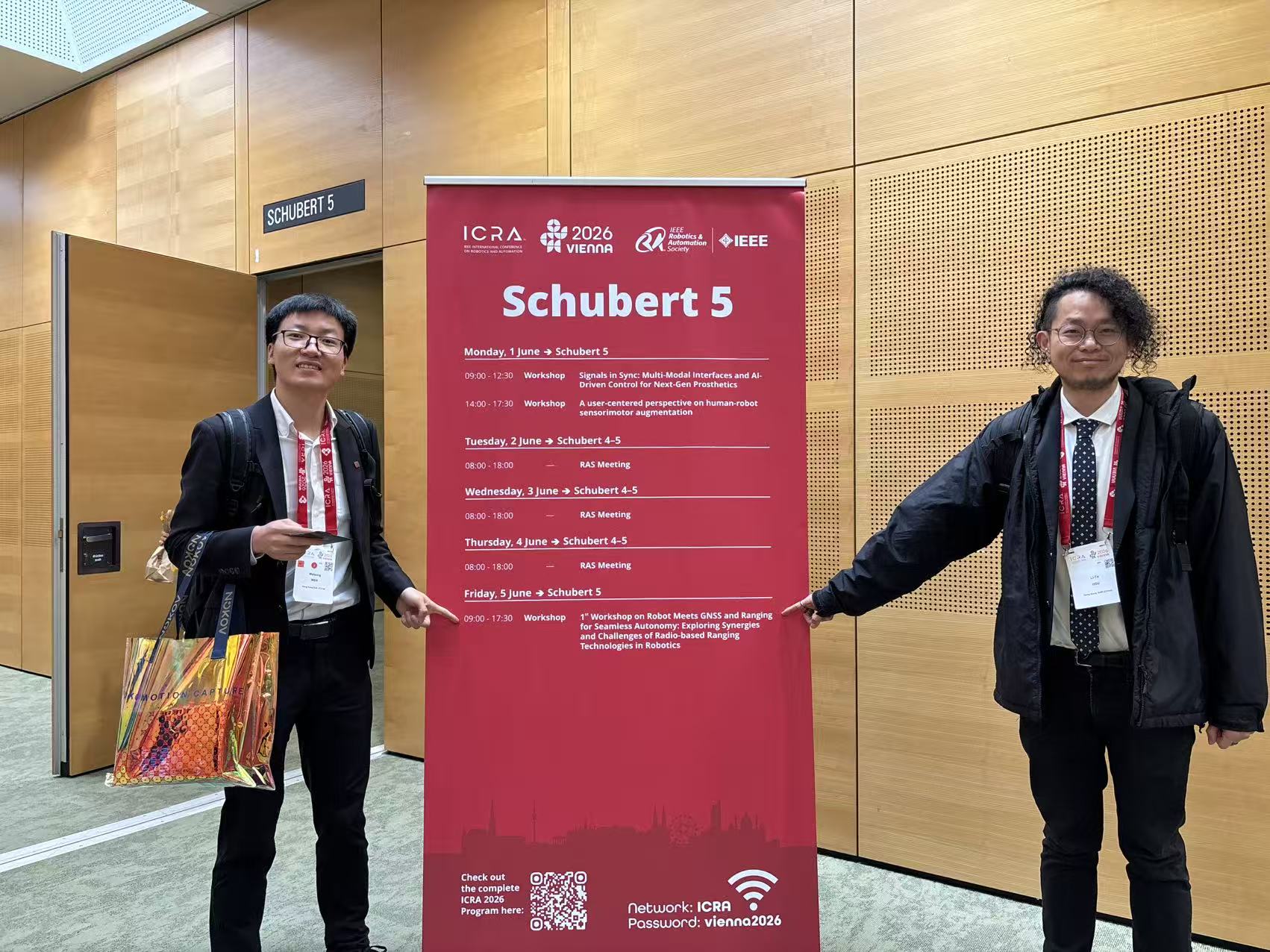
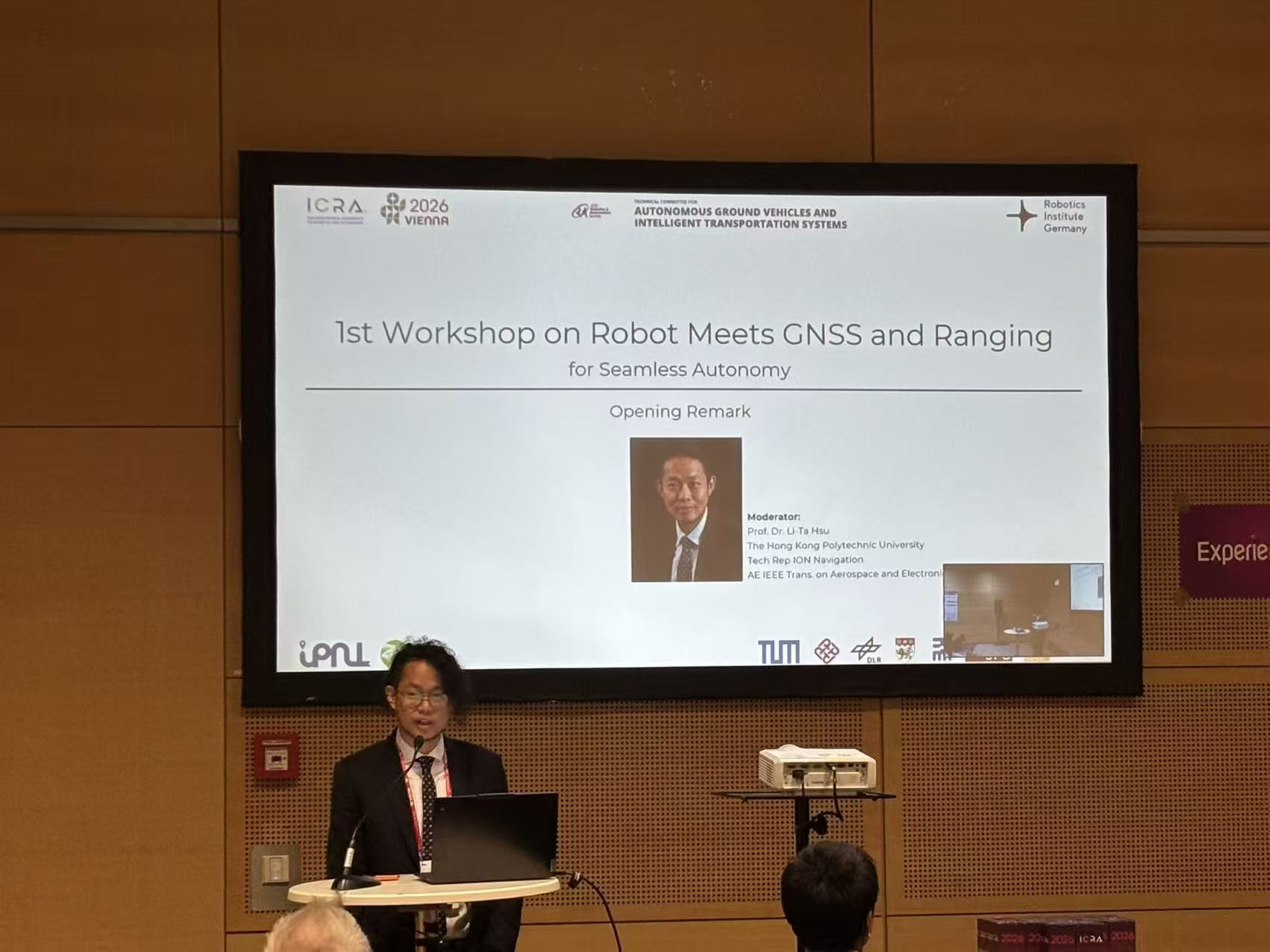
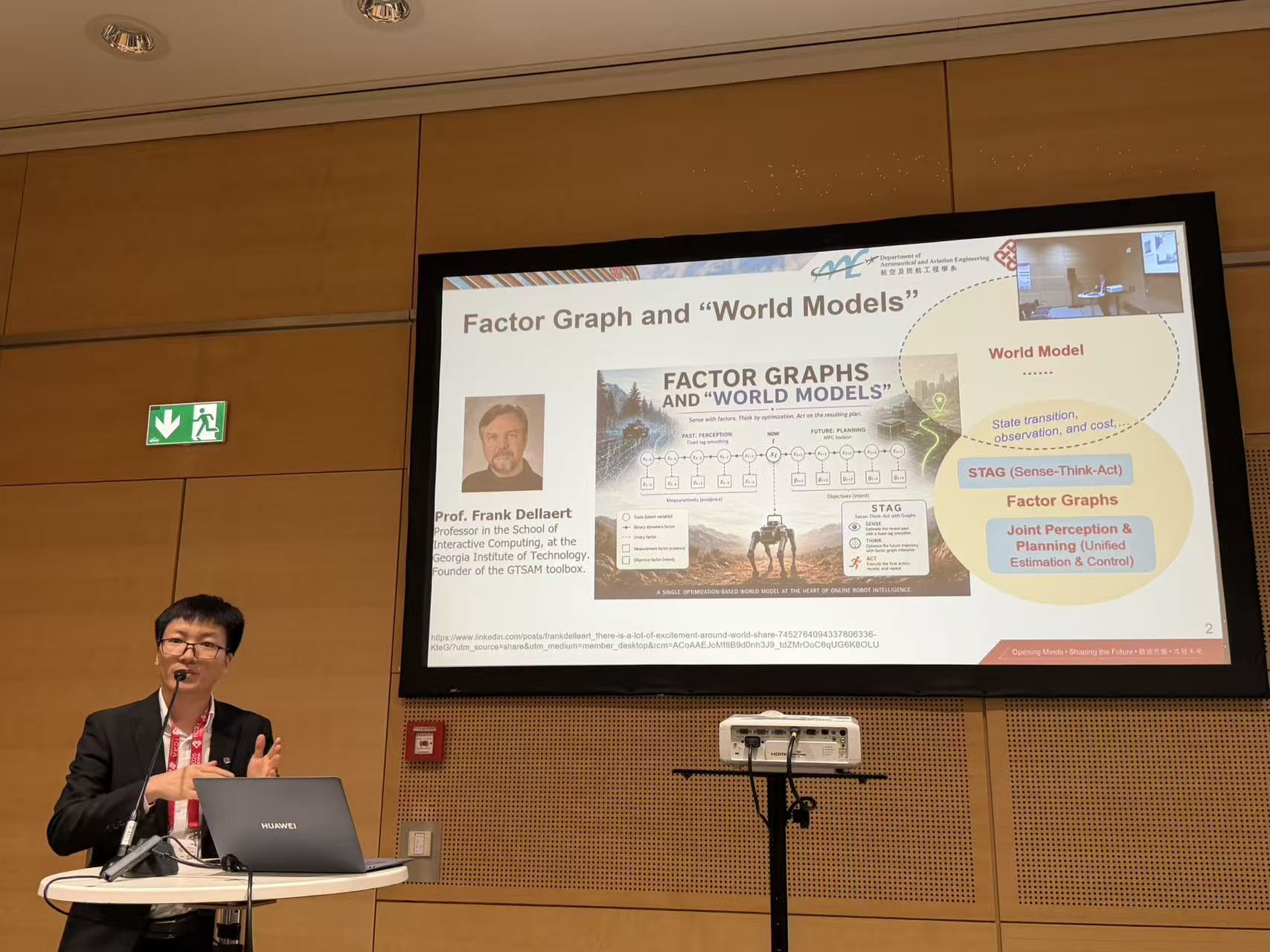

The 1st Workshop on Robot Meets GNSS and Ranging for Seamless Autonomy at ICRA 2026.
The workshop focused on shared challenges in sensor integration, ranging error modelling, integrity monitoring, robust localization and certifiable optimization for autonomous systems. Through invited talks, technical presentations and discussions, participants exchanged ideas on how ranging technologies can improve the safety, continuity and resilience of robot navigation.
Accepted paper
In addition to hosting the workshop, TASLAB presented its paper accepted by ICRA 2026:
- “Integrated Planning and Control on Manifolds: Factor Graph Representation and Toolkit”, by Peiwen Yang, Weisong Wen, Runqiu Yang, Yuanyuan Zhang, Jiahao Hu, Yingming Chen, Naigui Xiao and Jiaqi Zhao.
The paper introduces FactorMPC, a factor-graph-based model predictive control toolkit for systems evolving on nonlinear manifolds, supporting geometrically consistent planning and control for robotics applications.
The workshop and the paper acceptance reflect TASLAB’s continued work on robust navigation, GNSS/ranging-aided autonomy, factor graph optimization, and safety-aware planning and control for intelligent autonomous systems.