On 10 July 2026, Prof. Weisong Wen, Director of the Trustworthy AI and Autonomous Systems Laboratory (TASLAB) at The Hong Kong Polytechnic University (PolyU), received a Best Presentation Award at the 2026 3rd Navigation Technology and Application Conference (NaviCON 2026) in Chengdu, China. The conference was held from 8 to 10 July at the Chengdu Century City Convention Center and organized by the Chinese Institute of Electronics (CIE) together with the Sichuan Provincial Committee of the CCPIT and the Sichuan International Chamber of Commerce. Under the theme “Multi-source Augmentation, Advancing Toward Intelligence” (多基增强、向智而行), it brought together academicians, researchers and industry practitioners working on BeiDou-based positioning, navigation and timing (PNT).
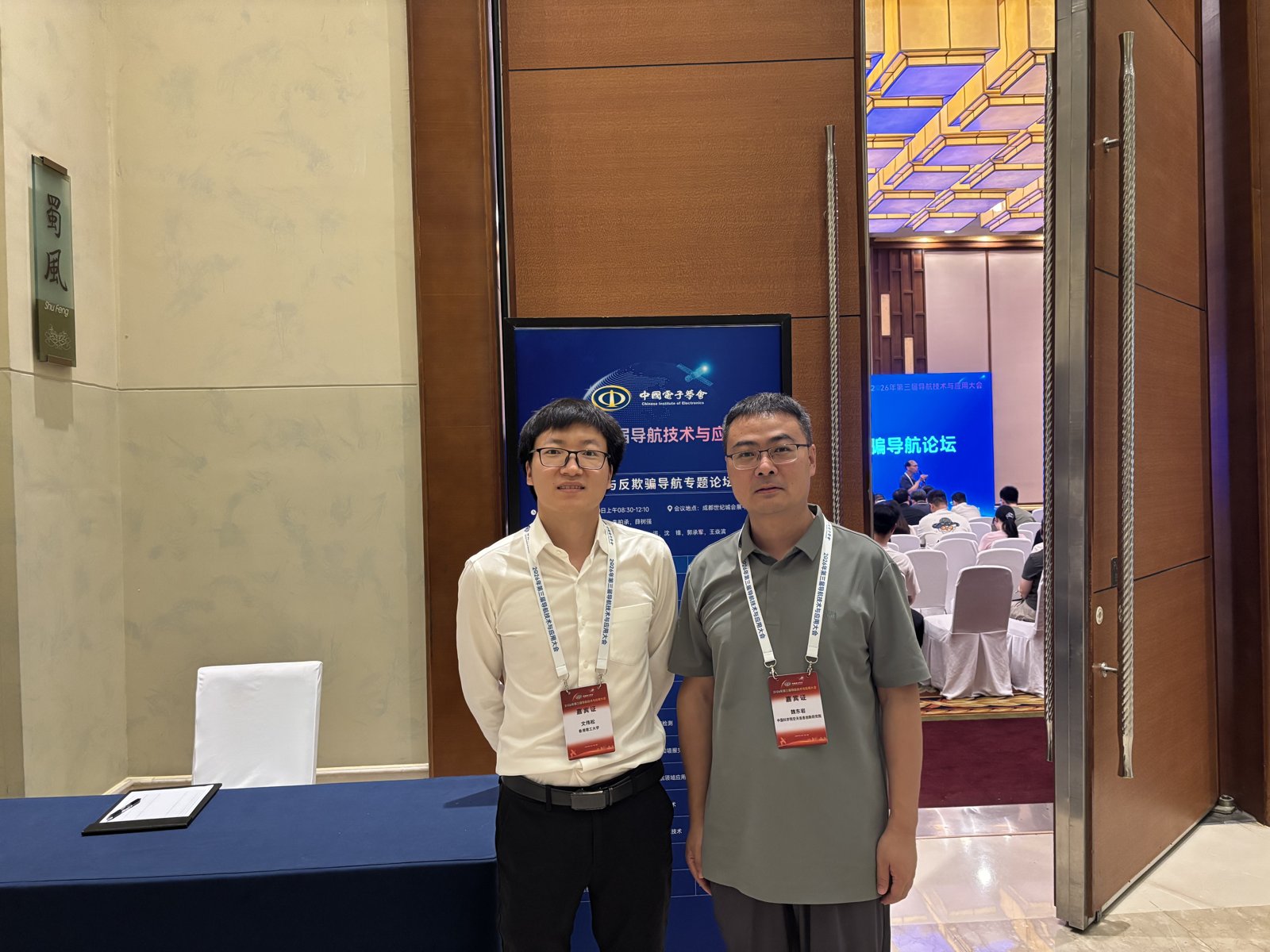
Prof. Weisong Wen (left) with Dr. Dongyan Wei of the Aerospace Information Research Institute, Chinese Academy of Sciences, at the conference venue in Chengdu.
The award-winning talk
Prof. Wen presented in the Signal Processing and Robust Positioning Forum (信号处理与鲁棒定位论坛) on the morning of 10 July. His talk, “3D LiDAR-Aided Trustworthy GNSS Positioning for Complex Urban Environments” (面向城市复杂环境的三维激光雷达辅助GNSS可信定位技术), was selected for the conference’s Best Presentation Award, recognizing both the technical contribution of the work and the clarity with which it was communicated to the navigation community.
The presentation set out TASLAB’s research roadmap on trustworthy positioning in urban canyons, where tall buildings block and reflect satellite signals and degrade conventional GNSS solutions. It covered the laboratory’s 3D LiDAR-aided (3DLA) GNSS framework, which progresses from non-line-of-sight (NLOS) detection and exclusion to Doppler-aided direction-of-arrival estimation and reflection-path-based NLOS correction. It also covered the framework’s extension to real-time kinematic positioning and to tightly-coupled GNSS/LiDAR/inertial odometry for continuous, drift-free state estimation. Finally, the talk addressed how these methods support integrity-aware positioning for safety-critical autonomous systems operating in dense cities.
Conference programme
The three-day programme covered the full breadth of contemporary navigation research, with invited keynote reports at the main forum and seven parallel technical forums:
- Multi-source augmentation and integrity monitoring
- Intelligent and emerging navigation
- Atmospheric propagation effects
- Anti-jamming and anti-spoofing navigation
- Signal processing and robust positioning
- Spatiotemporal reference establishment and maintenance
- Young Scientists Forum
The exchange gave Prof. Wen the opportunity to discuss robust positioning in challenging environments with peers from leading mainland institutions and research institutes.
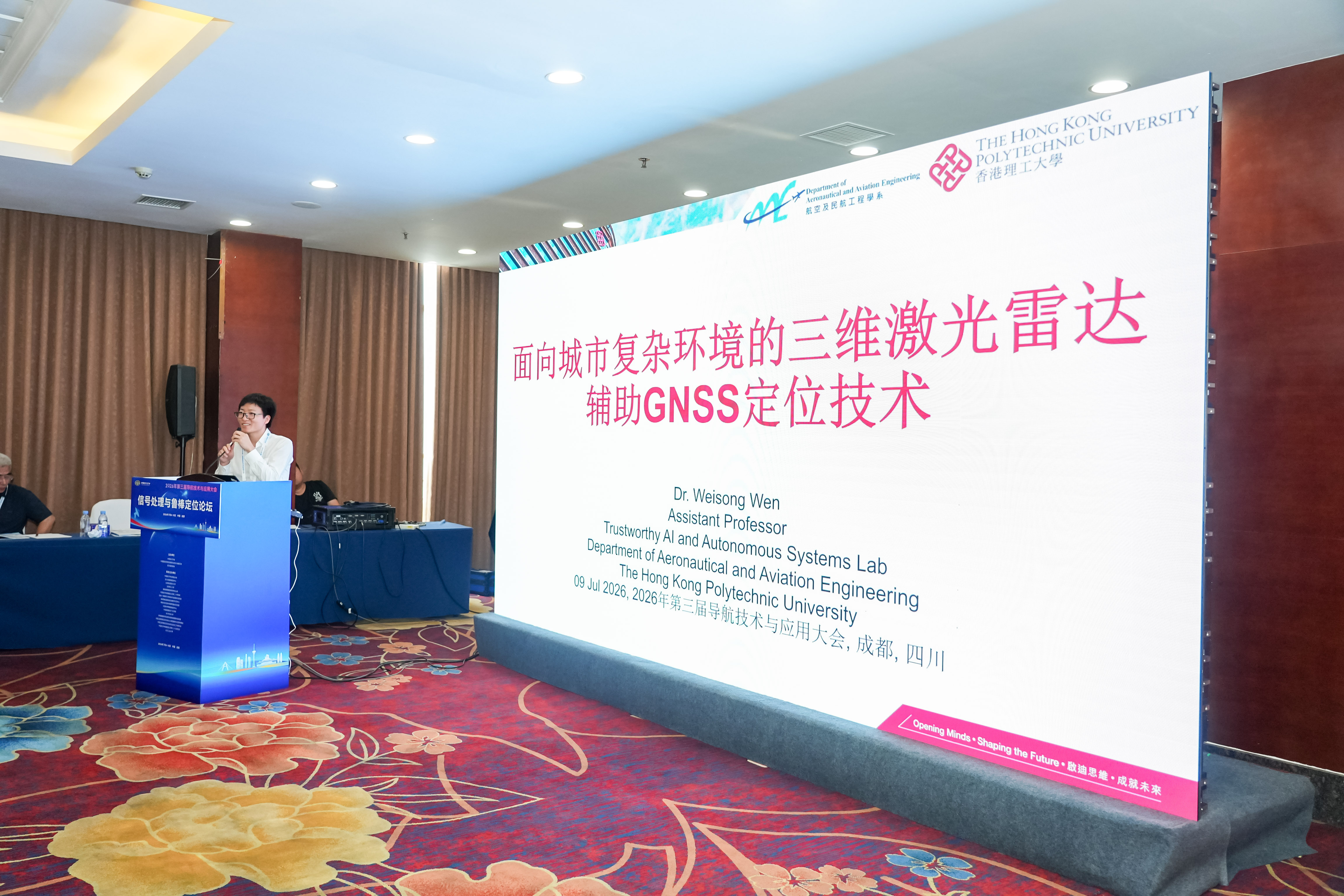
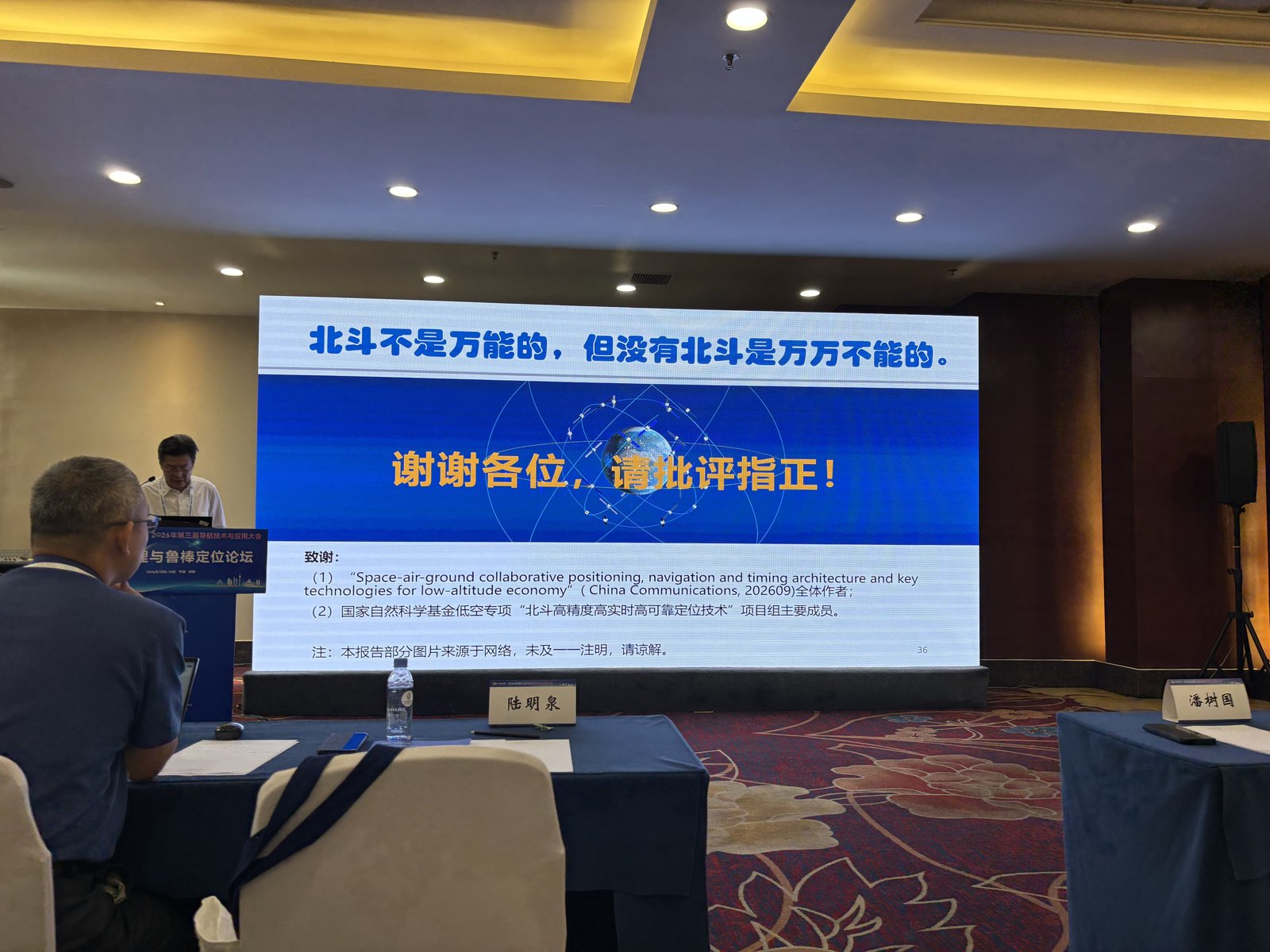
Talks at the Signal Processing and Robust Positioning Forum, where Prof. Wen also presented.
Prof. Wen’s participation and the Best Presentation Award reflect TASLAB’s continuing contribution to trustworthy positioning and navigation research, and its commitment to academic exchange with the wider PNT community in the mainland and internationally.