On 14 October 2026, Prof. Weisong Wen visited the College of Engineering, Peking University (PKU) in Beijing. During the visit, he met with Prof. Zhiyong Sun and Prof. Chang Liu to exchange research progress and discuss future collaboration between TASLAB and their research groups.
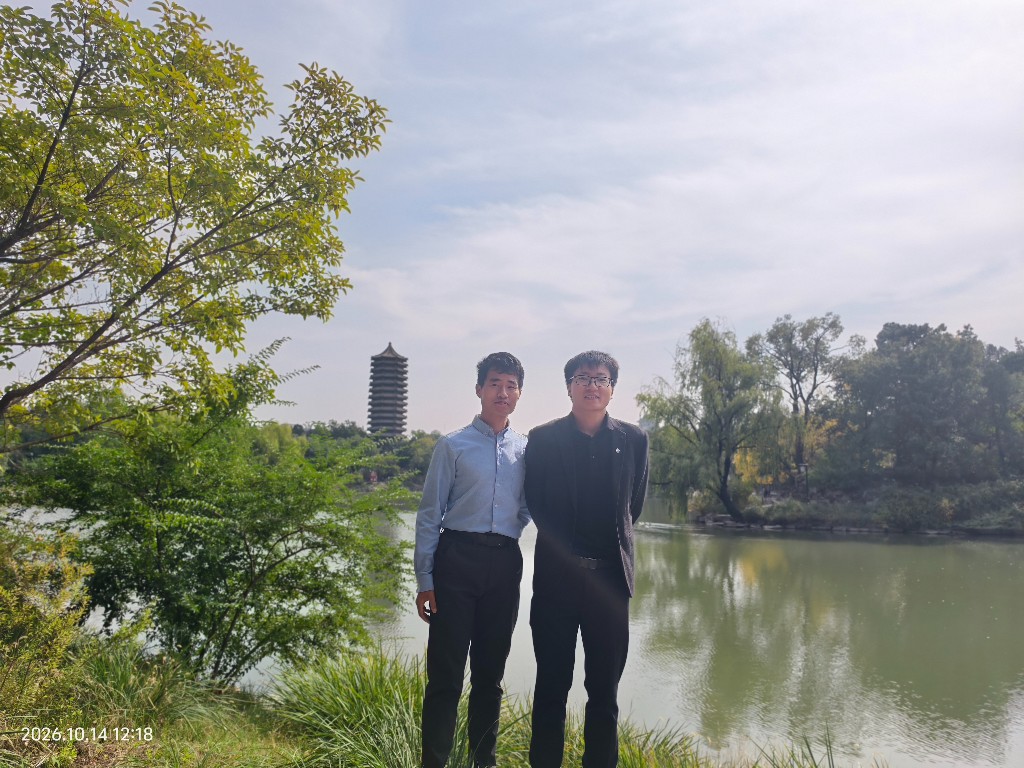
At Weiming Lake on the Peking University campus, with the Boya Pagoda in the background.
Discussions on future collaboration
The discussions centred on several directions where the groups’ expertise is highly complementary:
- Embodied intelligence, linking perception, decision-making and control so that robots can act safely and reliably in the physical world;
- Unmanned aerial vehicles (UAVs), including trustworthy navigation, safety-critical control and autonomous operation in complex environments; and
- Cooperative control of UAVs and unmanned ground vehicles (UGVs), covering multi-robot coordination, cooperative localisation and motion planning for heterogeneous air–ground teams.
Both sides look forward to exploring joint research in these areas, combining TASLAB’s strengths in trustworthy positioning, navigation and autonomous systems with PKU’s expertise in control theory, multi-robot systems and embodied AI.
About the hosts
Prof. Zhiyong Sun is an Assistant Professor and doctoral supervisor in the Department of Mechanics and Engineering Science (Mechanical Systems and Control), College of Engineering, Peking University, and a Boya Young Scholar. He received his PhD in control engineering from The Australian National University in 2017, and was subsequently a Research Fellow/Lecturer at ANU, a postdoctoral fellow at Lund University, Sweden, and an Assistant Professor at Eindhoven University of Technology (TU/e), the Netherlands, before joining PKU in 2024. His research interests include systems and control theory, unmanned autonomous systems, distributed control and optimisation, multi-agent coordination and formation control, and multi-robot motion planning. He is the author of the Springer monograph Cooperative Coordination and Formation Control for Multi-agent Systems, and his work has received a Springer best PhD thesis award as well as multiple best paper and best student paper awards at flagship IEEE control and robotics conferences.
Prof. Chang Liu is an Assistant Professor and doctoral supervisor at the School of Advanced Manufacturing and Robotics, Peking University, where he leads the Autonomous Robots Lab. He received his PhD in mechanical engineering from the University of California, Berkeley, and his bachelor’s degrees from Peking University. Before joining PKU in 2021, he was a Postdoctoral Associate at Cornell University and worked at NVIDIA’s autonomous vehicle division and Ford Motor Company. His research focuses on embodied AI and multi-robot systems, including autonomous decision-making, motion planning and state estimation for intelligent robots, cooperative perception and planning for multi-robot systems, and human–robot collaboration based on intention inference. His work has received honours including the IEEE Transactions on Intelligent Vehicles Best Paper Award.
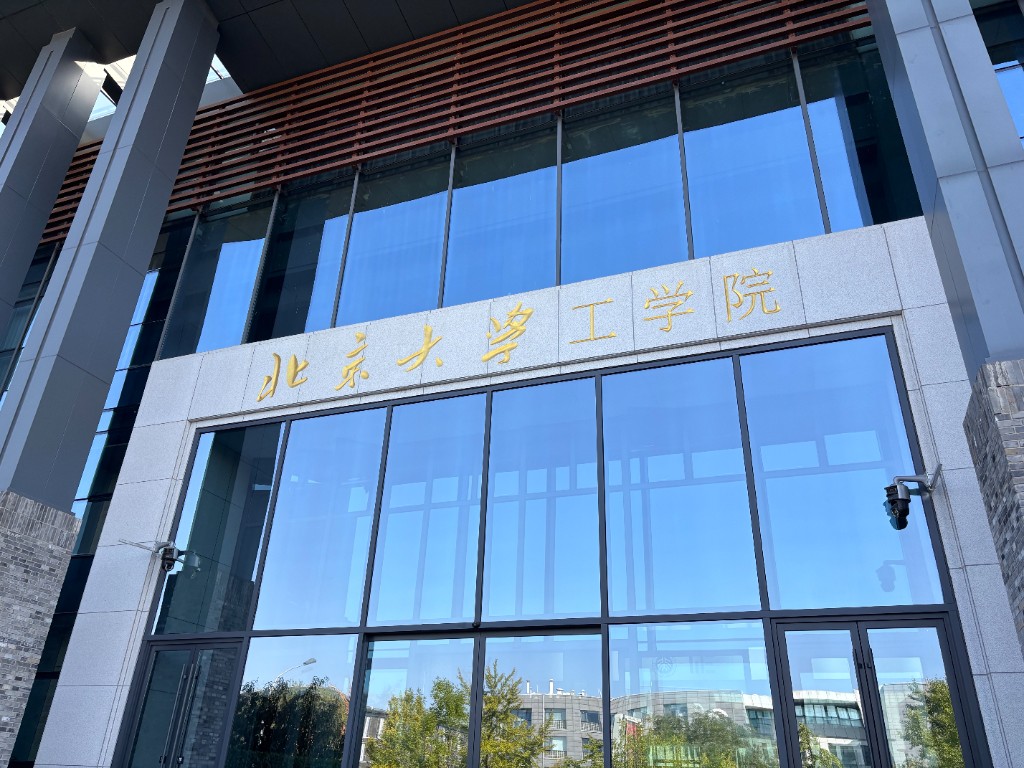
The College of Engineering, Peking University.
TASLAB sincerely thanks Prof. Sun and Prof. Liu for their warm hospitality and the insightful discussions, and looks forward to working closely together in the future.