On 18 January 2025, our postdoctoral fellow Dr. WANG Yingying, representing the Trustworthy AI and Autonomous Systems Laboratory (TASLAB), gave a talk at Shanghai Jiaotong University at the invitation of the Institute for Sensing and Navigation. She presented research on non-intrusive indoor pedestrian localization from the perspective of IMU and WiFi, with a focus on the indoor pedestrian localization research carried out at TASLAB.
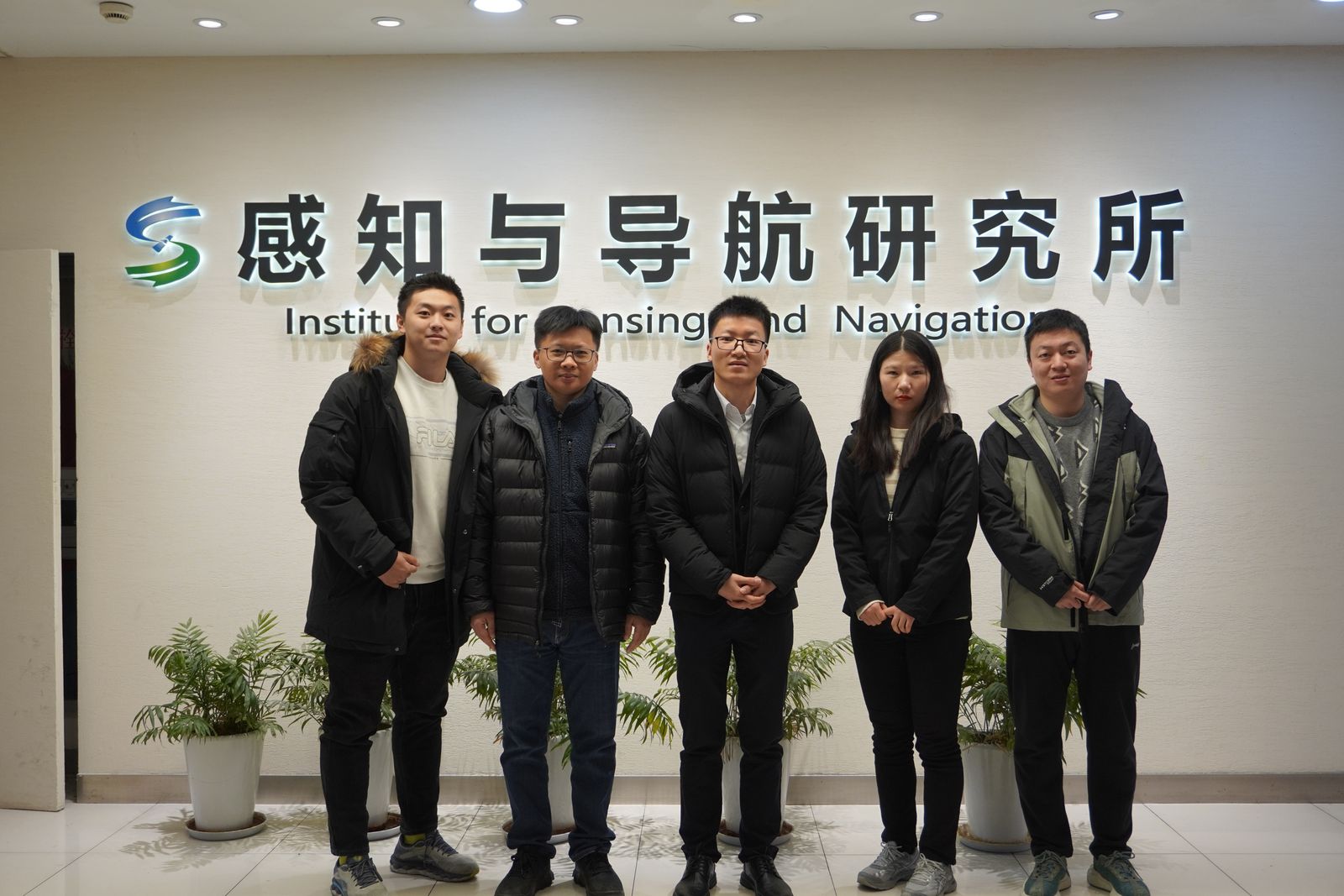
Group photo at Shanghai Jiaotong University.
Non-intrusive Pedestrian Indoor Localization: From the Perspective of IMU & WiFi
Low-cost, unobtrusive and non-intrusive sensing for indoor pedestrian localization has been a research hotspot for decades. However, there is still no universal indoor localization solution that works effectively without dedicated hardware. The strong research interest in smartphone-based indoor localization is driven by the spread of embedded sensors, which offer many candidates for indoor localization.
The talk focused on two non-intrusive sensing modalities: the inertial measurement unit (IMU) and the WiFi received signal strength indicator (RSSI). It illustrated how deep learning techniques can improve the localization accuracy and robustness of both modalities.
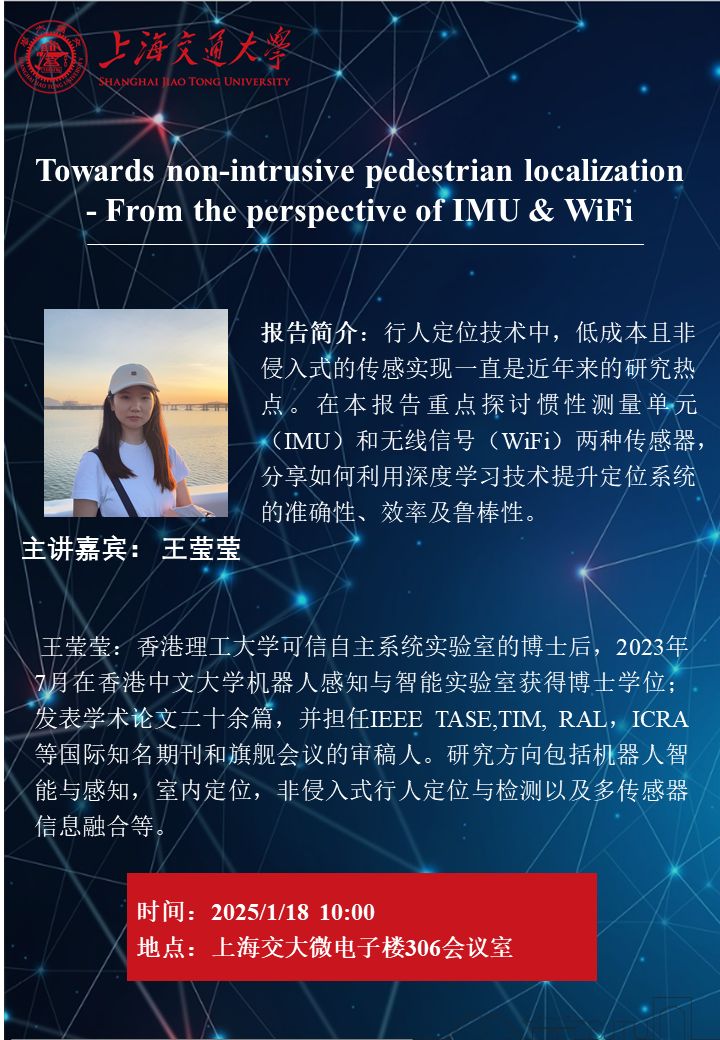
Poster of the talk at Shanghai Jiaotong University.