On 27 March 2025, the Trustworthy AI and Autonomous Systems Laboratory (TASLAB) at The Hong Kong Polytechnic University (PolyU) visited JIUSI Intelligent Aviation Technology (Shenzhen) Co., Ltd., a provider of autonomous drones for smart city maintenance. The visit, an academic-industry exchange on the future of smart city maintenance, featured a demonstration of Jiusi’s next-generation facade cleaning drone and a knowledge exchange session.
Demonstration of the D15R facade cleaning drone
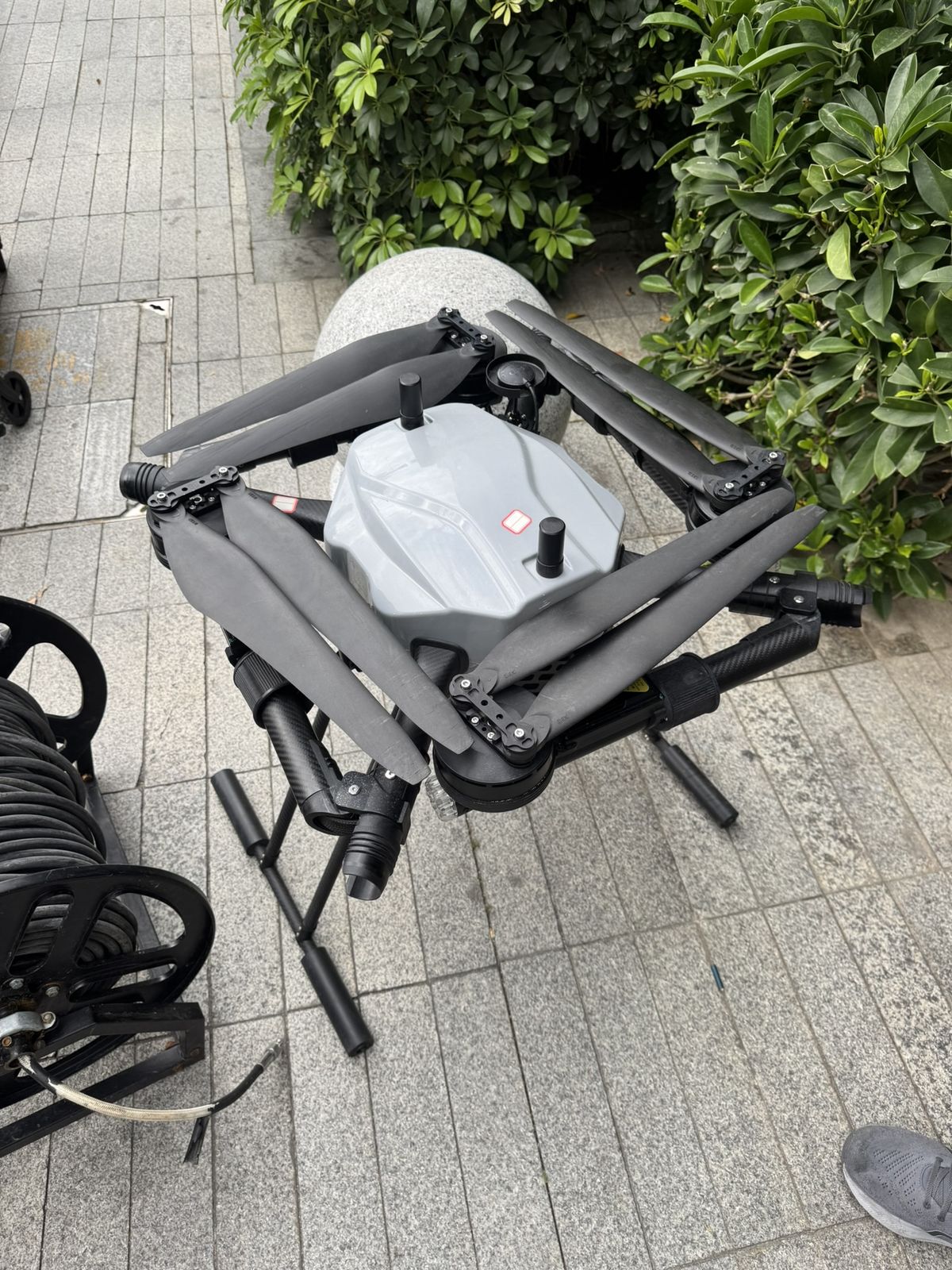
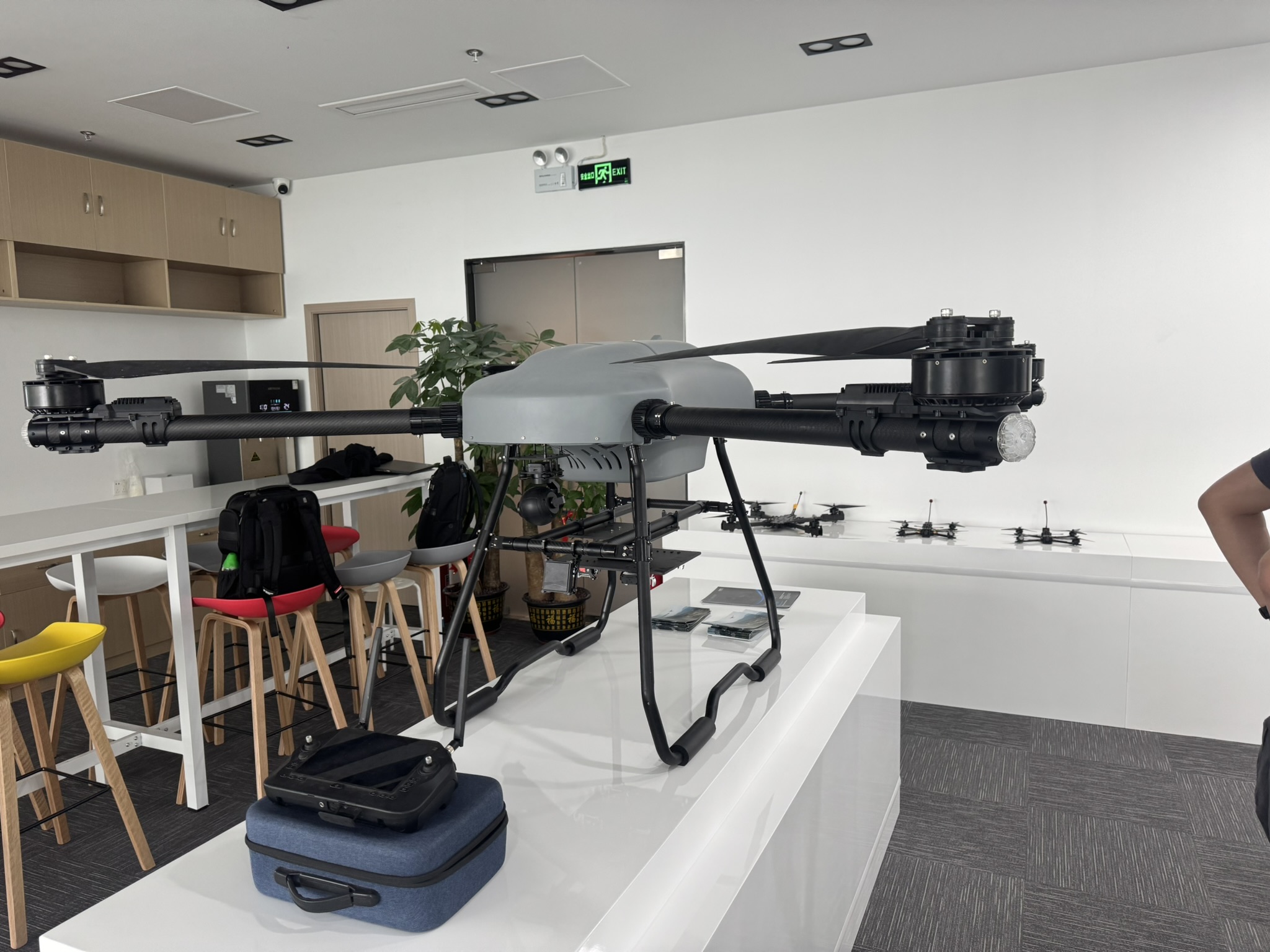
The D15R facade cleaning drone, folded and unfolded.
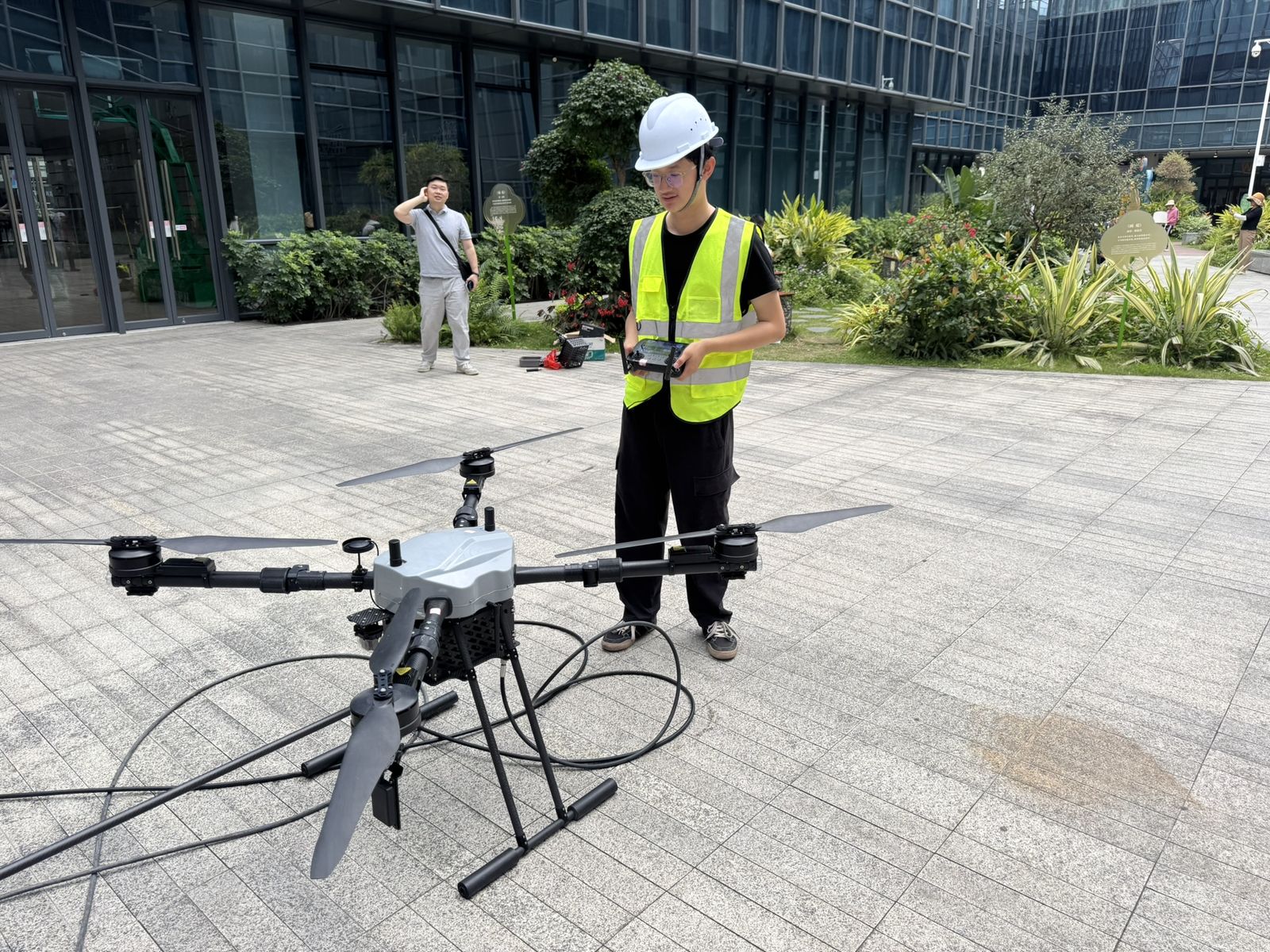
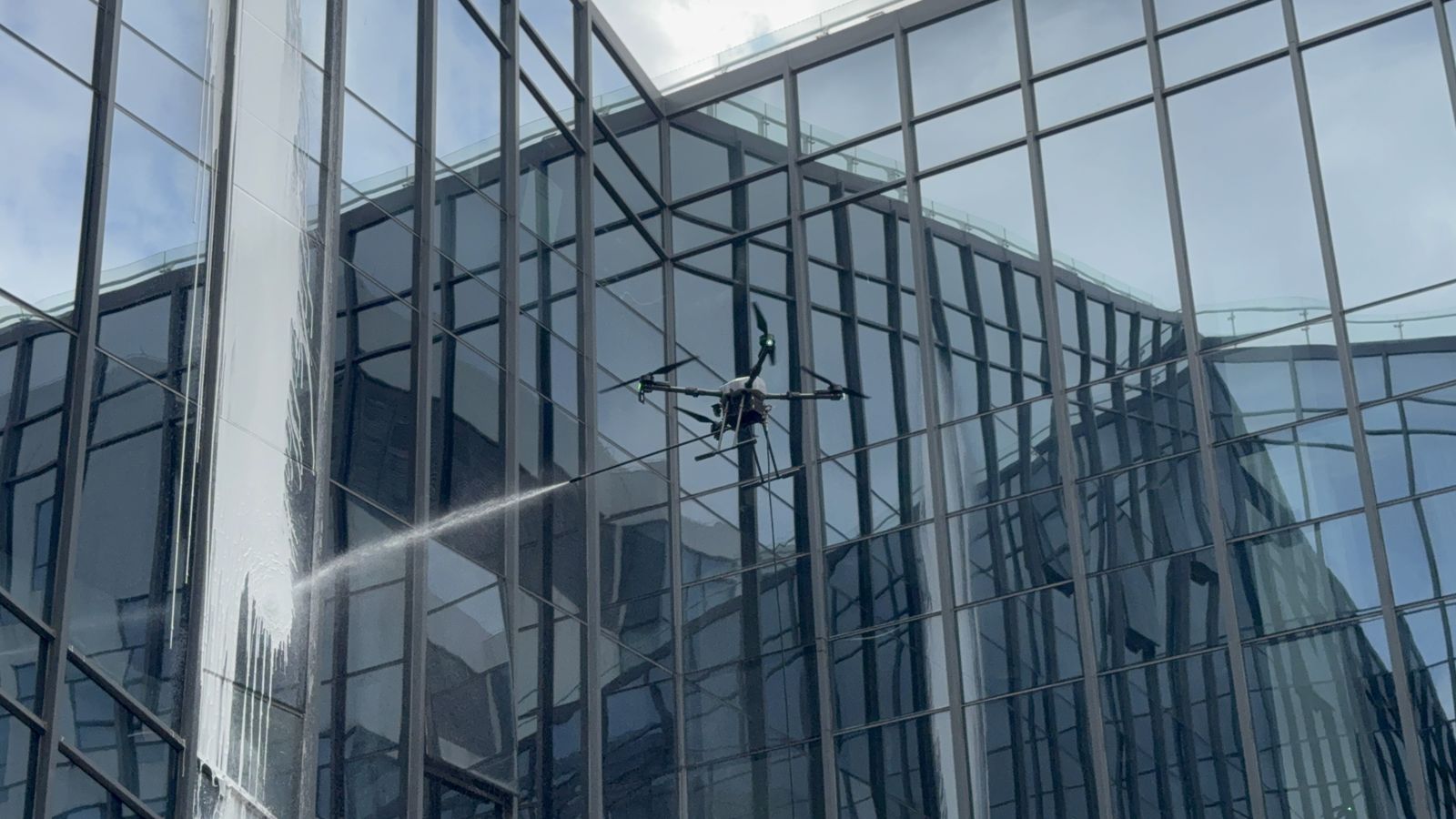
Live demonstration of facade cleaning.
Jiusi uses a dual RTK antenna solution to ensure accurate positioning of the drone and precise operation. With specially designed interchangeable nozzles, the drone cleans wall surfaces in two missions. In the first flight, a cavity nozzle generates an adhesive foam that holds the cleaning solution on the glass curtain wall, giving the solution enough time to react with and break down stubborn stains. In the second mission, a high-pressure nozzle sprays plasma-enhanced water, removing residual contaminants and minimising water streaks on the curtain wall through precision rinsing. The drone showed stable and efficient cleaning performance; according to the pilot, it can clean 500 square metres per hour.
Knowledge exchange session
Although the drone has demonstrated stable and efficient cleaning, several challenges must still be addressed before it can fully realise its potential in the real world:
- Positioning: accurate positioning when the drone approaches the facade.
- Strategy: optimising the cleaning and fail-safe strategies.
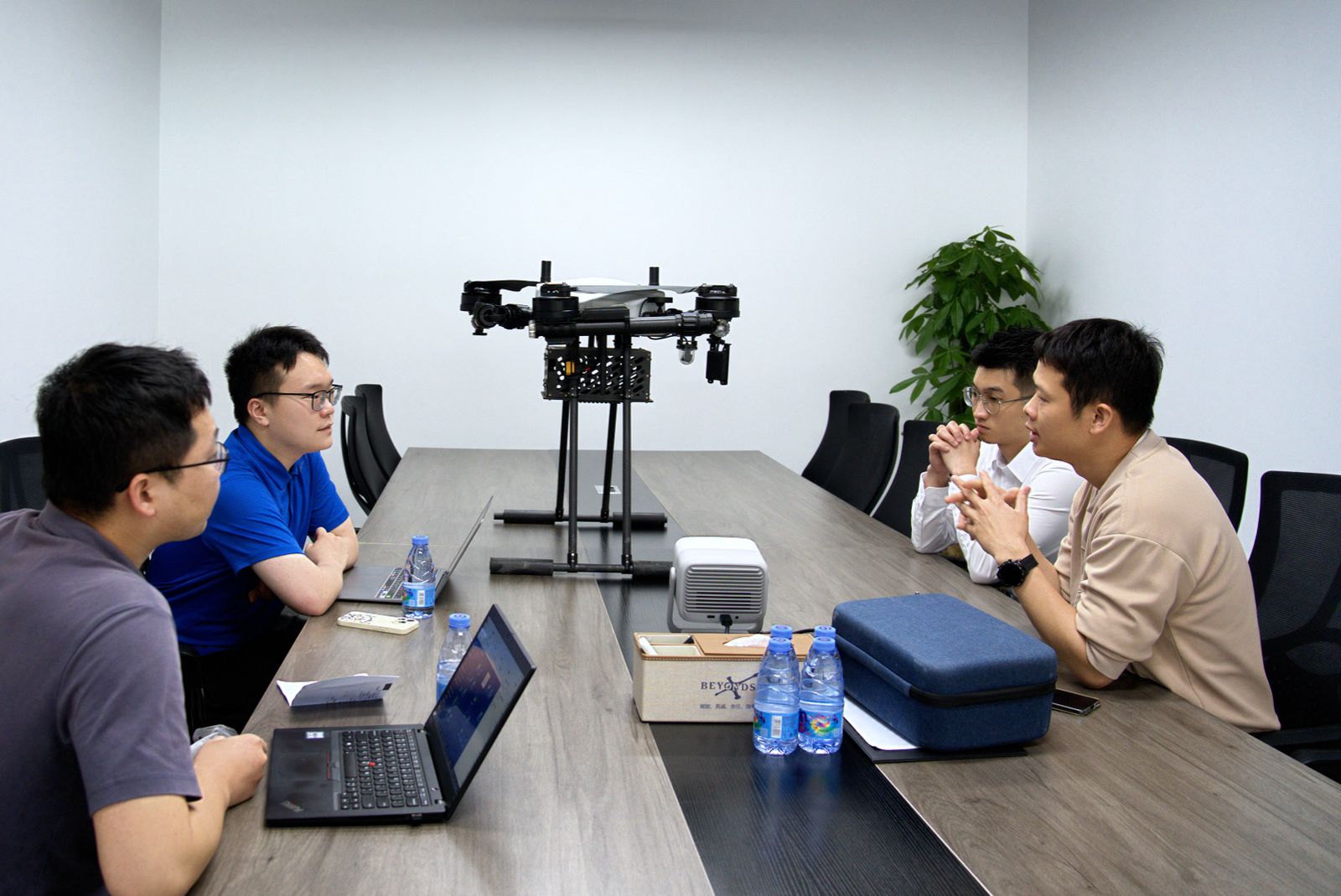
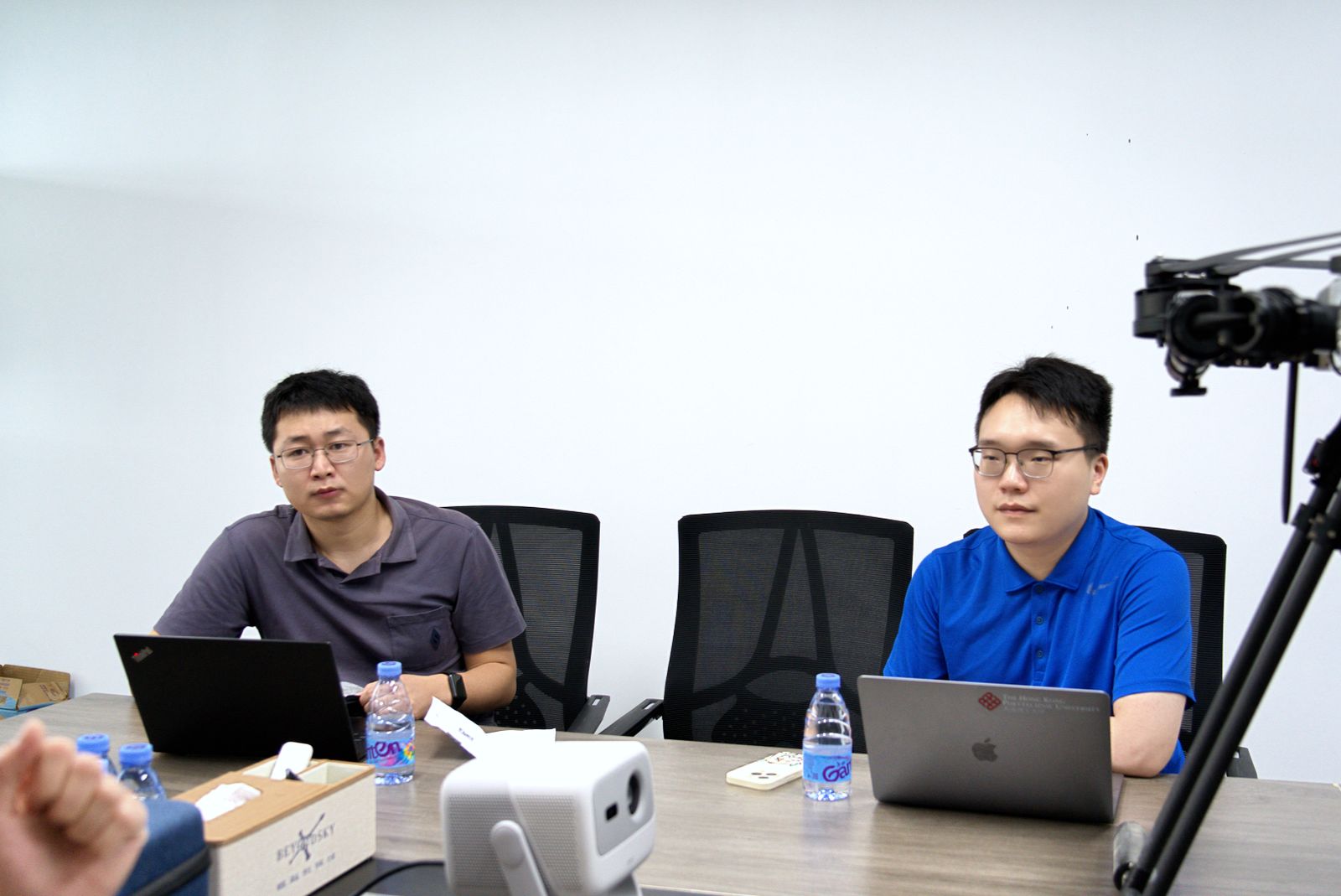
Knowledge exchange with the Jiusi team.
According to Jiusi’s technical manager, the current cleaning module of the drone tolerates a minimum error of 0.5 meters. The root cause is the limitation of the mmWave radar, which is constrained by the size of its antenna. Jiusi engineers are optimising the antenna design to improve its performance, aiming for an error of 0.2 meters when approaching the facade.
Jiusi’s future focus is on optimising the drone’s cleaning strategy. As shared by the head of the development team, the goal is for the drone to rotate autonomously when the cleaning route reaches the edges of a building, improving cleaning efficiency.
The visit and knowledge exchange session led to a fruitful discussion about the current cleaning module of the Jiusi drone, its limitations and future plans for optimisation.
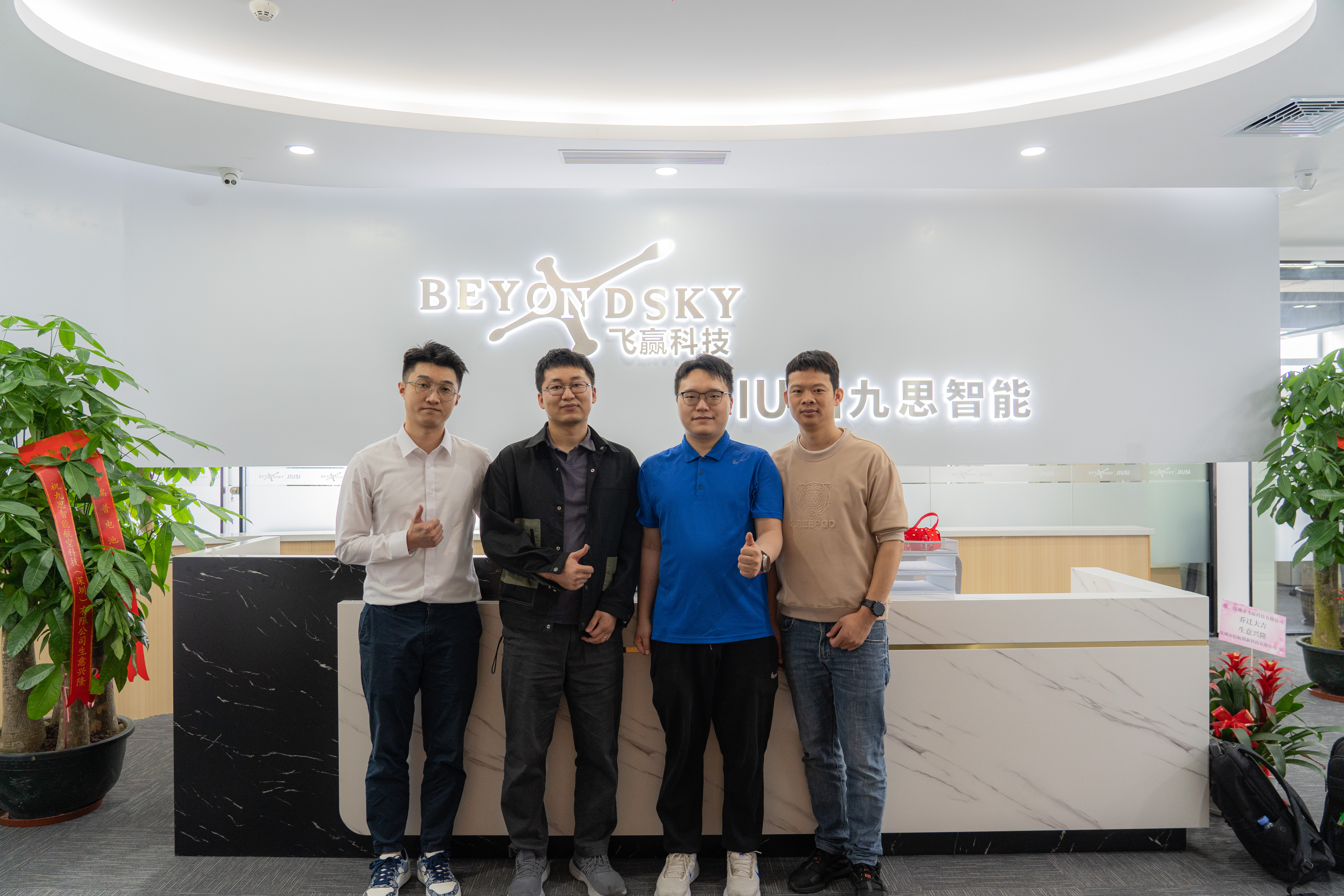
Group photo of TASLAB and Jiusi.