The 77th International Astronautical Congress (IAC 2026), held in Antalya, Türkiye, from 5 to 9 October 2026, brought together the international space community to share research, discuss future exploration and explore opportunities for cooperation.
The Hong Kong Polytechnic University (PolyU) participated through project exhibitions and academic forums. Its delegation showcased 10 ongoing space-related research projects, including TASLAB’s quadruped robot project for lunar exploration. TASLAB PhD student Xiangru Wang joined the delegation to introduce the project and PolyU’s wider space research to congress participants.
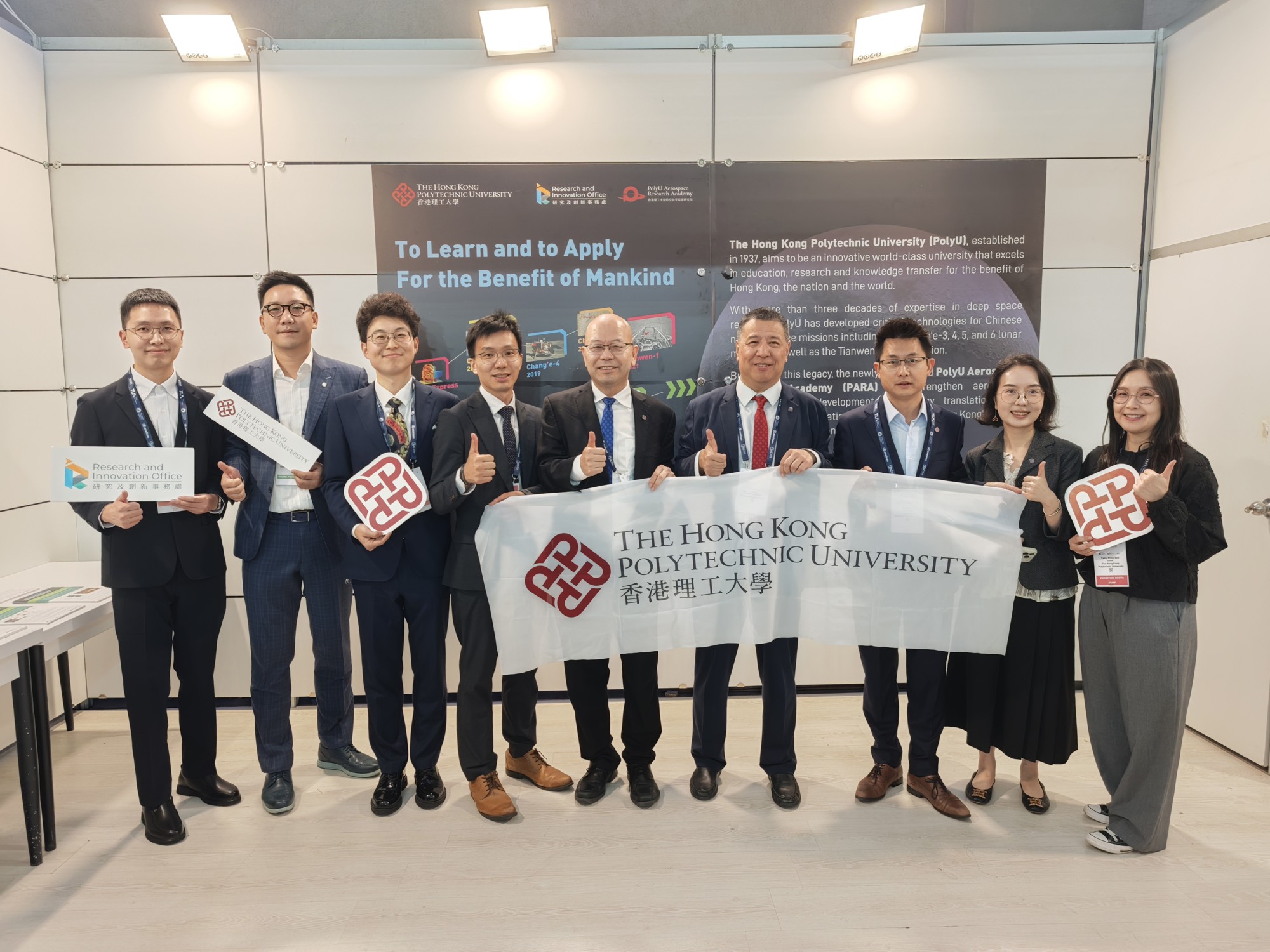
The PolyU delegation at the University's exhibition booth at IAC 2026 in Antalya.
Perspectives from the congress
The congress offered an opportunity to learn about the wider direction of space exploration through presentations and exhibitions from across the international space community. Yang Liwei, China’s first astronaut, outlined plans for the next phase of China’s crewed space programme, including the expansion of the China Space Station and preparations for a crewed lunar landing by 2030, as reported from the congress. Members of the PolyU delegation also had a group photograph with him during the congress.
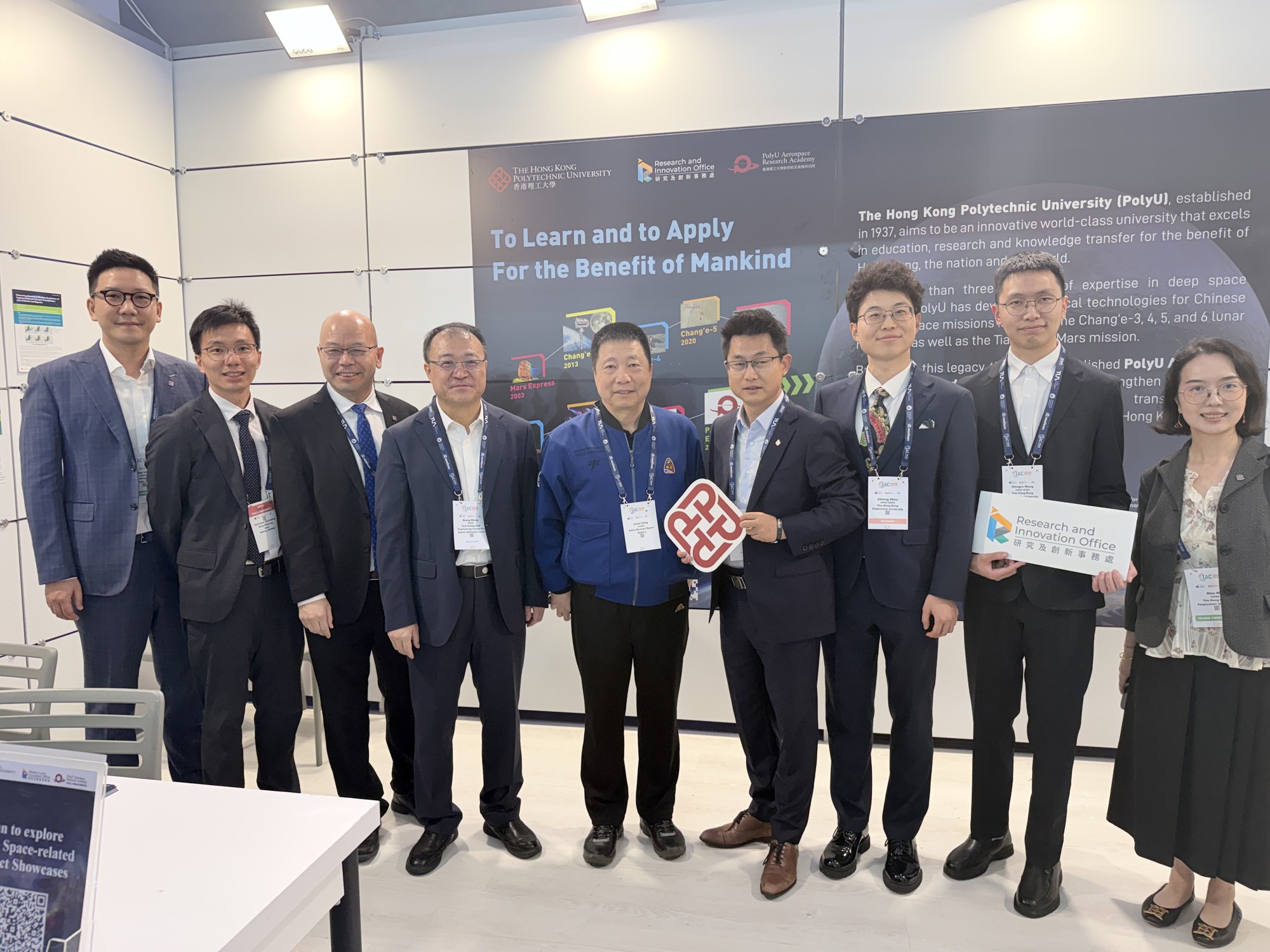
Members of the PolyU delegation with Yang Liwei, China's first astronaut.
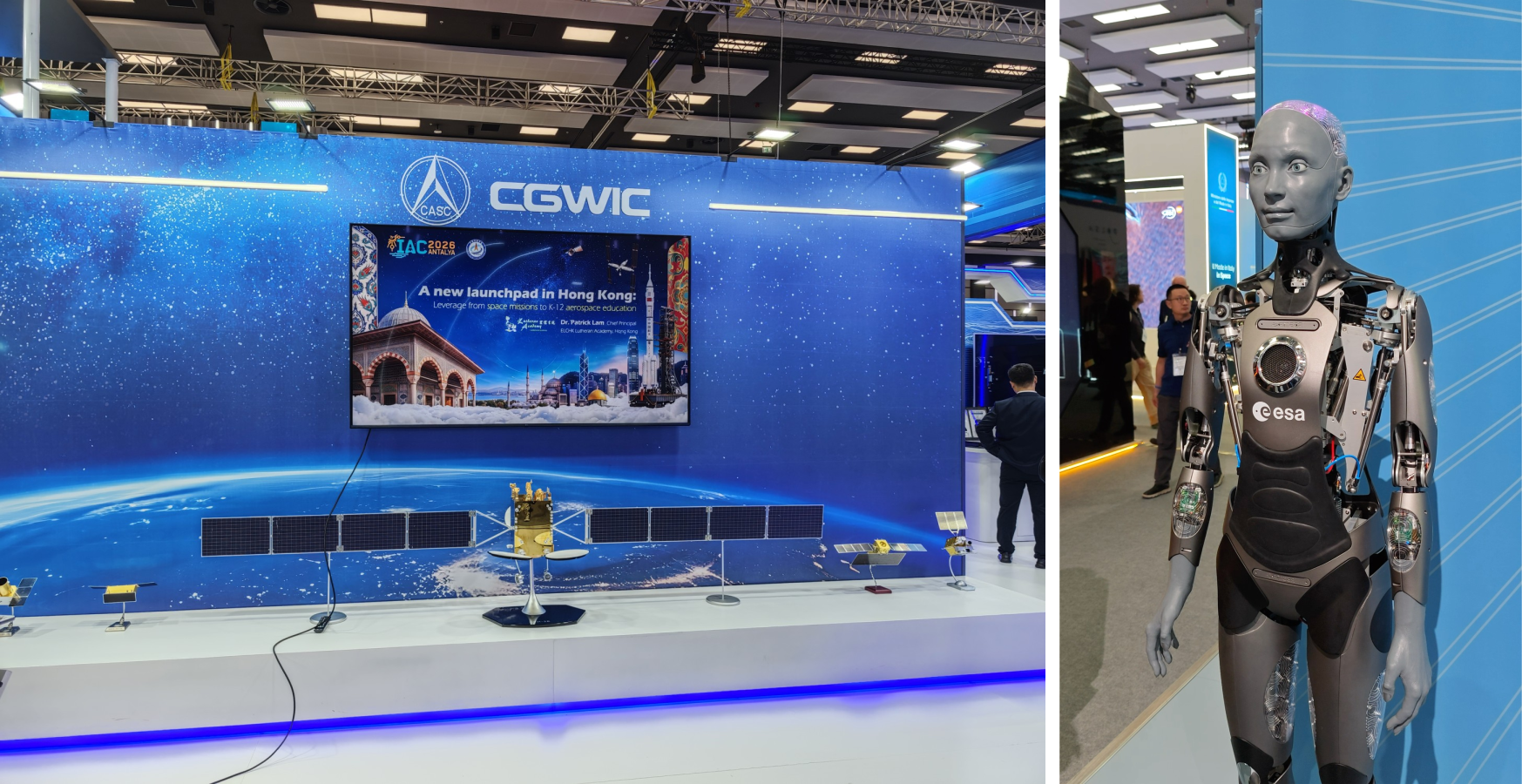
Visits to Chinese space-sector exhibits, including the China Great Wall Industry Corporation (CGWIC) booth, and the European Space Agency (ESA) exhibition offered further perspectives on spacecraft technologies and robotics. The satellite models at the Chinese exhibition and the humanoid robot displayed by ESA were among the memorable sights, complementing the delegation’s own discussions on future robotic exploration.
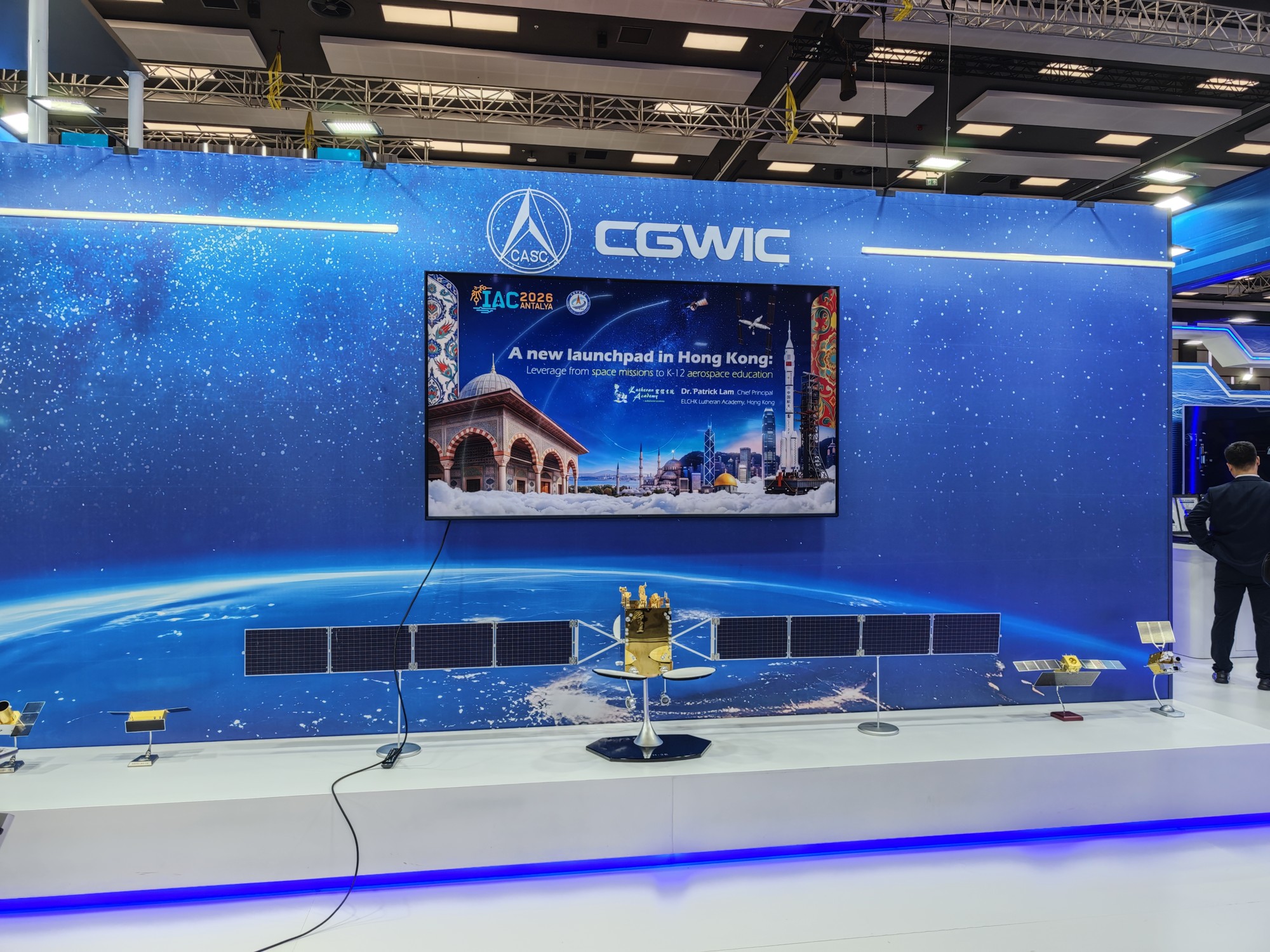
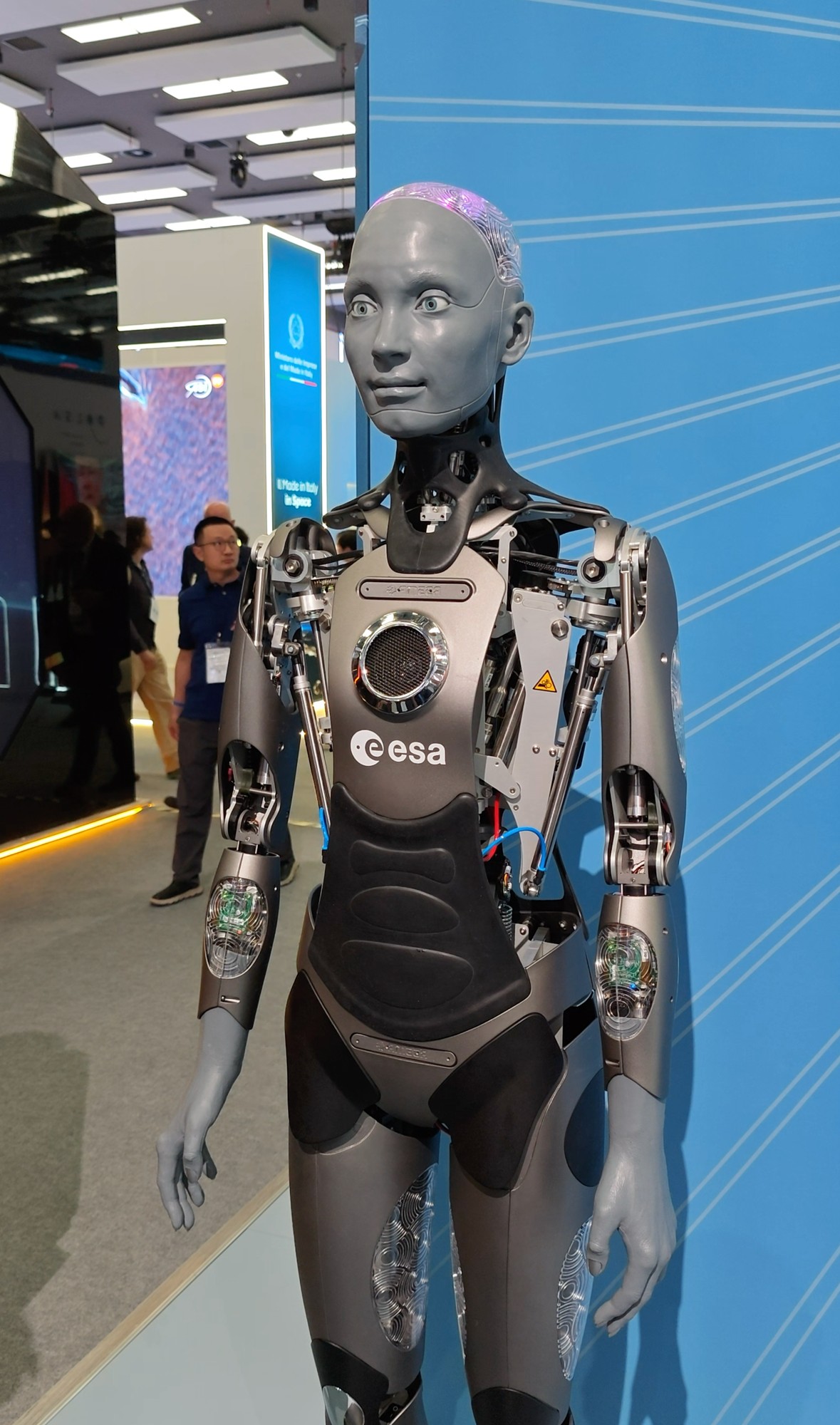
Exhibition highlights: satellite models at the CGWIC booth and a humanoid robot displayed by ESA. View the photo collage.
PolyU’s aerospace research and academic exchanges
The delegation’s participation came as PolyU expanded its aerospace research through the newly established PolyU Aerospace Research Academy (PARA). The Academy supports interdisciplinary research and talent development, technology transfer, and collaboration with industry, government and international partners. RCDSE is one of PARA’s constituent research units, connecting the lunar robotics project with this wider research community. More about the Academy’s development is available in PolyU’s announcement.
On 7 October, PolyU hosted the Global Networking Forum (GNF) “Space Governance: Hong Kong’s Role and Perspective”. Prof. Hongyu Yu, Executive Director of PARA, delivered the opening remarks, followed by a keynote by Mr Steve Gao, Associate Executive Director of PARA. A panel moderated by Mr Wu Lei of CGTN brought together representatives from international organisations, universities and industry to discuss space governance, international cooperation and sustainable space activities. The forum highlighted how Hong Kong’s research strengths and international connections can contribute to the space sector. PolyU’s congress report provides further details.
PolyU also contributed to the GNF session “Space Manufacturing: Driving the Next Revolution in Biotechnology, Advanced Materials, and Human Exploration”, where Prof. Xiewen Wen of the Department of Industrial and Systems Engineering shared perspectives on space manufacturing. These exchanges complemented the project exhibition by connecting research developments with wider discussions on governance, emerging technologies and international collaboration.
Sharing PolyU’s space research
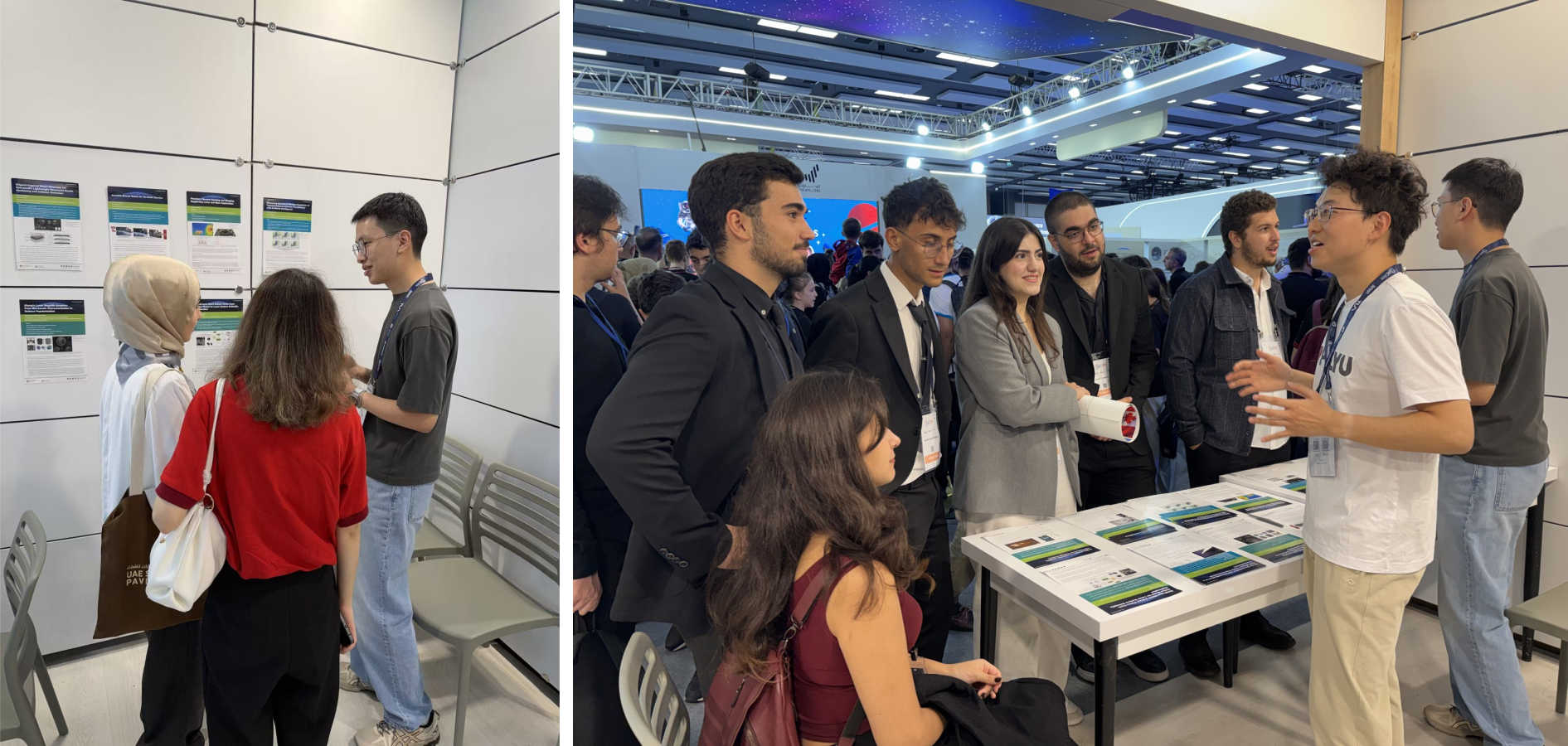
Through project posters, video presentations and discussions at the PolyU booth, the delegation shared the University’s ongoing work with visitors and explored interests in research collaboration. Xiangru helped introduce the lunar robotics project and the wider showcase of 10 projects, highlighting PolyU’s research capabilities and engagement with the international space community. The broader PolyU showcase covered areas including satellite technologies, planetary mapping, space robotics, lunar regolith studies and resource utilisation.
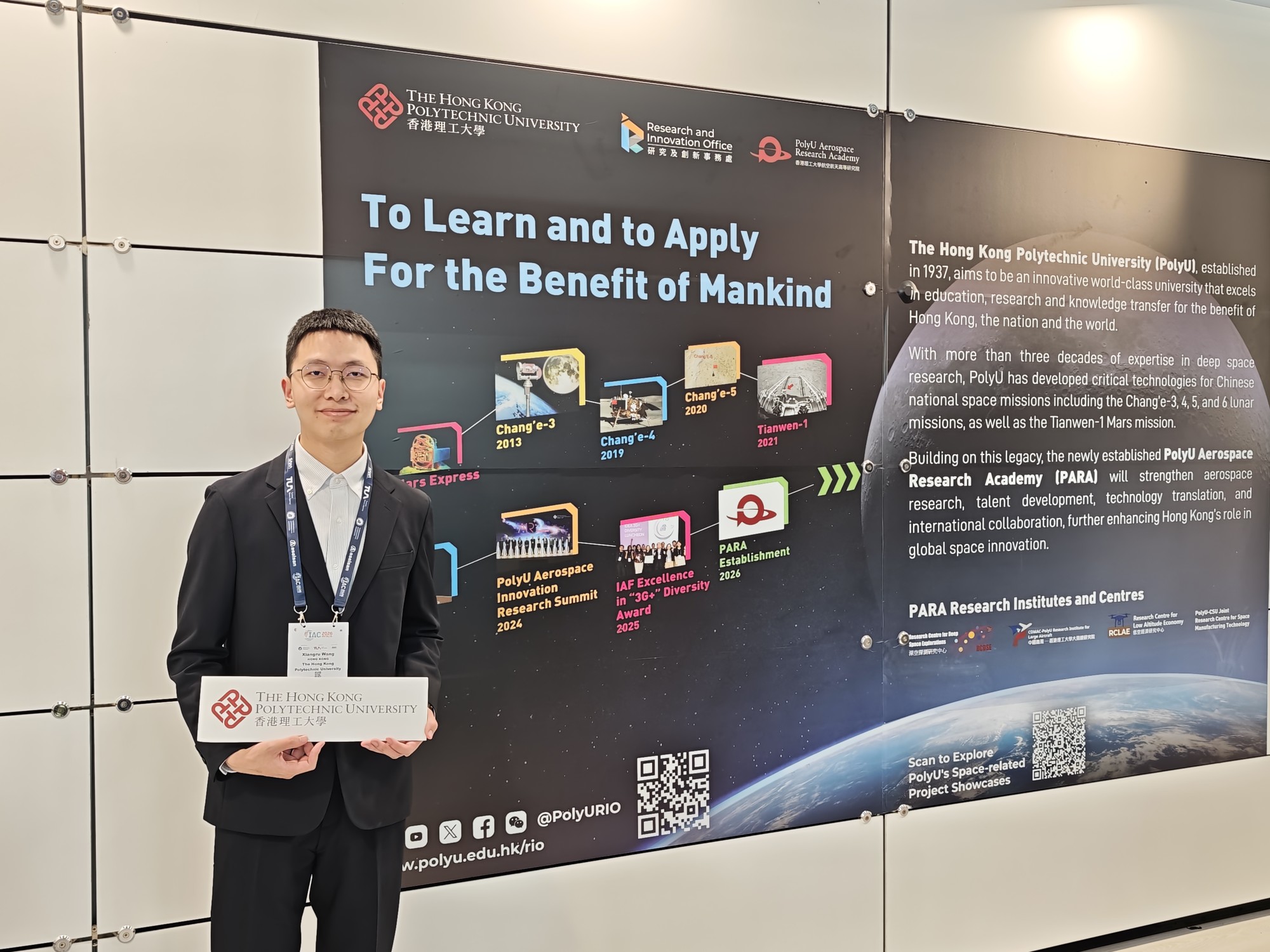
Xiangru Wang at the PolyU exhibition booth at IAC 2026.
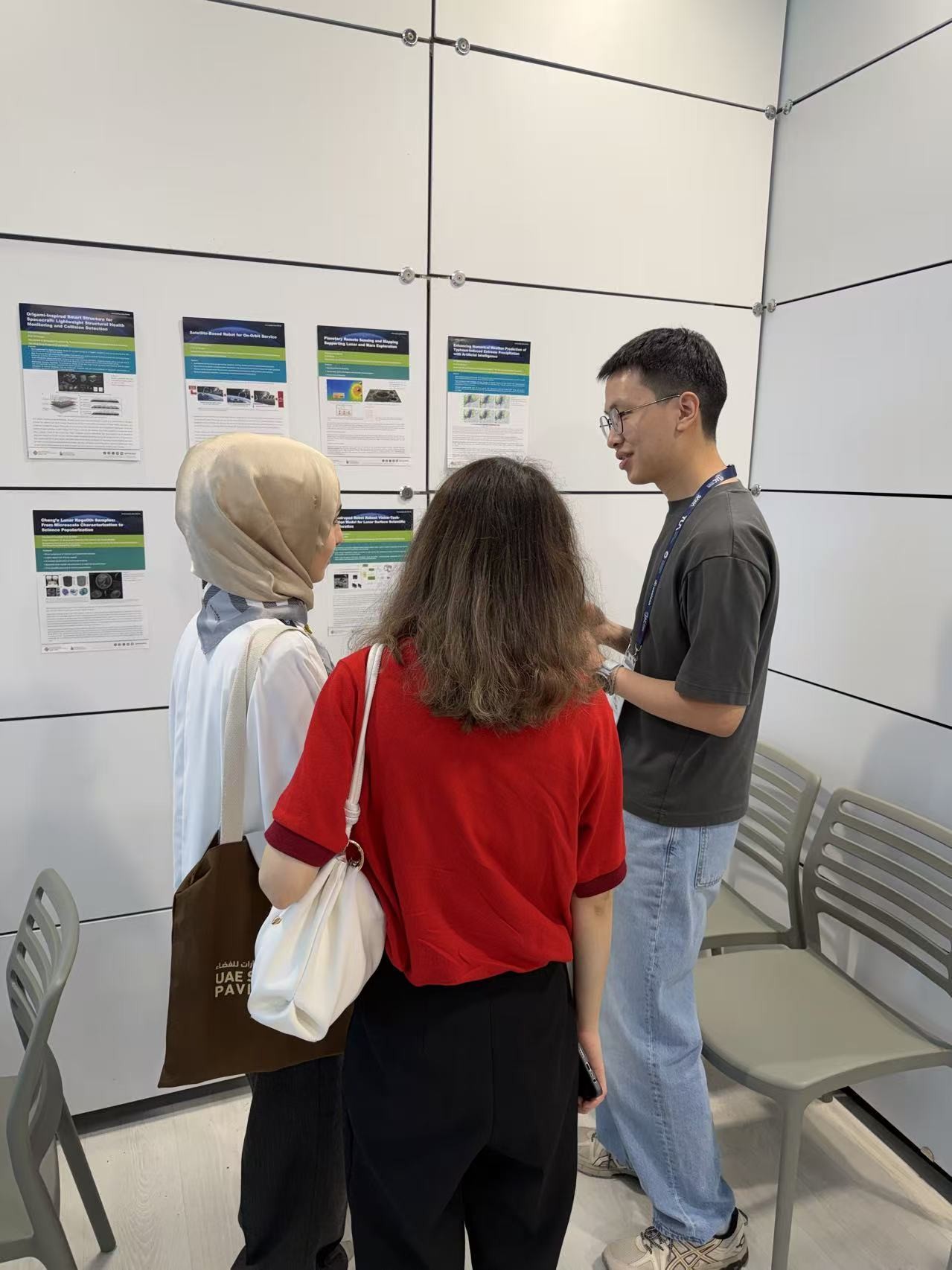
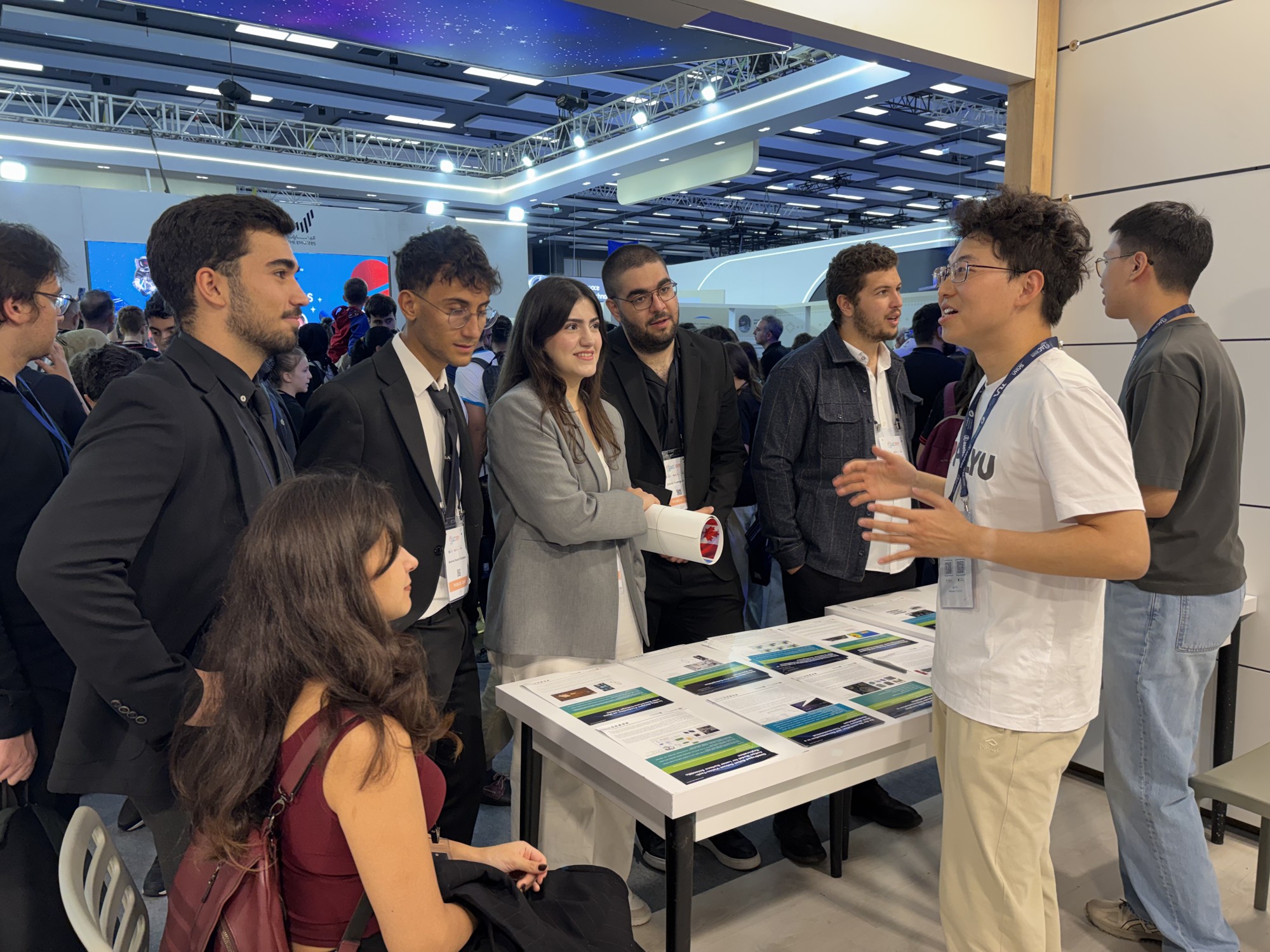
Project introductions and conversations with visitors at the PolyU booth. View the photo collage.
Quadruped robots for lunar exploration
Led by Prof. Weisong Wen and supported by seed funding from PolyU’s Research Centre for Deep Space Explorations (RCDSE), the project, “Quadruped Robot Robust Vision-Task-Action Model for Lunar Surface Scientific Exploration,” investigates how quadruped robots can support future scientific missions on challenging lunar terrain.
The ongoing research focuses on fault-tolerant locomotion, adaptation to lunar gravity and uneven surfaces, and autonomous task execution guided by visual observations and natural-language instructions. It aims to connect high-level scientific exploration tasks with robust robot navigation and control, including operation under joint or actuator failures. Planned validation includes testing with a gravity offload system.
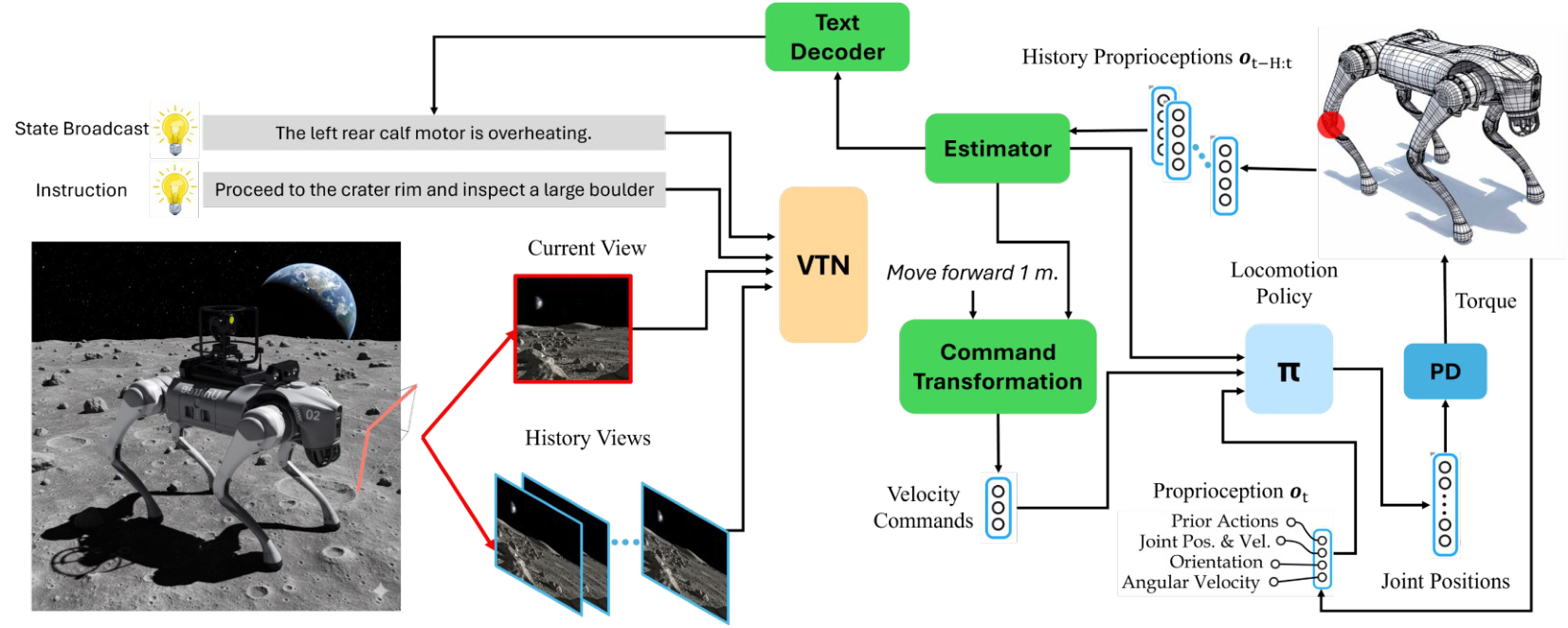
The project's system framework, combining visual task planning with fault-tolerant locomotion.
The project demonstration video presented progress in three areas: fault-tolerant locomotion under simulated leg failures, movement across simulated lunar terrain, and outdoor navigation trials with a physical quadruped robot. These demonstrations form part of the team’s ongoing development towards more resilient and autonomous exploration systems.
Full project demonstration: fault-tolerant locomotion, lunar terrain adaptation in simulation, and outdoor navigation with a physical quadruped robot. Watch on YouTube.
TASLAB thanks RCDSE for supporting the lunar robotics project and the PolyU delegation for the opportunity to share its ongoing research at IAC 2026.
Read more about PolyU’s participation in IAC 2026.