Prof. David M. Rosen Visits TASLAB for Academic Exchange on Trustworthy Autonomous Systems
Prof. David M. Rosen Visits TASLAB for Academic Exchange on Trustworthy Autonomous Systems
From 4 to 7 August 2026, the Trustworthy AI and Autonomous Systems Laboratory (TASLAB) at The Hong Kong Polytechnic University (PolyU) welcomed Prof. David M. Rosen of Northeastern University for an academic visit hosted by Prof. Weisong WEN. The visit included meetings with colleagues at The University of Hong Kong (HKU), a visit to TASLAB, research discussions with lab members, and an AAE research seminar, bringing together perspectives on the mathematical foundations and practical development of trustworthy autonomous systems.
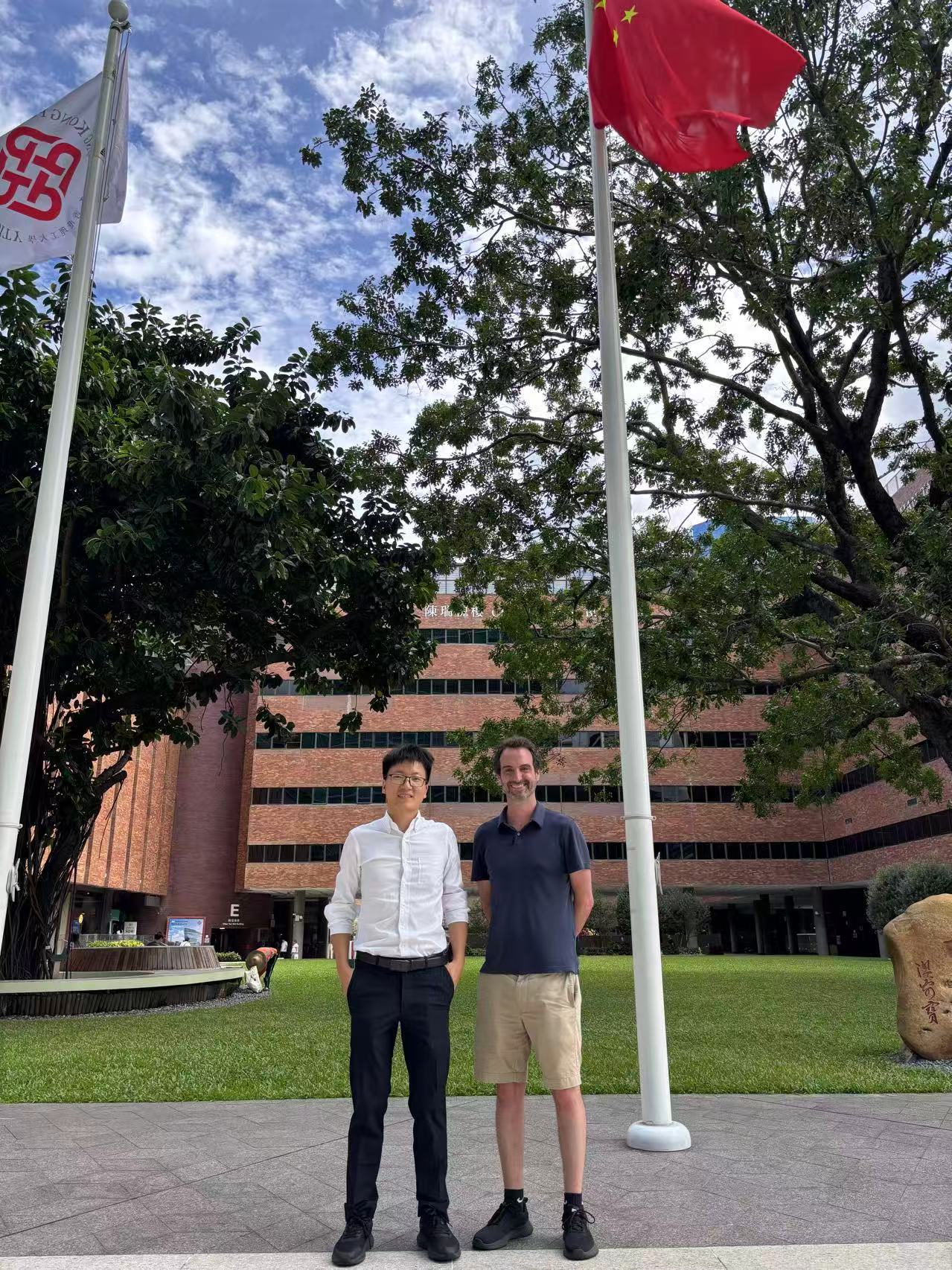
4 August: Visiting Colleagues at HKU
On the first day, Prof. Weisong WEN and Prof. David M. Rosen visited Prof. Peng LU and Prof. Chen SUN at HKU. These meetings connected the visiting Northeastern researcher with colleagues in Hong Kong and provided an opportunity for direct academic exchange across the three universities.
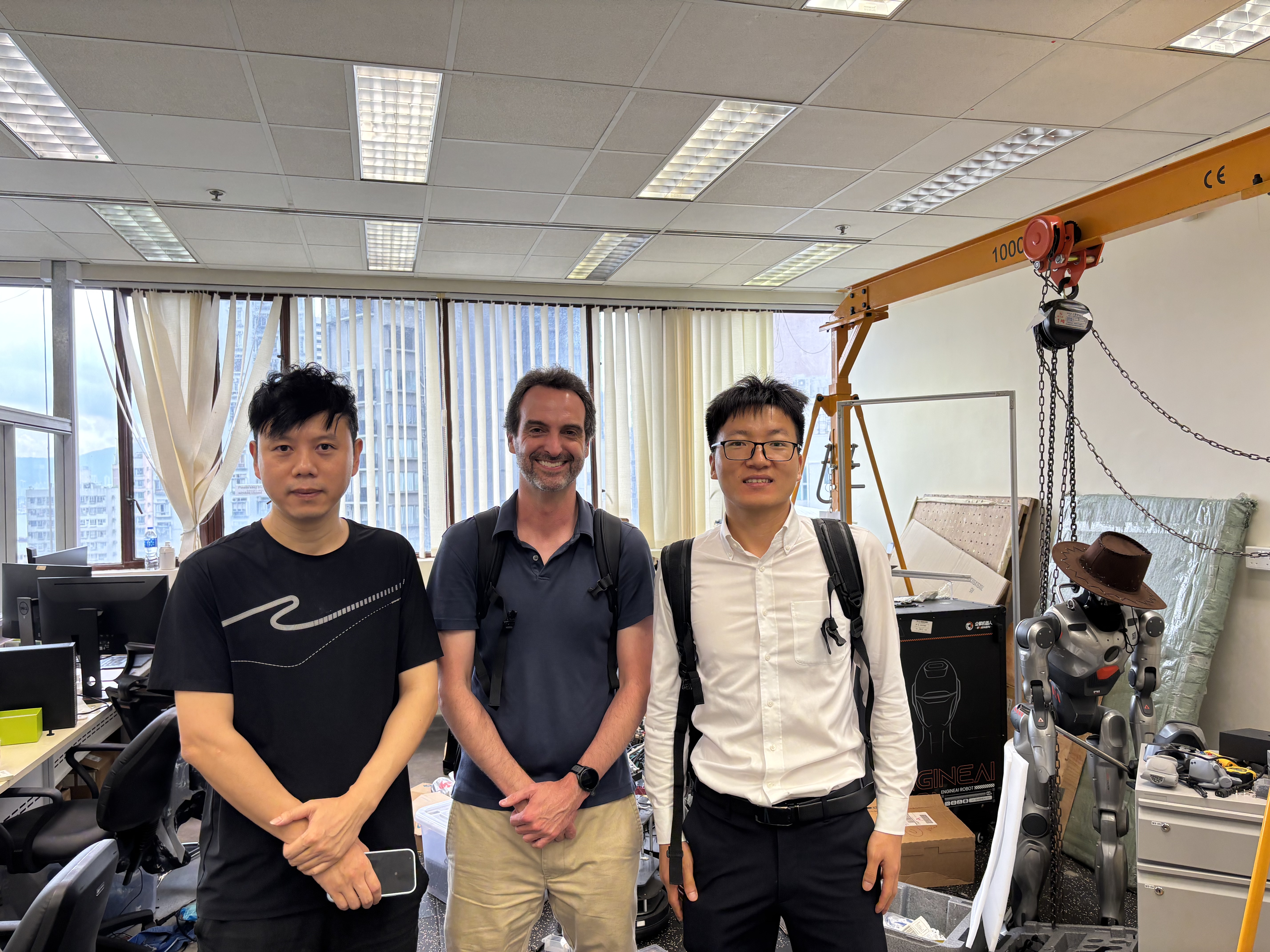
The visit with Prof. Peng LU included time in the laboratory, where the visitors viewed robotic hardware and experimental platforms. The photographs capture both a group portrait beside a humanoid robot and an informal discussion around laboratory equipment. This setting brought the exchange close to the physical systems through which robotics research is developed and evaluated.
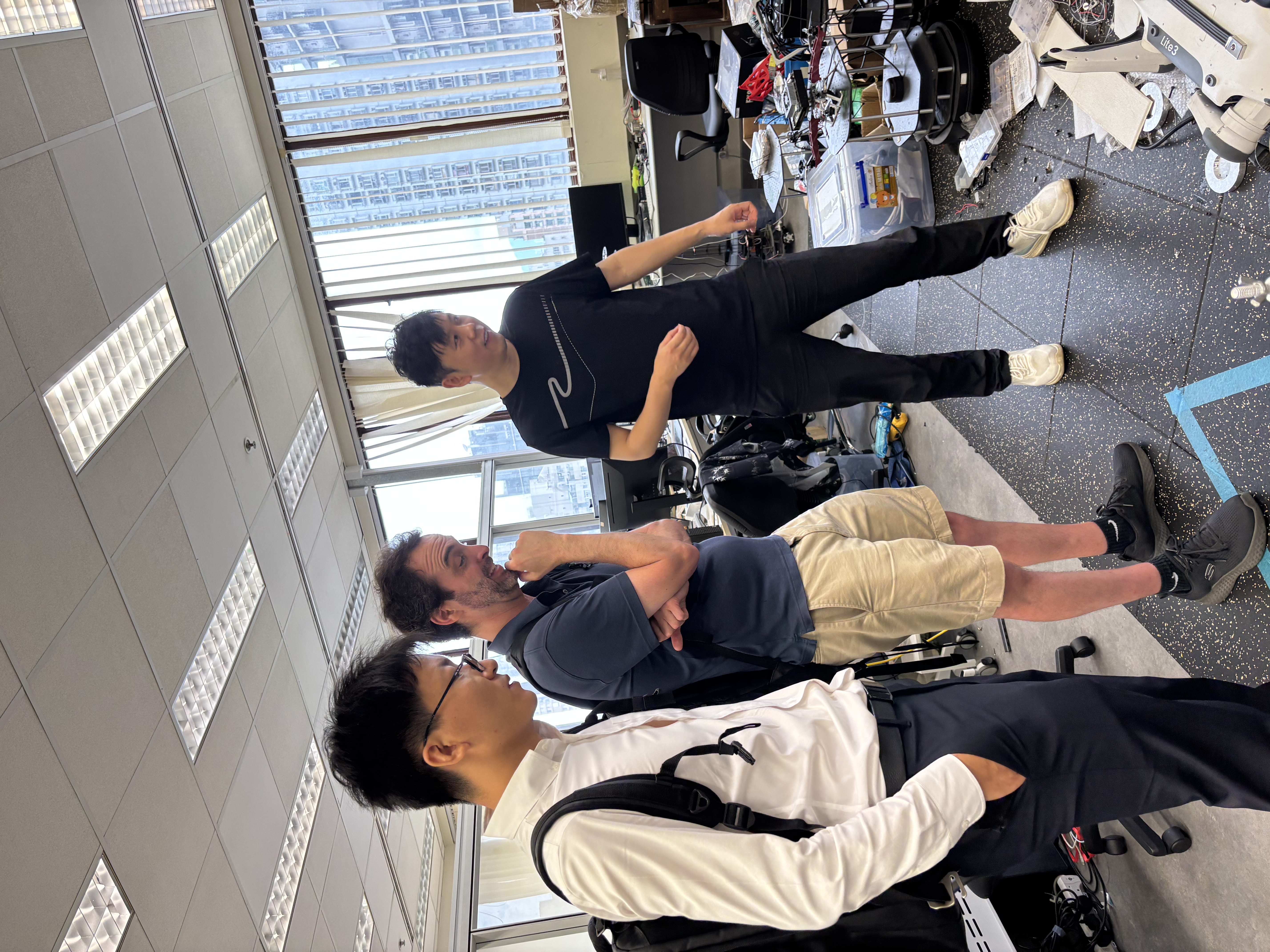
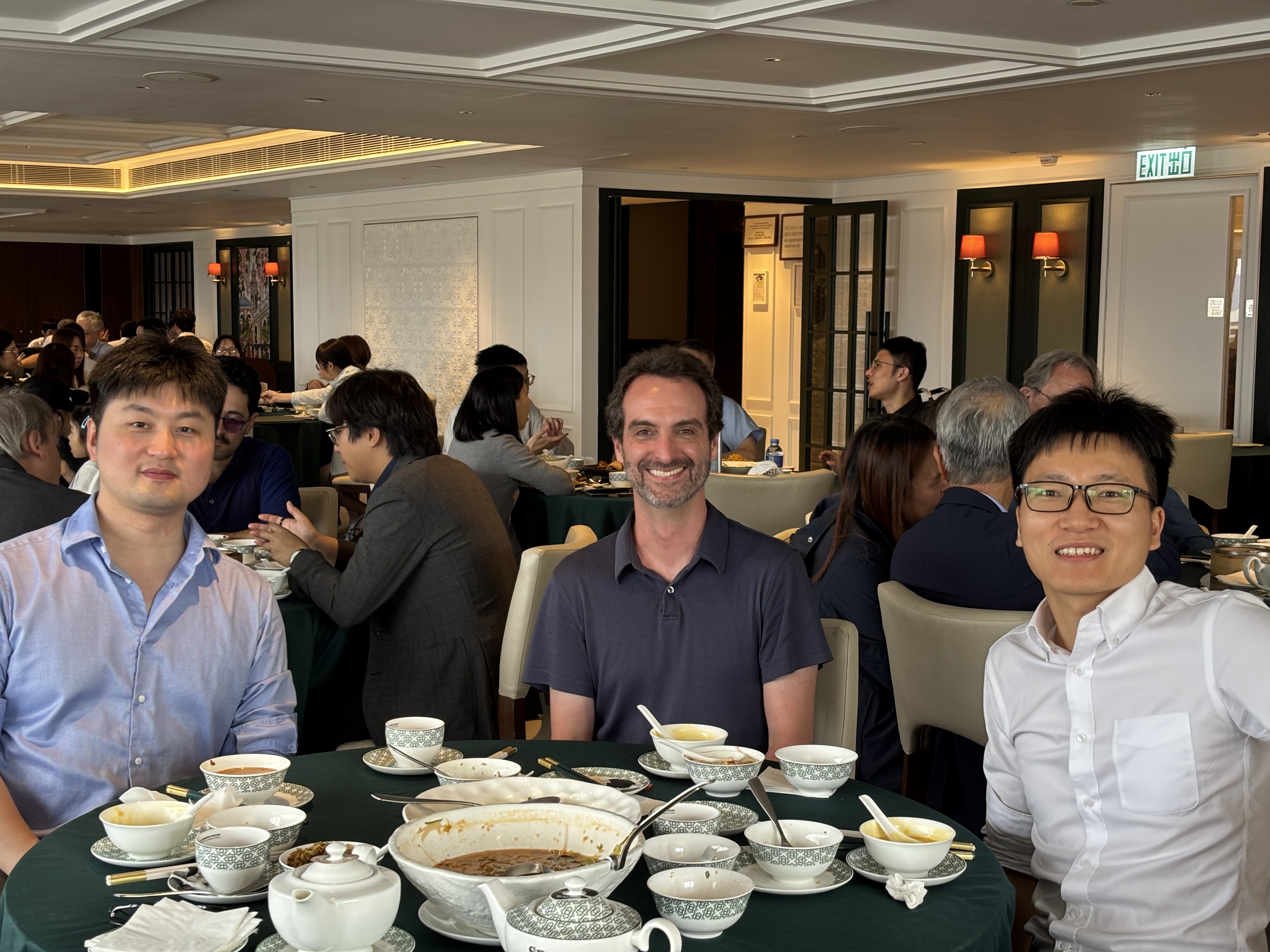
Prof. WEN and Prof. Rosen also met with Prof. Chen SUN. Alongside the laboratory visit, the informal meeting offered time for conversation and helped establish personal connections among the participating researchers.
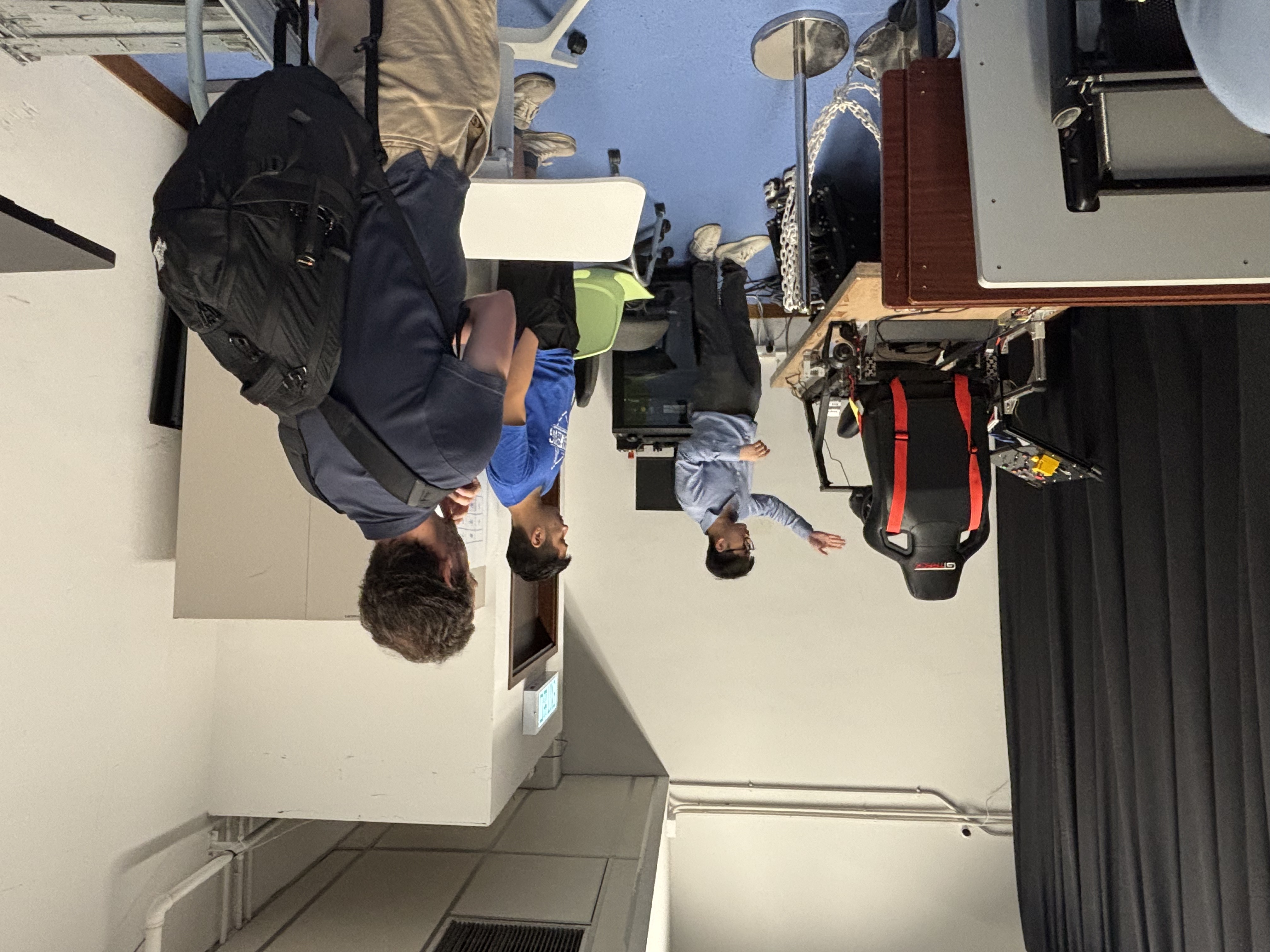
During the visit to Prof. Chen SUN’s laboratory at HKU, Prof. WEN and Prof. Rosen were introduced to a seated simulator platform. The laboratory visit complemented their research conversations with a closer look at the team’s experimental facilities, connecting academic exchange with the practical systems used in research.
5 August: Visiting TASLAB and Discussing Research
On the second day, Prof. Rosen visited TASLAB and joined discussions with lab members. Research presentations and smaller group exchanges gave participants an opportunity to explain their work and examine technical questions together. The discussions covered topics spanning navigation, learning under uncertainty, and optimization for planning and control.
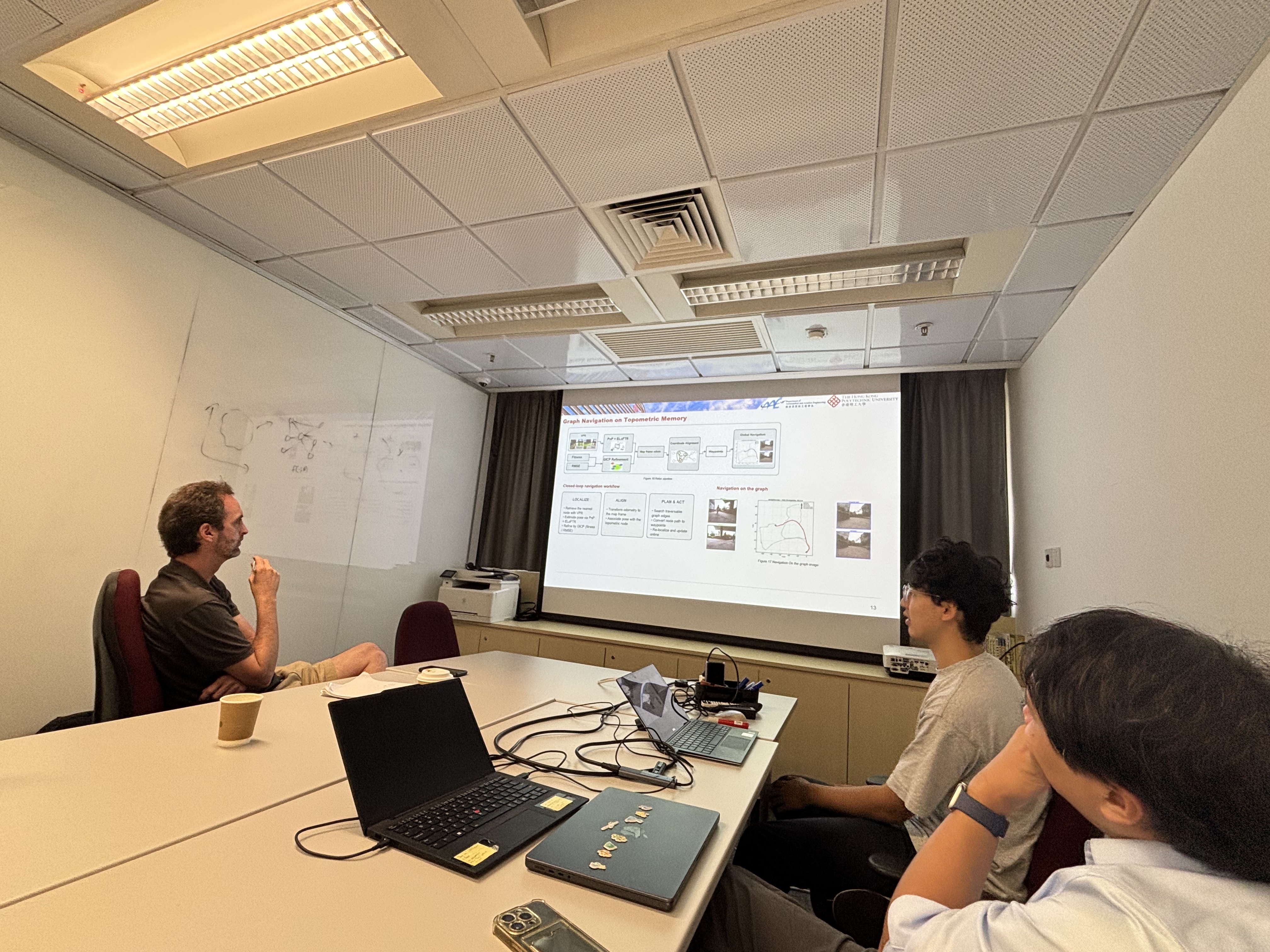
Graph navigation using topometric memory. One presentation introduced graph navigation on topometric memory, with a workflow connecting localization, alignment, planning, and action. The material linked representations of the environment to the steps a robot takes to navigate through it, providing a concrete basis for discussing how stored spatial information supports autonomous operation.
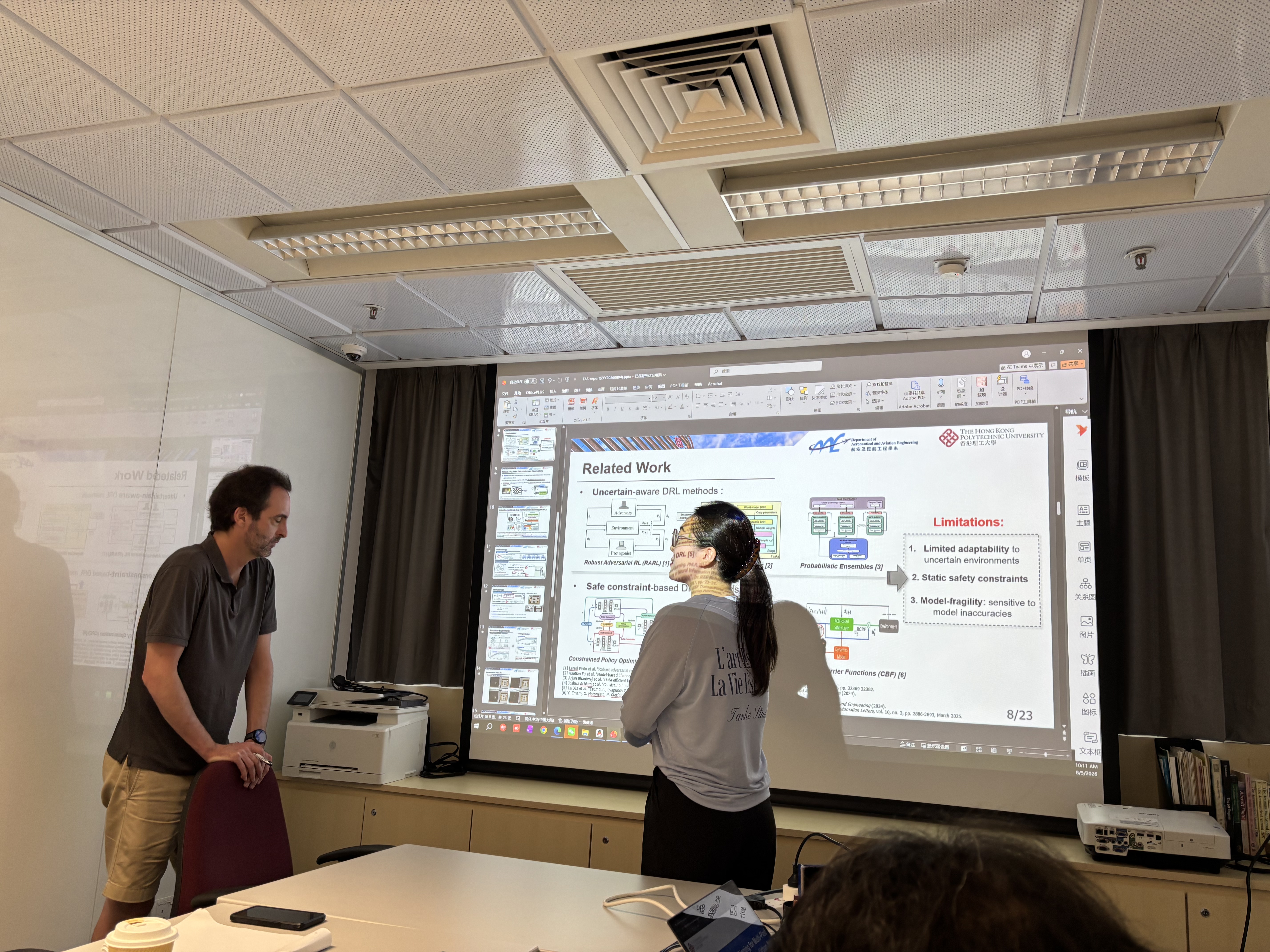
Safe learning in uncertain environments. Another exchange examined related work on uncertainty-aware deep reinforcement learning and methods incorporating safety constraints. The displayed material highlighted challenges including adaptation to uncertain environments, static safety constraints, and sensitivity to model inaccuracies. These questions are central to understanding how learning-based methods can support dependable robot behaviour beyond controlled experiments.
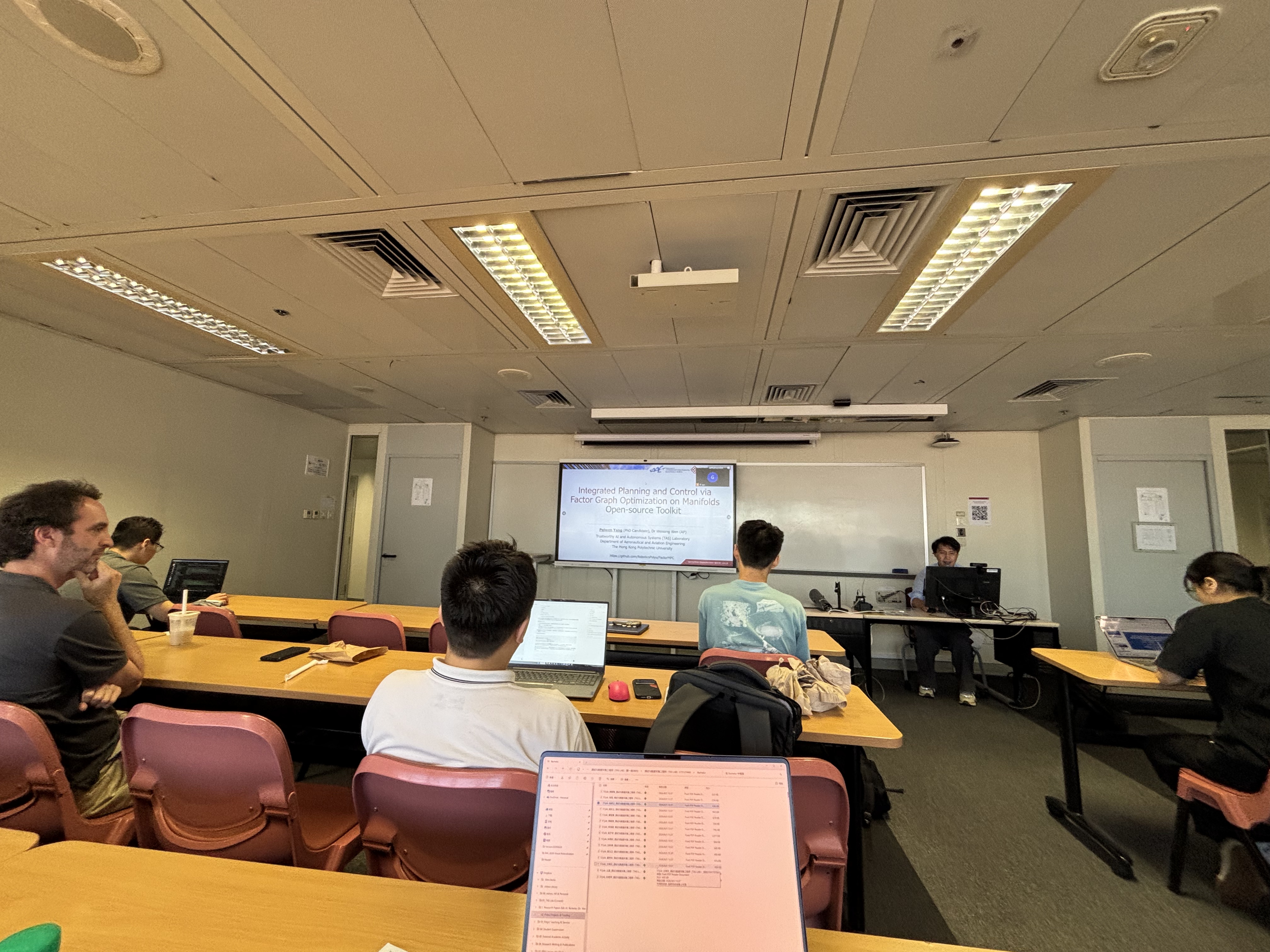
Integrated planning and control through factor graph optimization. A further presentation featured an open-source toolkit for integrated planning and control via factor graph optimization on manifolds. This topic connected optimization methods with robot motion, complementing the discussions of navigation and safe learning. Together, the presentations illustrated several stages of an autonomous system’s operation: representing its surroundings, selecting actions, and planning and controlling movement.
6 August: AAE Seminar on Certifiably Correct State Estimation
On 6 August 2026, Prof. Rosen delivered “Certifiably Correct State Estimation” as part of the AAE Seminar Series, organised by PolyU’s Department of Aeronautical and Aviation Engineering. The seminar took place from 14:30 to 15:30 in FJ301.
The talk addressed a central difficulty in robotic state estimation: nonconvex optimisation can lead conventional methods to poor local solutions, producing unreliable estimates. Using problems such as simultaneous localisation and mapping (SLAM) and 3D reconstruction as context, Prof. Rosen presented certifiable approaches based on convex relaxation that can establish global optimality under suitable conditions.
The seminar also traced the progression from specialised algorithms to more general tools for developing certifiable estimators, including approaches to large computational problems and corrupted measurements. These themes connected closely with the visit’s focus on trustworthy autonomous systems and the need for estimation methods that combine computational efficiency with robustness and mathematical guarantees. Further details are available in the official AAE seminar announcement.
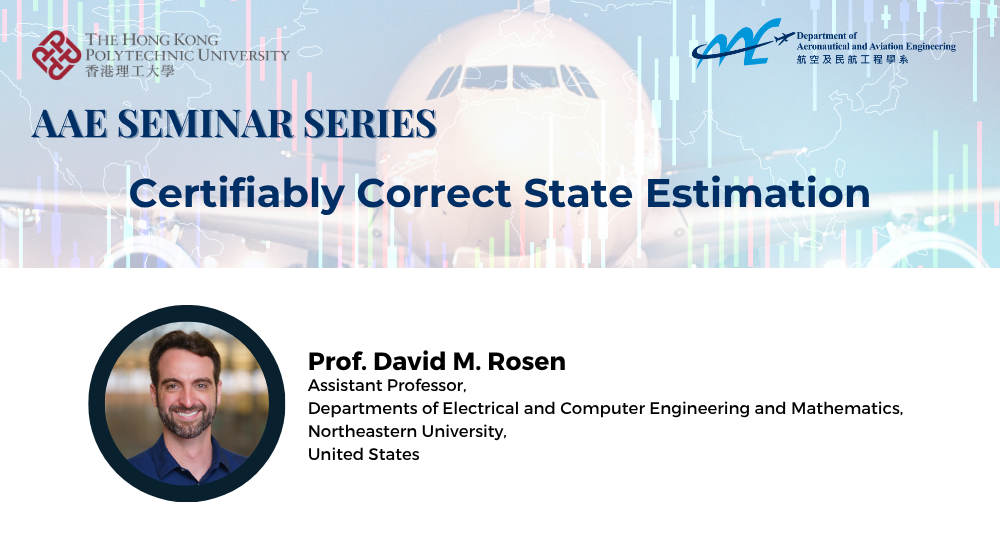
About Prof. David M. Rosen
According to his Northeastern University faculty profile, Prof. Rosen is an Assistant Professor in Electrical and Computer Engineering and Mathematics, with a courtesy appointment in the Khoury College of Computer Sciences. His research addresses the mathematical and algorithmic foundations of trustworthy autonomy, particularly efficient algorithms with provable guarantees for perception and control. His work includes optimization approaches to simultaneous localization and mapping (SLAM), making his research closely relevant to TASLAB’s interest in dependable autonomous systems.
TASLAB thanks Prof. Rosen for visiting and engaging with the team, and Prof. Peng LU and Prof. Chen SUN for their hospitality at HKU. The visit provided a valuable opportunity for researchers to share ideas across institutions and build connections for future academic exchange in trustworthy AI and autonomous systems.