PolyU and CUHK-Shenzhen Successfully Co-host Joint Workshop on AI and Intelligent Robotics
PolyU and CUHK-Shenzhen Successfully Co-host Joint Workshop on AI and Intelligent Robotics
The Hong Kong Polytechnic University (PolyU) and The Chinese University of Hong Kong, Shenzhen (CUHK-Shenzhen) successfully co-hosted a Joint Workshop on AI and Intelligent Robotics on 22 August 2026 at CUHK-Shenzhen. The workshop brought together faculty members and students from both universities for an afternoon of research presentations, technical discussions, and laboratory exchange.
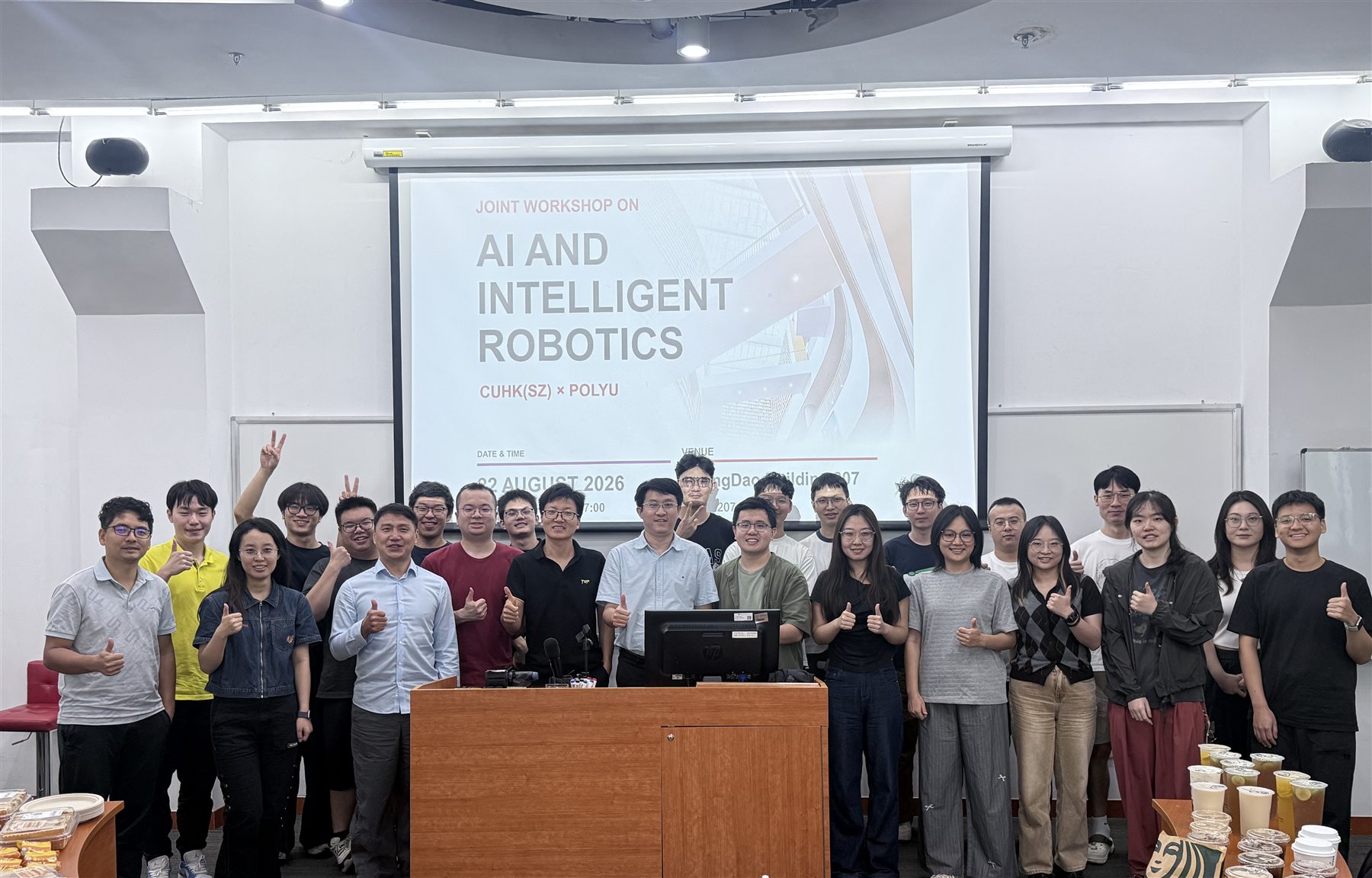
Faculty members and students from PolyU and CUHK-Shenzhen at the Joint Workshop on AI and Intelligent Robotics.
Workshop Background
Rapid advances in artificial intelligence are reshaping how robots perceive, reason, navigate, and interact with people and complex environments. At the same time, deploying intelligent robots in transportation, healthcare, and other safety-critical settings requires dependable perception, localization, planning, control, and human-robot collaboration. The joint workshop was established to connect complementary research from PolyU and CUHK-Shenzhen, give young researchers a focused platform for presenting work in progress, and encourage direct discussion of shared technical challenges and potential collaborations.
Participating Teams
PolyU team. Led by Prof. Weisong Wen, the PolyU participants represented the Trustworthy AI and Autonomous Systems Laboratory in the Department of Aeronautical and Aviation Engineering. Their presentations focused on safe autonomous-system planning and control, embodied navigation, robust multi-sensor positioning, infrastructure-light localization, urban vehicle positioning, and seamless indoor-outdoor SLAM. The PolyU student presenters were Peiwen Yang, Jianhao Jiao, Xiangru Wang, Naigui Xiao, Yu Feng, Feng Huang, and Ruijie Xu.
CUHK-Shenzhen team. Led by Prof. Fangxun Zhong, the CUHK-Shenzhen participants contributed research in intelligent healthcare and autonomous robotics, including endoscopic 3D perception, autonomous surgical tasks, vision-guided endoscope control, language-guided robot perception, hand-eye calibration, and real-time AI guidance for clinical procedures. The CUHK-Shenzhen student presenters were Shaoming Li, Hongrong Yang, Junfeng Zou, Che Cheng, Yi Zhu, and Hongjie Zhu.
Prof. Fangxun Zhong and Prof. Weisong Wen opened the programme and welcomed participants. Across two presentation sessions, researchers from the two universities shared work spanning safe path planning and control, endoscopic 3D perception, embodied navigation, surgical robotics, GNSS/IMU smoothing, vision-guided robotic systems, LiDAR/IMU/UWB integration, language-guided robot perception, infrastructure-light localization, robot hand-eye calibration, roadside-GNSS-aided vehicle positioning, AI-assisted clinical guidance, and radio-aided SLAM.
The compact presentation format combined focused talks with question-and-answer sessions, encouraging participants to compare methods, discuss practical challenges, and identify connections between research in trustworthy autonomous systems and intelligent robotics. A group discussion further explored promising research directions and opportunities for continued academic exchange.
Workshop Rundown
The workshop was held in ChengDao Building 207 at CUHK-Shenzhen from 1:30 pm to 5:00 pm. Each student presentation was allocated ten minutes, comprising an eight-minute presentation and two minutes for questions and answers.
| Time | Presenter / Lead | Presentation or Activity | Affiliation |
|---|---|---|---|
| 13:30–13:40 | Prof. Fangxun Zhong and Prof. Weisong Wen | Opening Remarks and Programme Overview | CUHK-Shenzhen and PolyU |
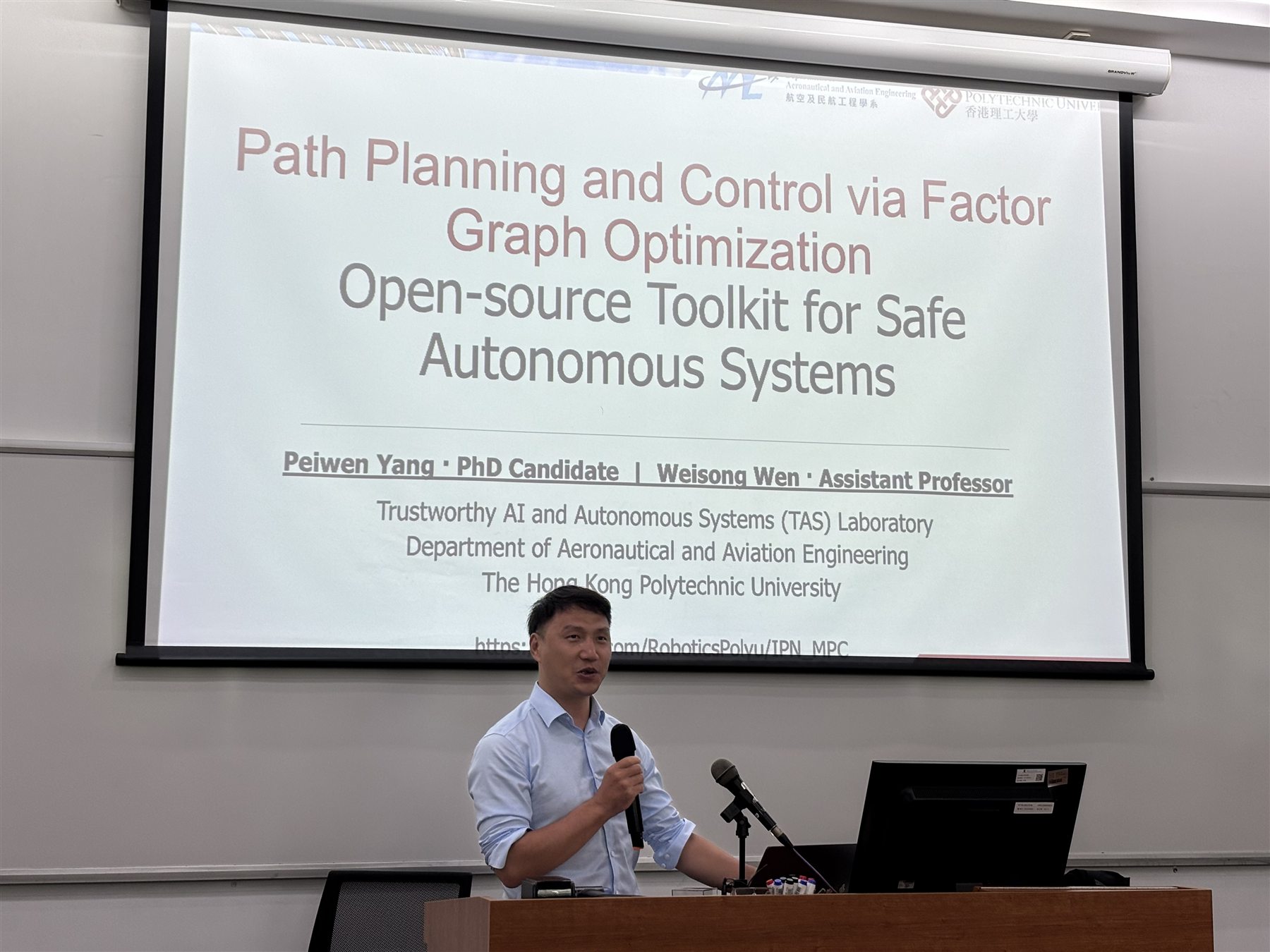
| 13:40–13:50 | Peiwen Yang | Path Planning and Control via Factor Graph Optimization: Open-source Toolkit for Safe Autonomous Systems | PolyU |
| 13:50–14:00 | Shaoming Li | SURE-3D: Robot-Ready Endoscopic 3D Perception | CUHK-Shenzhen |
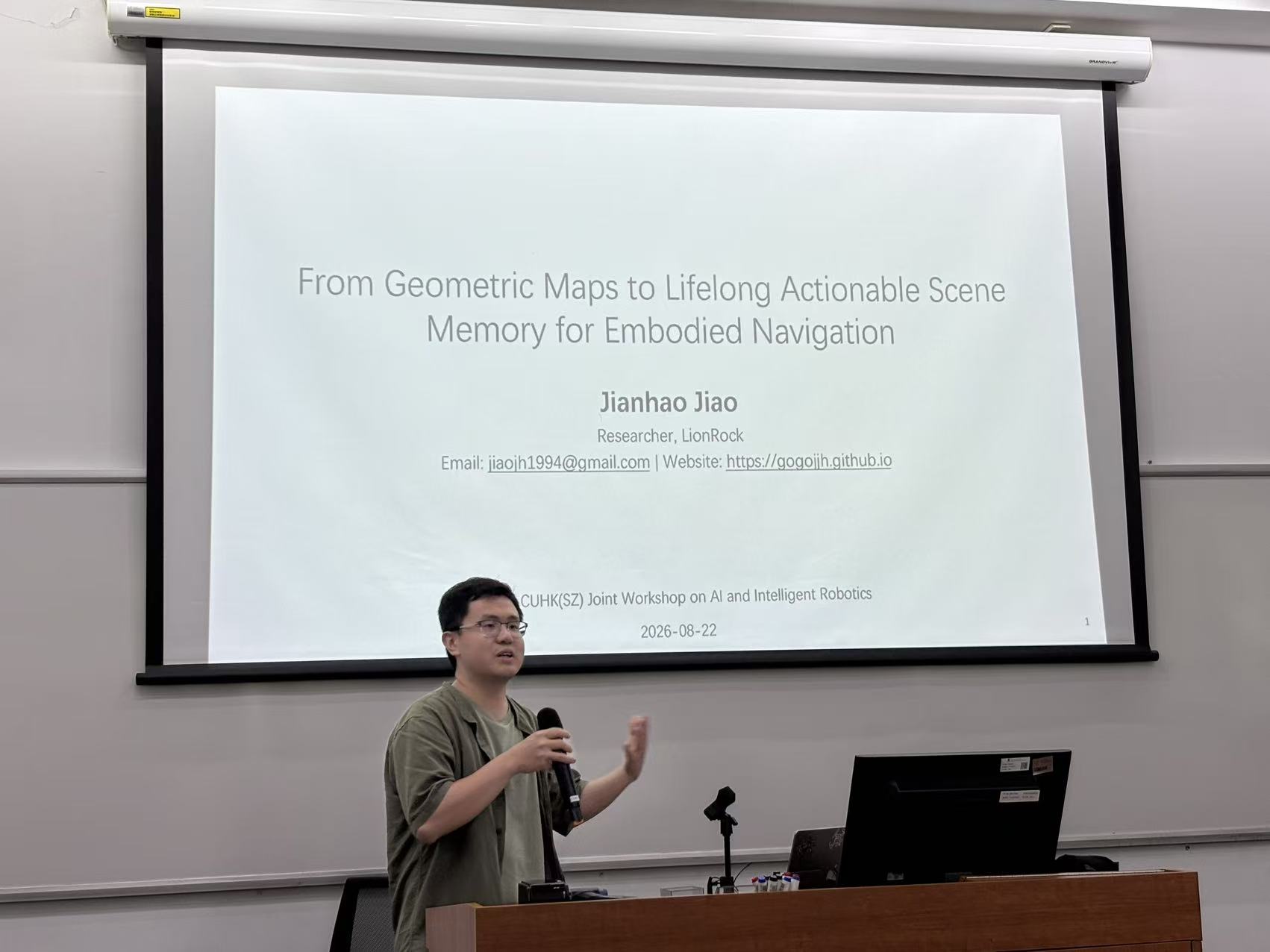
| 14:00–14:10 | Jianhao Jiao | From Geometric Maps to Lifelong Actionable Scene Memory for Embodied Navigation | LionRock AI and PolyU |
| 14:10–14:20 | Hongrong Yang | Toward Surgical-Task Autonomy: Integrated Robotic Control and Real-Time Soft-Tissue Simulation | CUHK-Shenzhen |
| 14:20–14:30 | Xiangru Wang | Efficient Solution Separation for Continuous Weight Tightly Coupled GNSS/IMU Smoothing | PolyU |
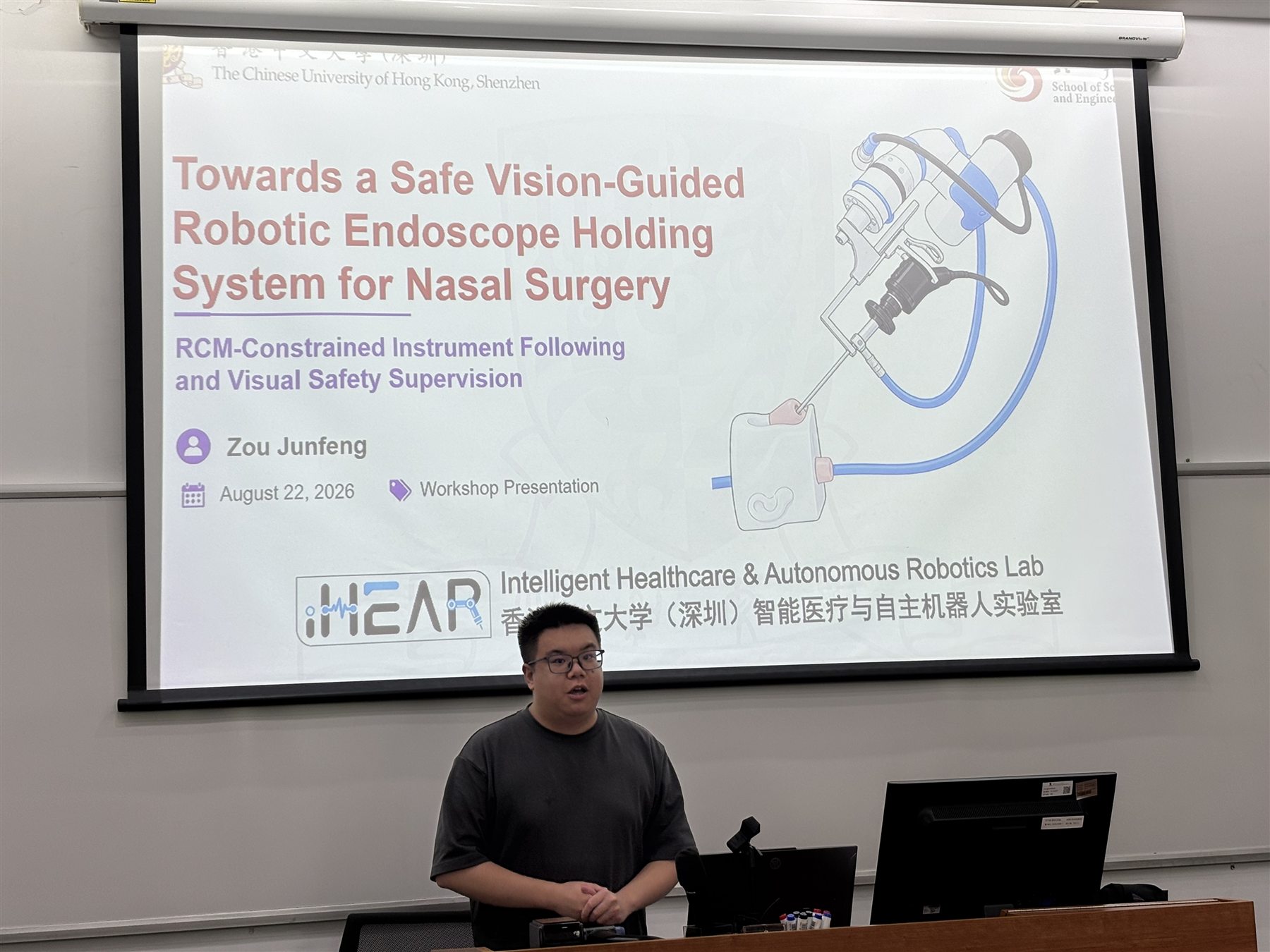
| 14:30–14:40 | Junfeng Zou | Towards a Safe Vision-Guided Robotic Endoscope Holding System for Nasal Surgery | CUHK-Shenzhen |
| 15:00–15:20 | All participants | Coffee Break and Networking | — |
| 15:20–15:30 | Naigui Xiao | Outlier-Aware LiDAR/IMU/UWB Integration with NLOS Mitigation and Anchor Self-Calibration in Complex Scenarios | PolyU |
| 15:30–15:40 | Che Cheng | Predictions Are Not Decisions: Making Language-Guided Robot Perception Usable and Diagnosable | CUHK-Shenzhen |
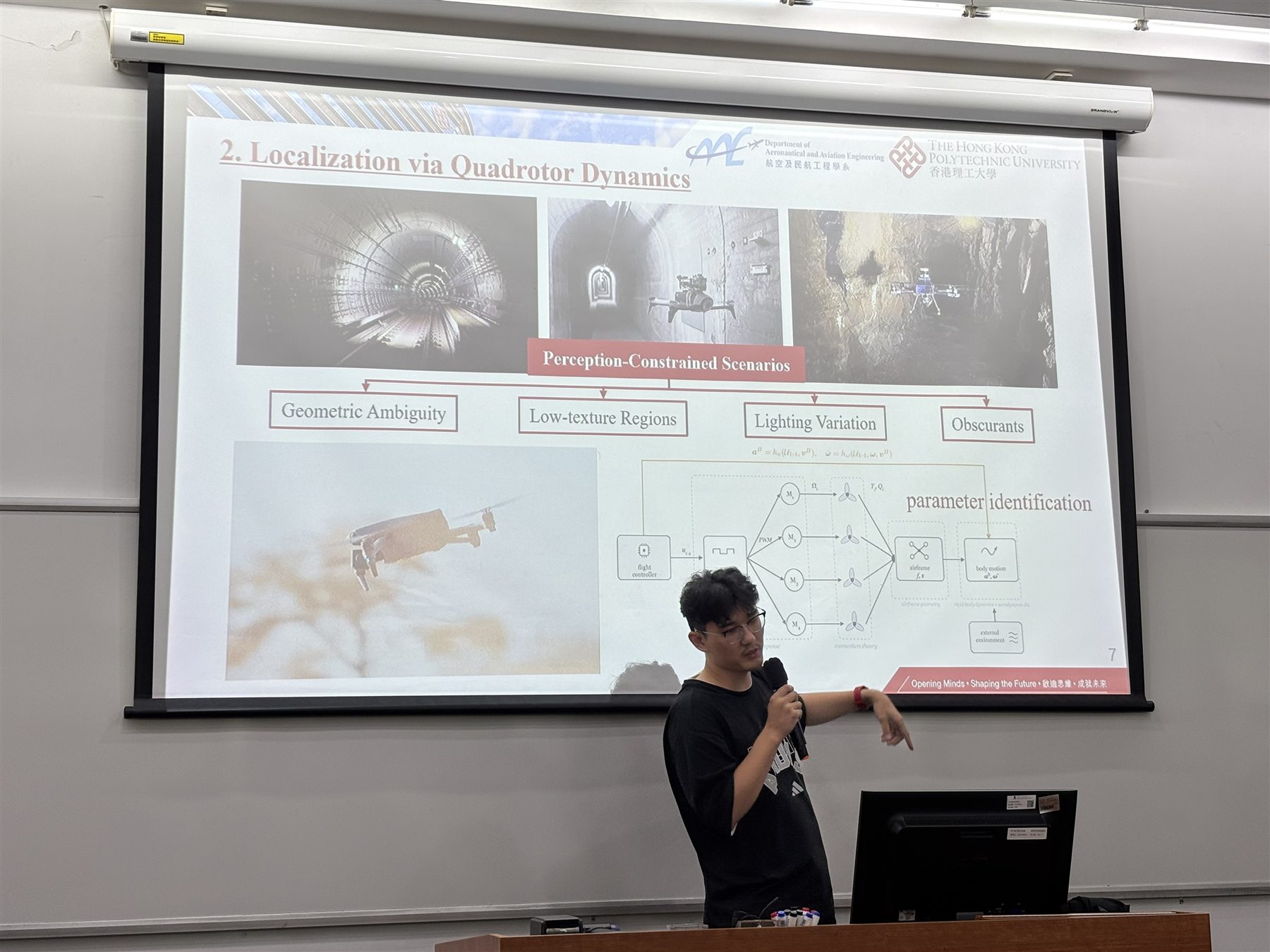
| 15:40–15:50 | Yu Feng | Doing More with Less: Infrastructure-Light Localization and Navigation for Robots | PolyU |
| 15:50–16:00 | Yi Zhu | One Point Is Enough: Autonomous In Situ Robot Hand-Eye Calibration via a Single Unstructured Point Using View-Consistency Interactive Constraint | CUHK-Shenzhen |
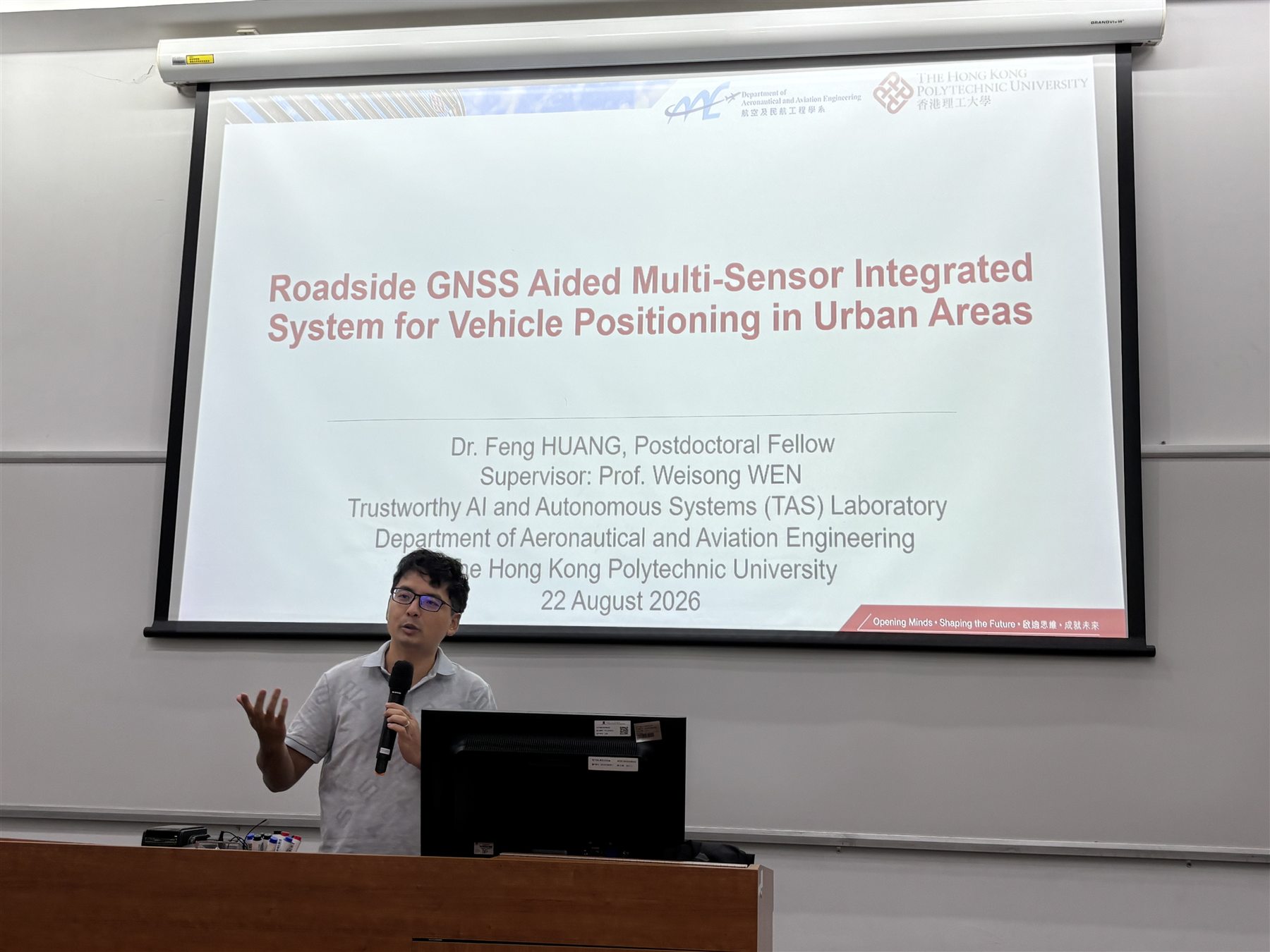
| 16:00–16:10 | Feng Huang | Roadside GNSS Aided Multi-Sensor Integrated System for Vehicle Positioning in Urban Areas | PolyU |
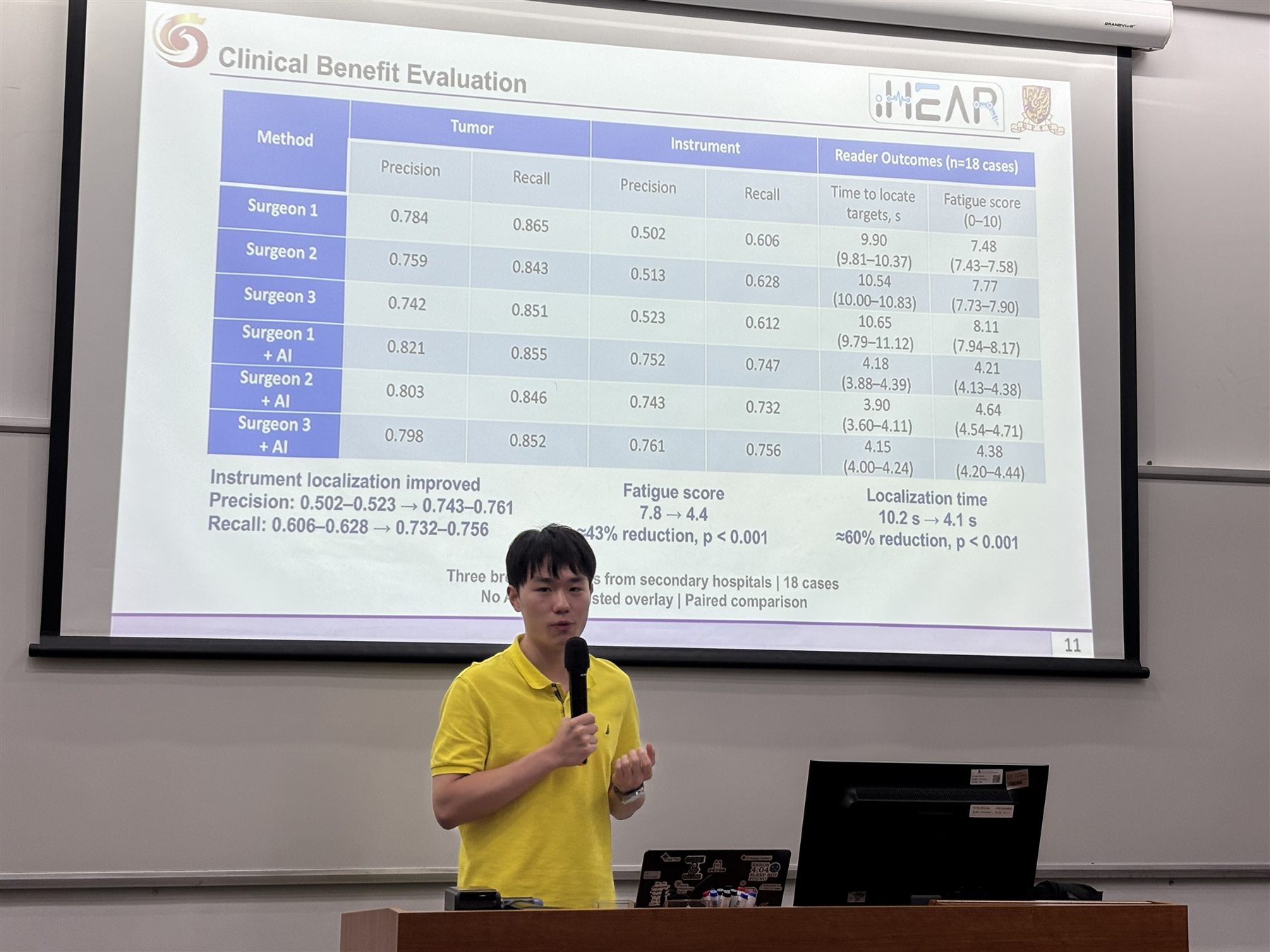
| 16:10–16:20 | Hongjie Zhu | Real-Time AI Guidance for VABB | CUHK-Shenzhen |
| 16:30–16:40 | Ruijie Xu | Radio-Aided SLAM for Seamless Indoor-Outdoor Positioning | PolyU |
| 16:40–16:50 | All participants | Group Discussion on Research Directions and Collaboration Opportunities | — |
| 16:50–17:00 | Prof. Fangxun Zhong and Prof. Weisong Wen | Closing Remarks and Group Photo | CUHK-Shenzhen and PolyU |
Presentation Highlights
- Peiwen Yang (PolyU) introduced a factor-graph-based approach to path planning and control and presented an open-source toolkit designed to support the development of safe autonomous systems.
- Shaoming Li (CUHK-Shenzhen) presented SURE-3D, a robot-ready framework for endoscopic 3D perception, addressing how surgical robots can obtain actionable spatial information from endoscopic imagery.
- Jianhao Jiao (LionRock AI and PolyU) discussed the progression from geometric maps to lifelong actionable scene memory, with an emphasis on enabling embodied agents to retain and use knowledge for navigation over extended operation.
- Hongrong Yang (CUHK-Shenzhen) explored surgical-task autonomy through the integration of robotic control and real-time soft-tissue simulation, connecting robot motion with the dynamics of deformable surgical environments.
- Xiangru Wang (PolyU) presented efficient solution separation for continuous-weight, tightly coupled GNSS/IMU smoothing, focusing on robust and trustworthy positioning for safety-critical applications.
- Junfeng Zou (CUHK-Shenzhen) introduced a vision-guided robotic endoscope holding system for nasal surgery, highlighting instrument following, remote-centre-of-motion constraints, and visual safety supervision.
- Naigui Xiao (PolyU) presented an outlier-aware integration framework combining LiDAR, IMU, and UWB measurements, with NLOS mitigation and anchor self-calibration for positioning in complex environments.
- Che Cheng (CUHK-Shenzhen) examined the gap between model predictions and executable robot decisions, discussing how language-guided perception can be made more usable, diagnosable, and suitable for physical systems.
- Yu Feng (PolyU) presented infrastructure-light localization and navigation methods aimed at enabling robots to operate effectively with reduced dependence on dedicated external infrastructure.
- Yi Zhu (CUHK-Shenzhen) introduced an autonomous in situ hand-eye calibration method that uses a single unstructured point and view-consistency interactive constraints to simplify robot calibration.
- Feng Huang (PolyU) presented a roadside-GNSS-aided multi-sensor integrated system designed to improve vehicle positioning in challenging urban environments.
- Hongjie Zhu (CUHK-Shenzhen) discussed real-time AI guidance for vacuum-assisted breast biopsy (VABB), illustrating how AI support can assist target and instrument localization during clinical procedures.
- Ruijie Xu (PolyU) presented radio-aided SLAM for seamless indoor-outdoor positioning, integrating signals such as Wi-Fi, Bluetooth, 5G, and GNSS with SLAM to support continuity across changing environments.
Research Presentations
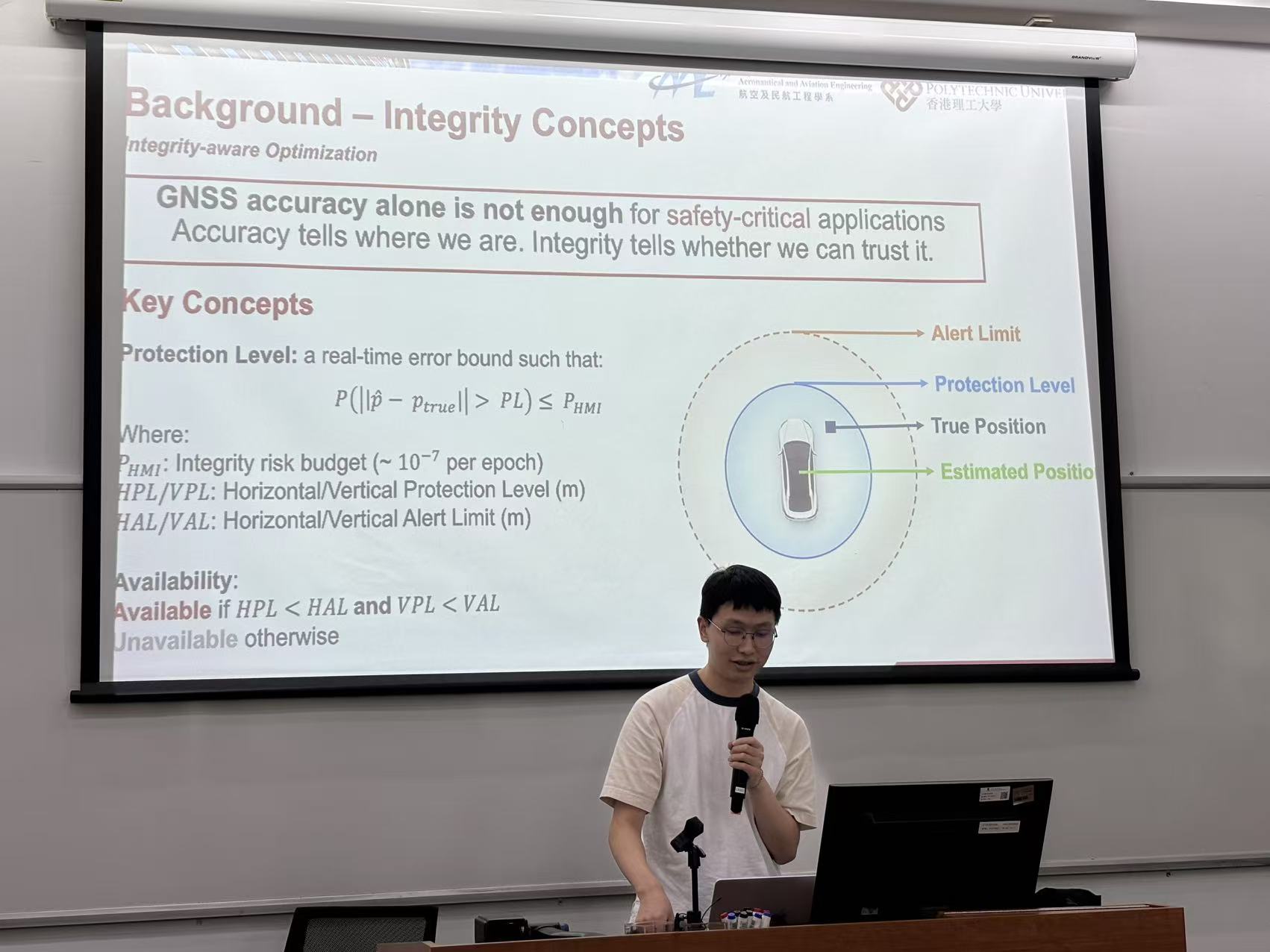
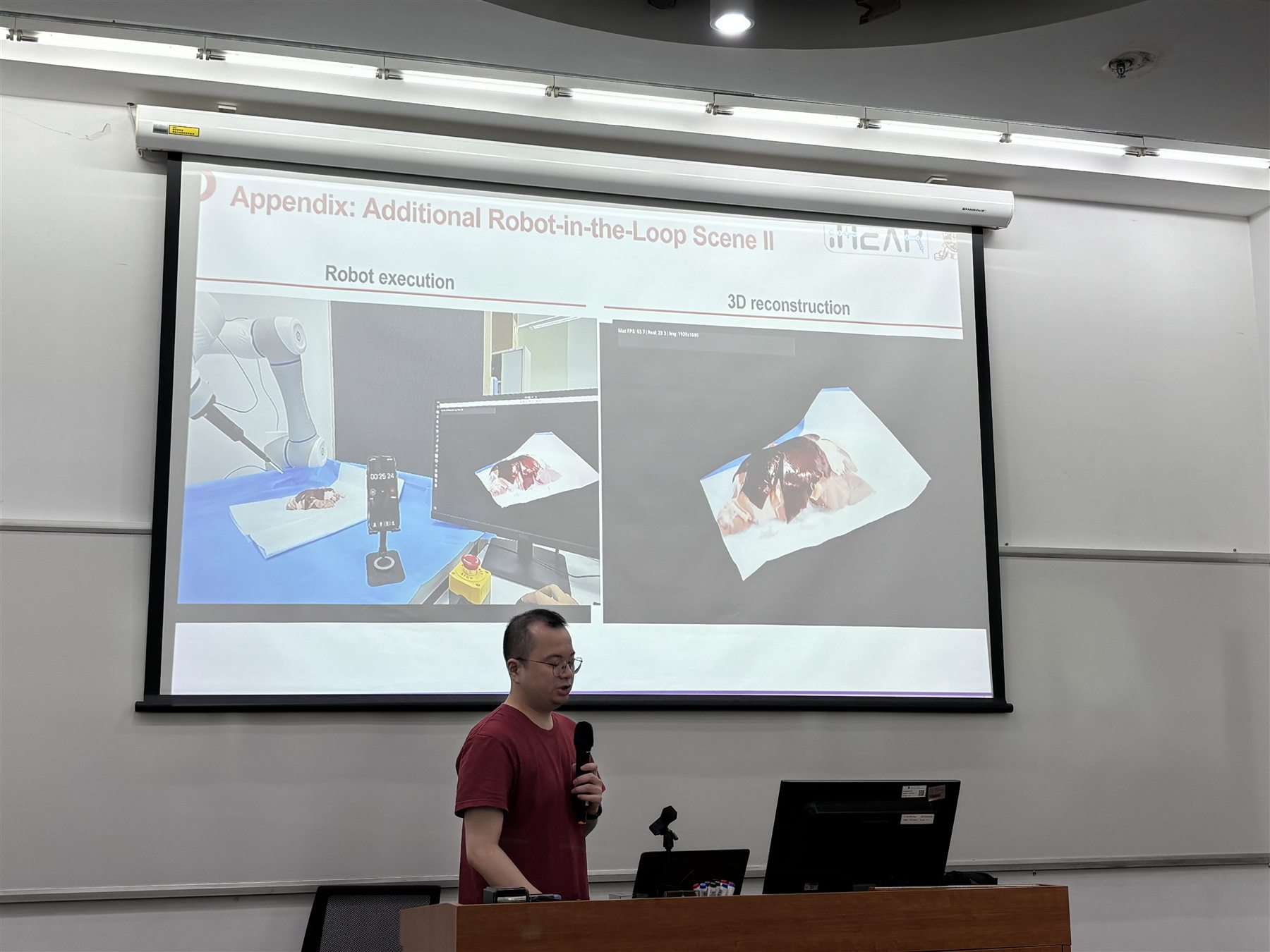
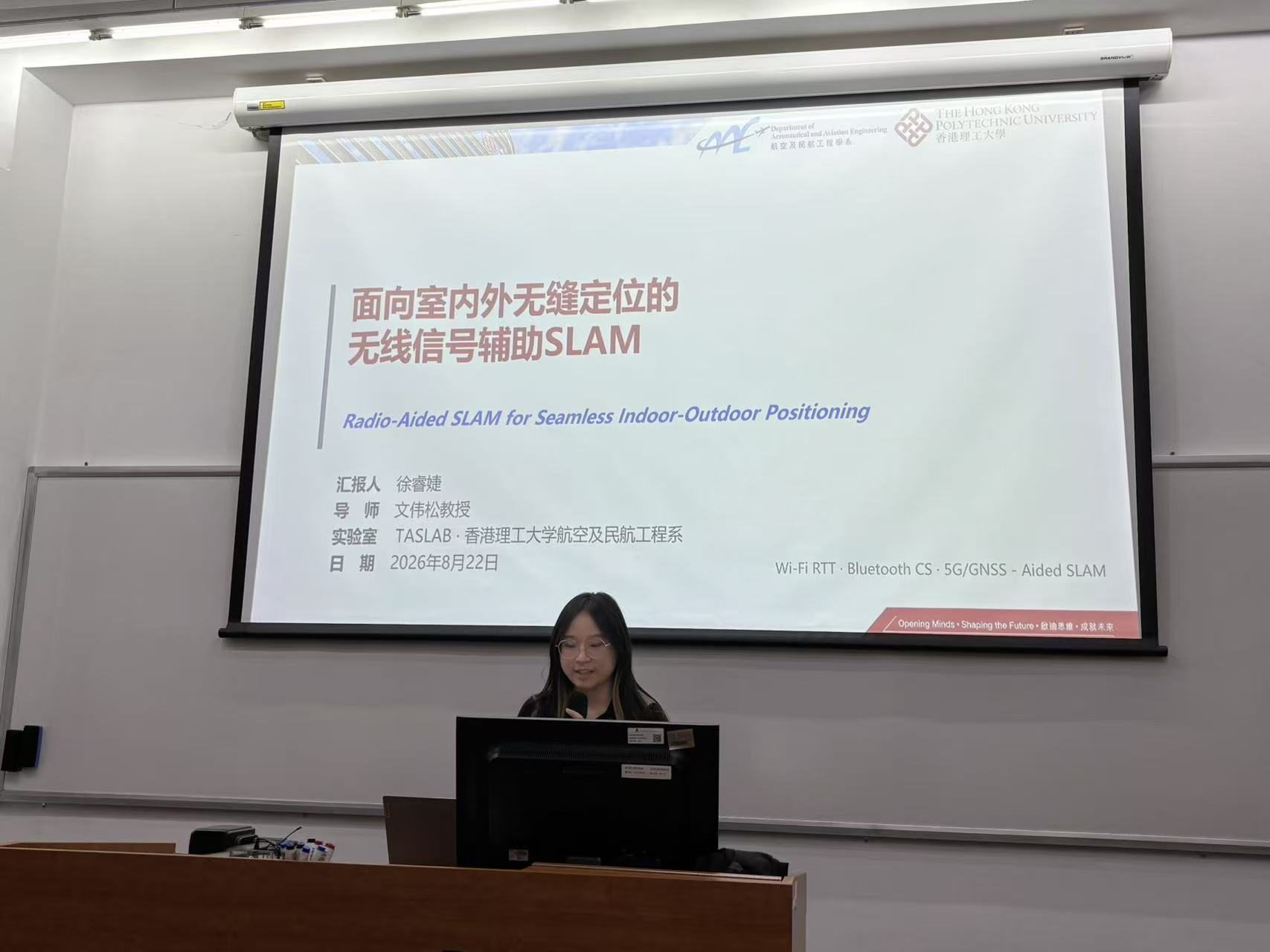
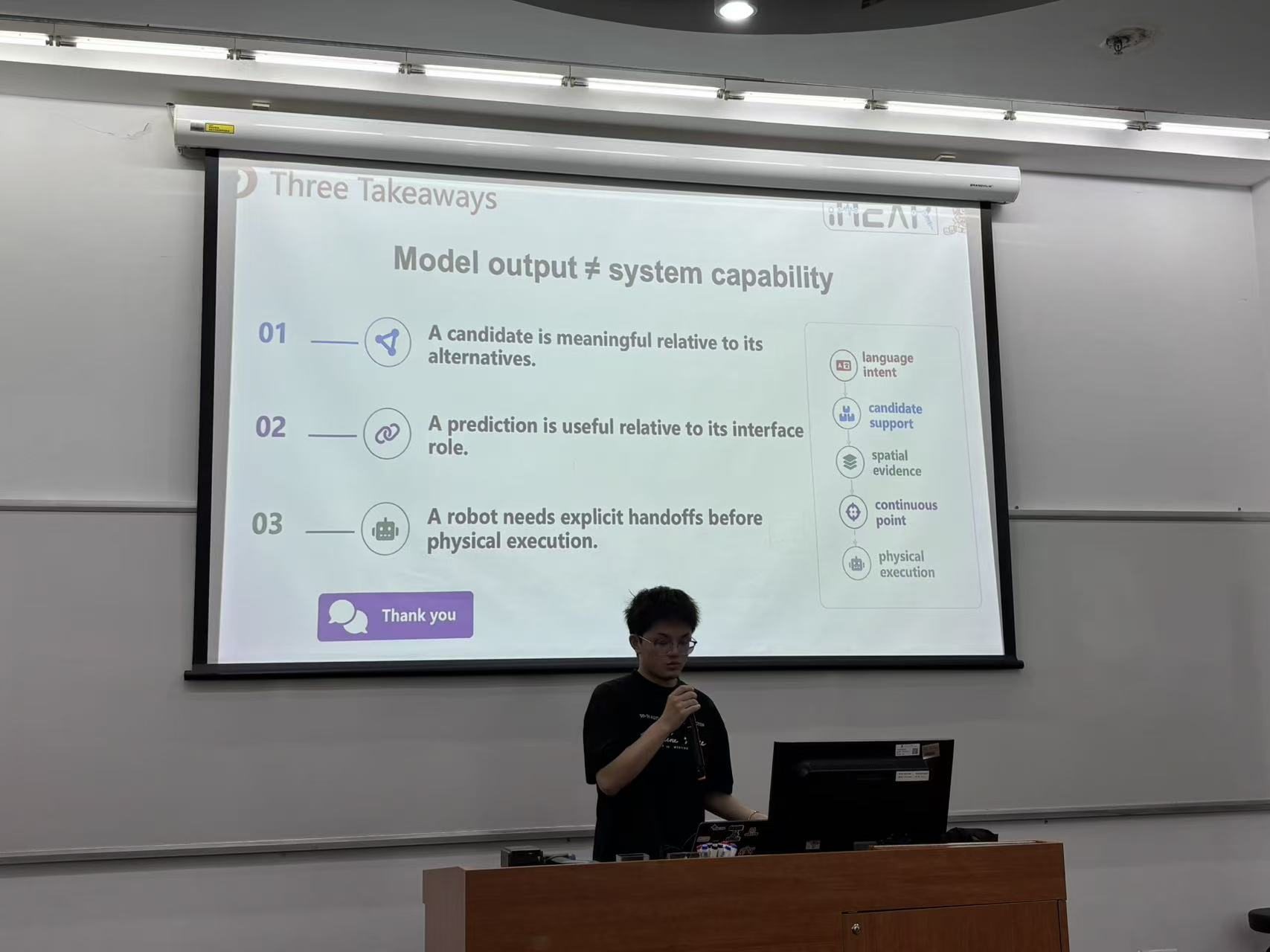
Best Presentation Awards
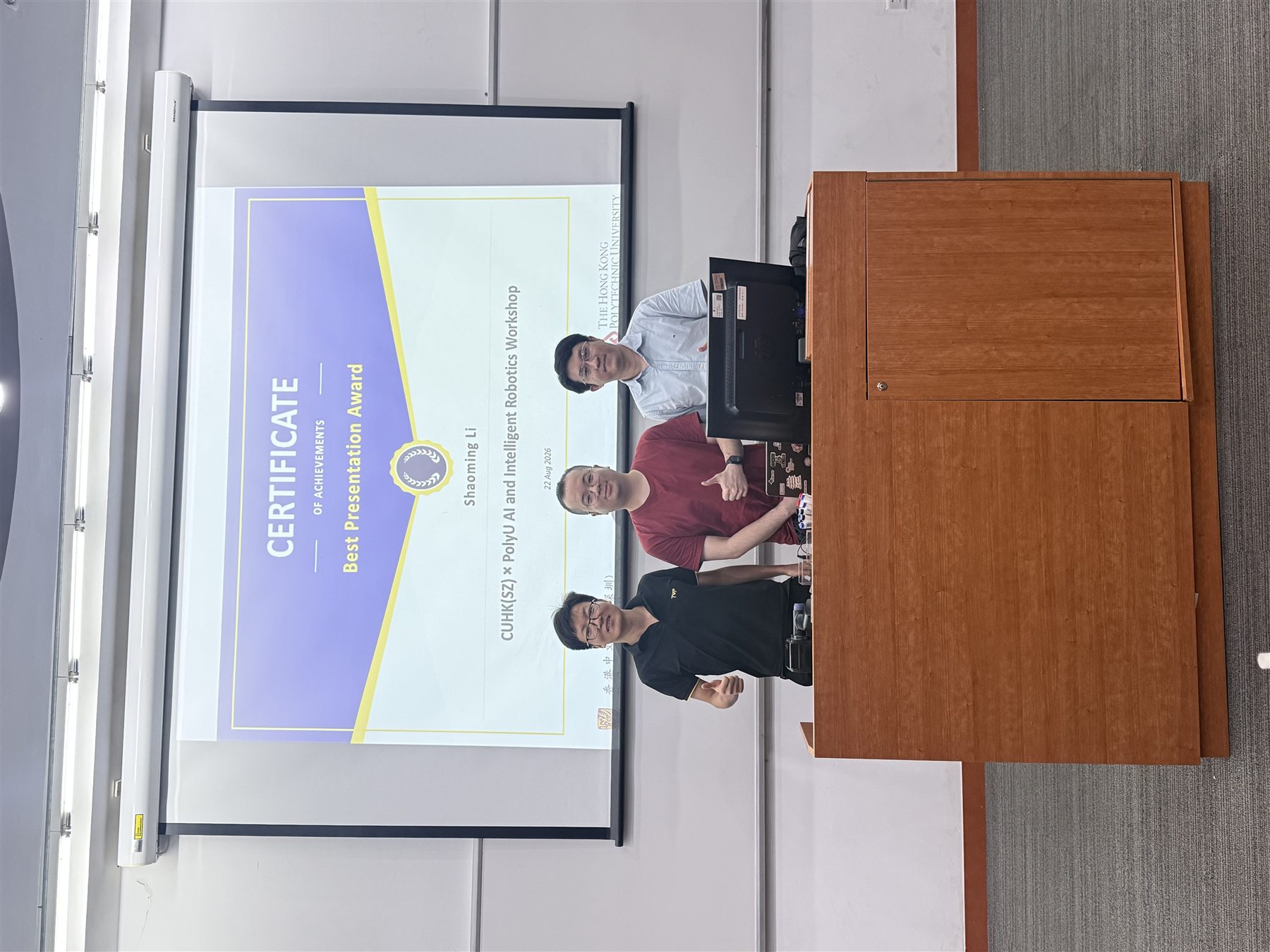
The workshop also recognized three students with Best Presentation Awards for the quality, clarity, and impact of their presentations:
- Shaoming Li (CUHK-Shenzhen) — SURE-3D: Robot-Ready Endoscopic 3D Perception
- Yu Feng (PolyU) — Doing More with Less: Infrastructure-Light Localization and Navigation for Robots
- Feng Huang (PolyU) — Roadside GNSS Aided Multi-Sensor Integrated System for Vehicle Positioning in Urban Areas
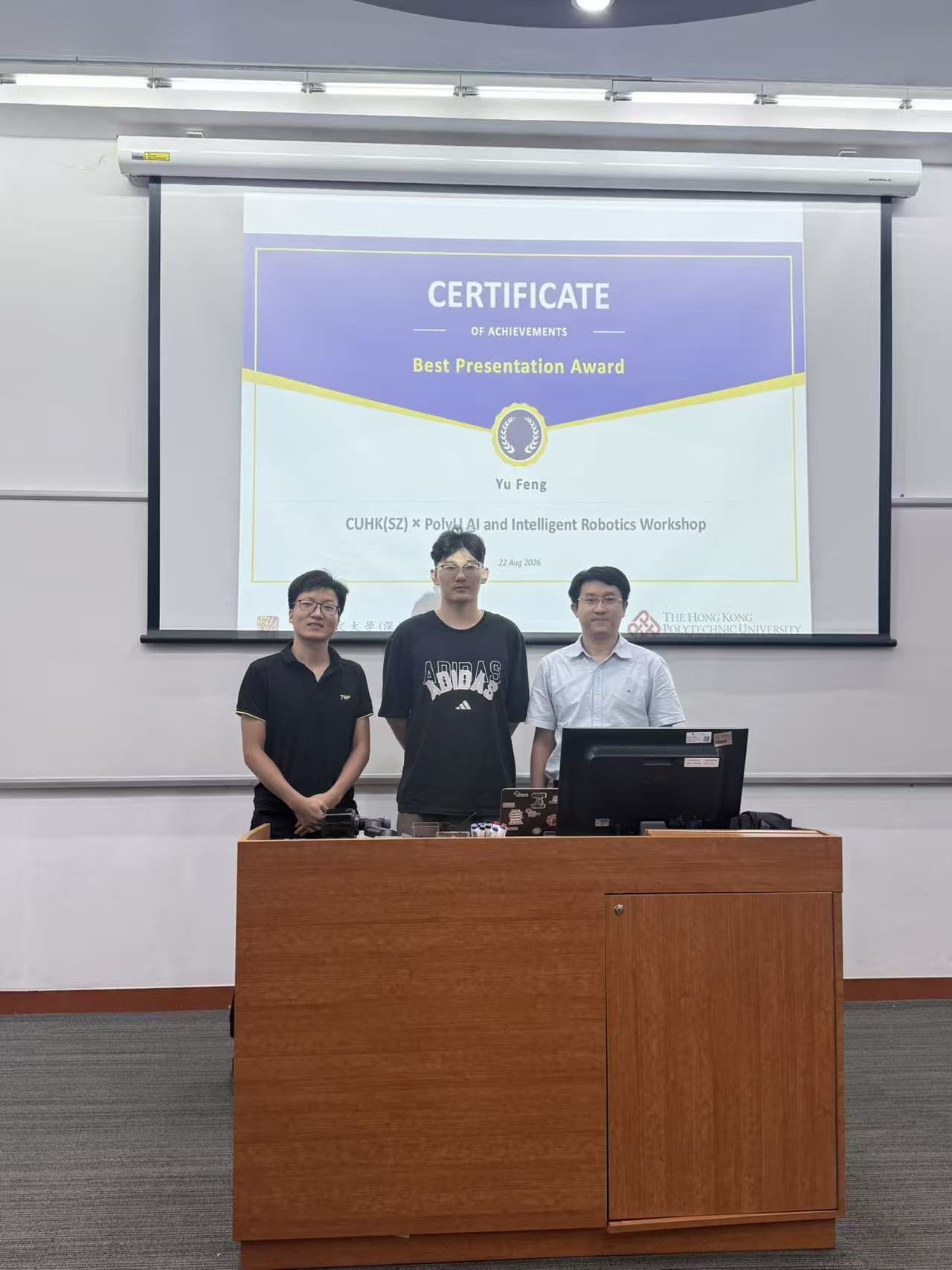
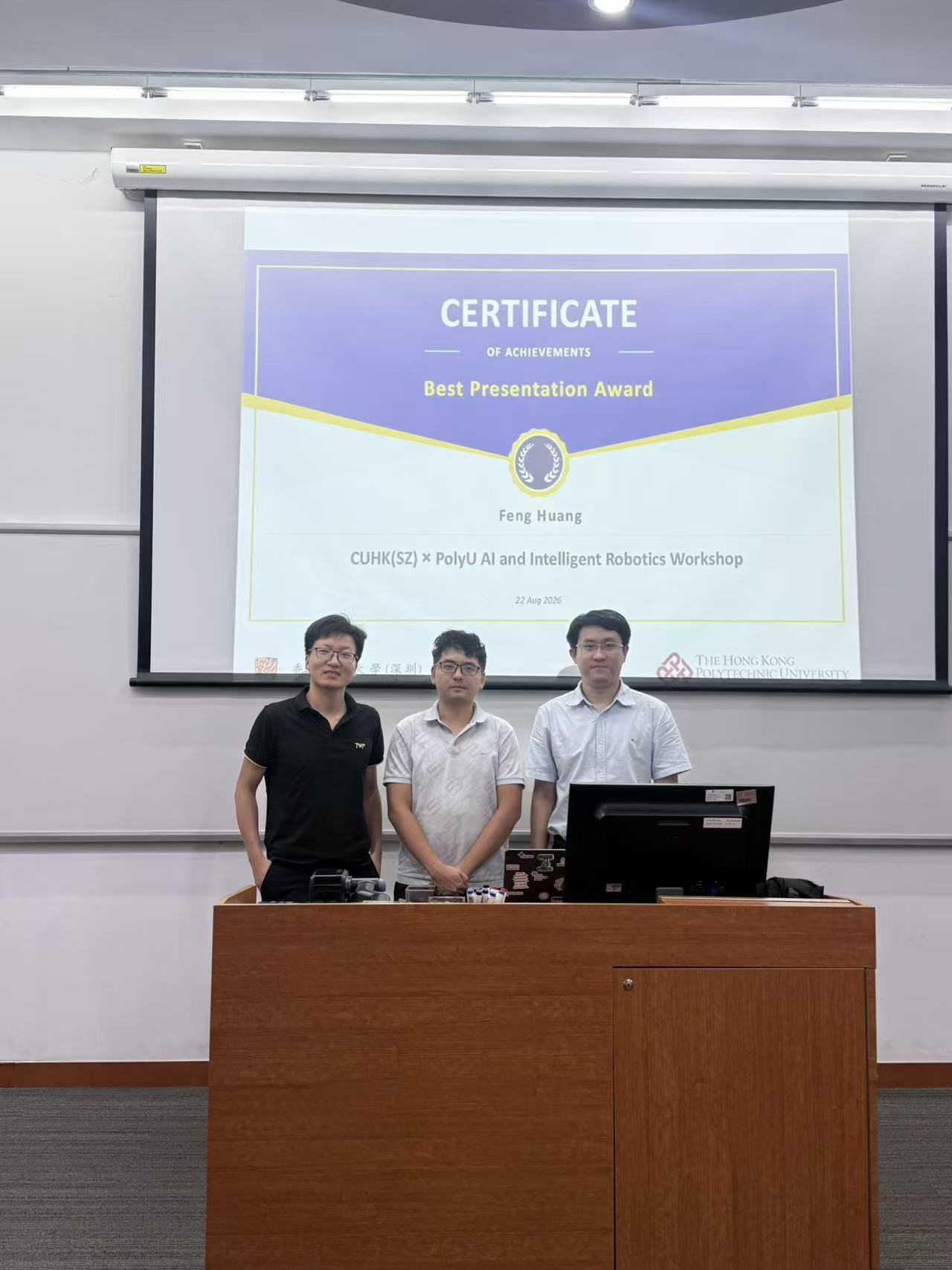
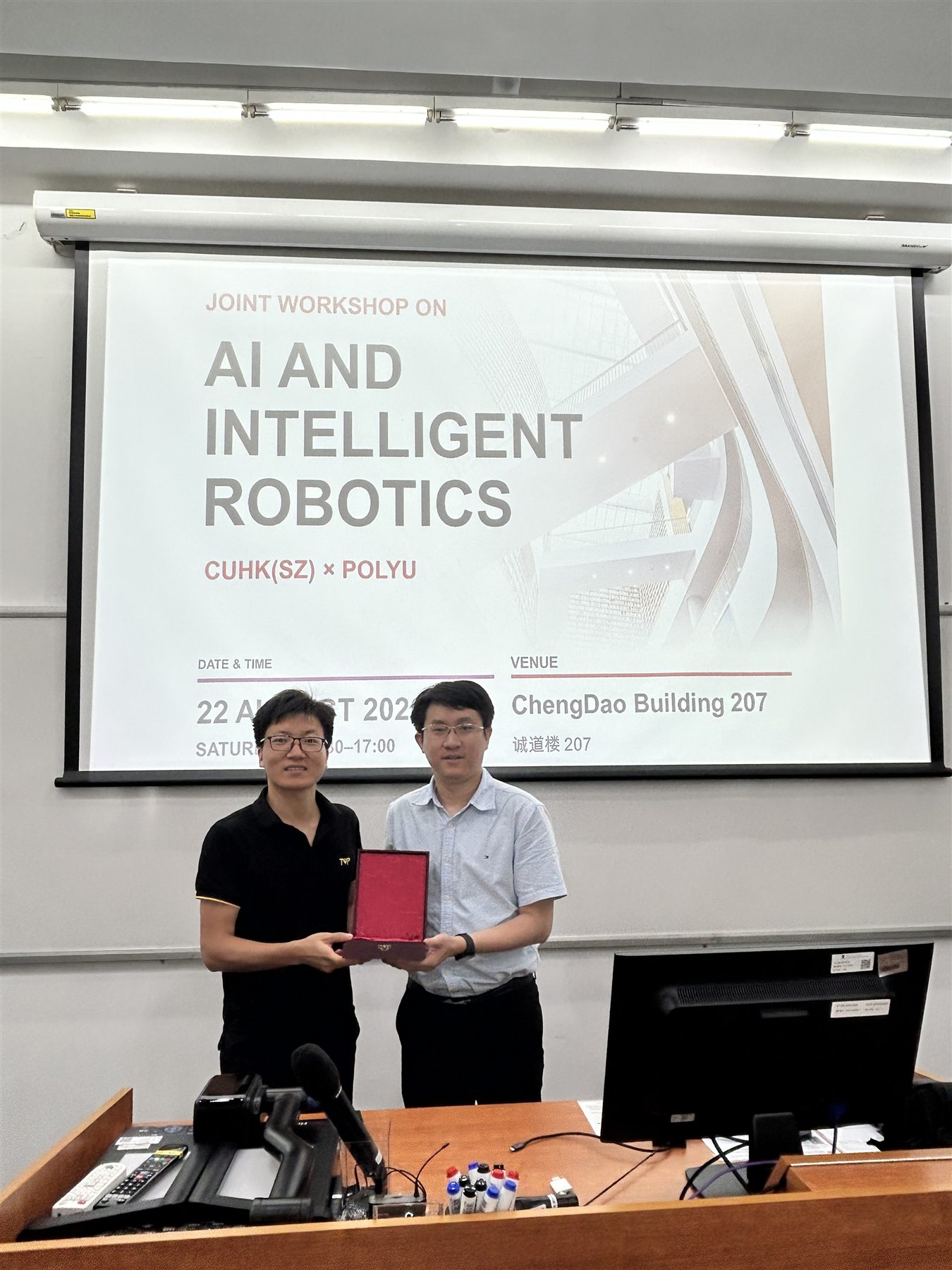
Prof. Weisong WEN from PolyU and Prof. Fangxun Zhong from CUHK-Shenzhen exchange a commemorative token during the workshop.
Participants also visited laboratory facilities and interacted with intelligent robotic systems. The hands-on exchange complemented the technical presentations by connecting research ideas with experimental platforms and real-world applications.
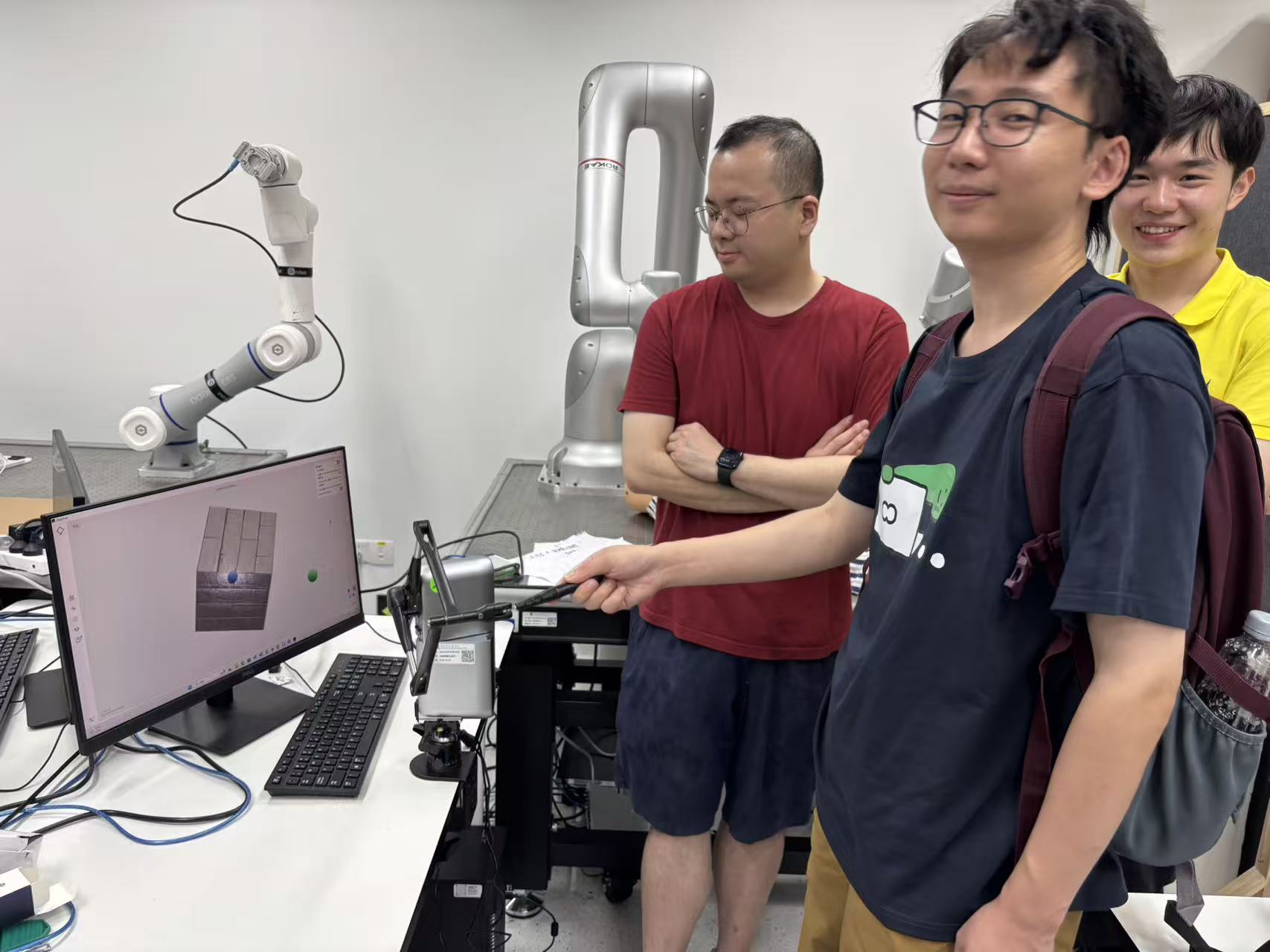
Workshop participants interact with an intelligent robotic system during the laboratory visit.
The workshop concluded with closing remarks by Prof. Weisong Wen and Prof. Fangxun Zhong, followed by a group photo. Through open dialogue and direct engagement among faculty members and students, the event strengthened links between PolyU and CUHK-Shenzhen and laid a positive foundation for future exchanges in AI, autonomous systems, and intelligent robotics.
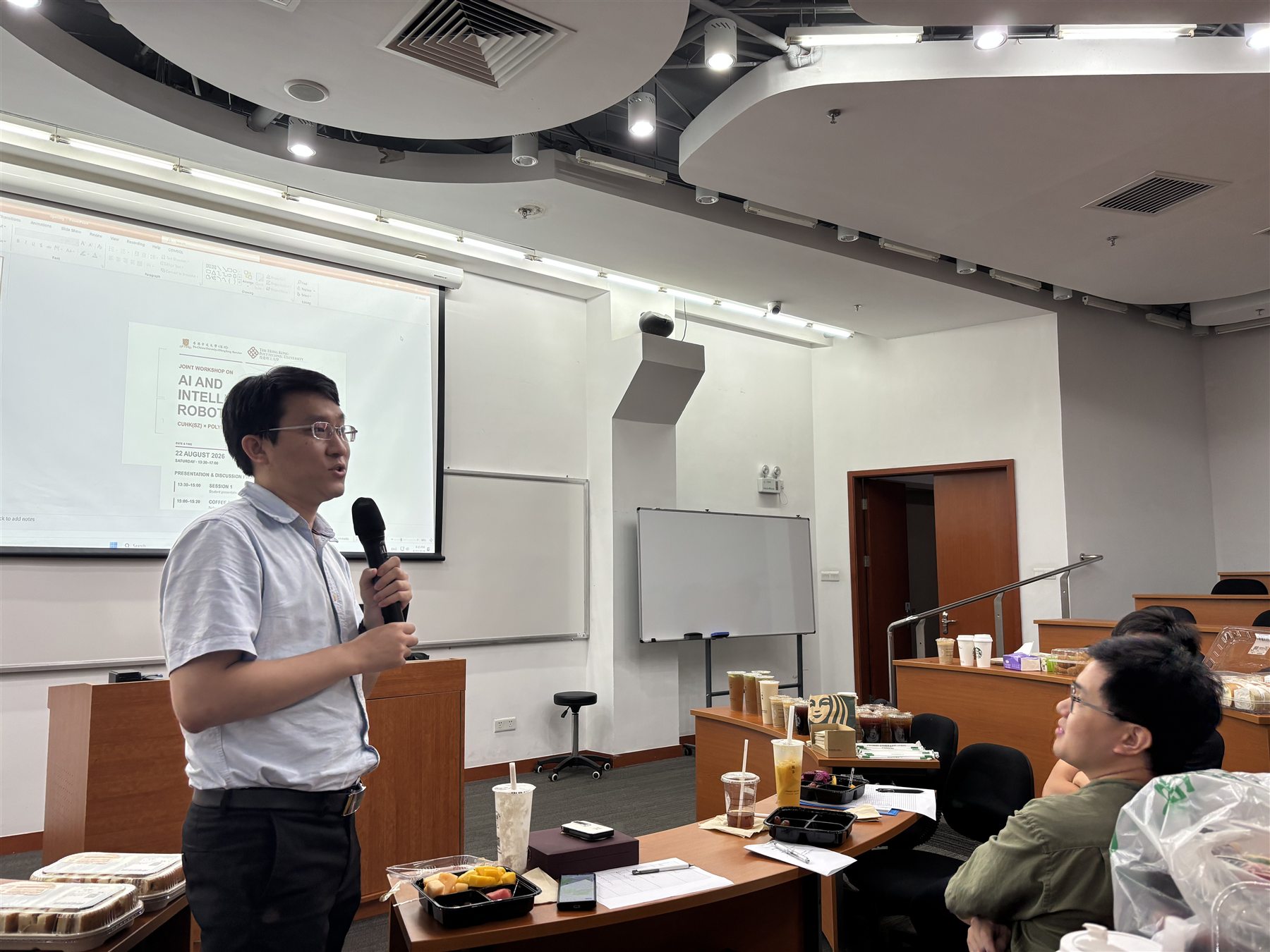
Prof. Weisong Wen delivers closing remarks at the workshop.